TL;DR (Summary)
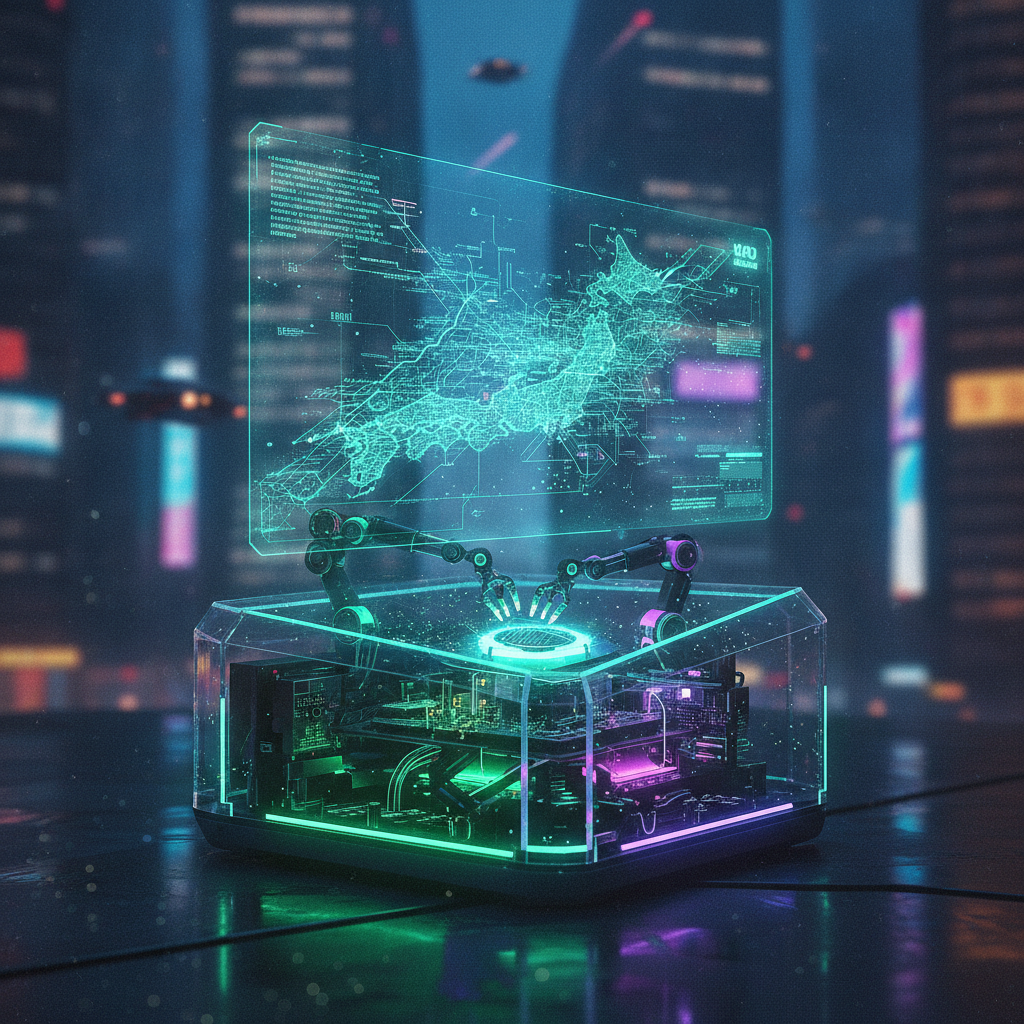
Nvidia’s Cosmos 3 Edge is fundamentally shifting the AI landscape by enabling hyper-localized, physical AI deployments, particularly evident in Japan. This model moves beyond the cloud-centric large language models, focusing on real-time, on-device intelligence for robotics, smart cities, and industrial automation. It integrates advanced perception, reasoning, and action capabilities directly at the ‘edge,’ reducing latency, enhancing data privacy, and optimizing resource use. Japan’s robust infrastructure and proactive investment in robotics make it a prime testbed for this new era of decentralized, autonomous AI systems, promising a future where AI isn’t just digital but deeply embedded in our physical world.
Nvidia Cosmos 3 Edge: Japan’s Blueprint for a Decentralized Physical AI Future
The narrative around Artificial Intelligence has long been dominated by the colossal advancements in Large Language Models (LLMs) and their cloud-based computational demands. Yet, a seismic shift is underway, quietly but profoundly reshaping the very fabric of AI deployment. Nvidia’s latest iteration, Cosmos 3 Edge, is not merely an incremental update; it’s a strategic pivot, particularly potent in its application within Japan, towards a future where AI isn’t just in the cloud but deeply embedded in our physical reality, operating autonomously at the ‘edge.’
Beyond the Cloud: The Imperative of Edge AI
For years, the promise of AI has been tethered to massive data centers, requiring constant connectivity and significant bandwidth. While powerful for certain applications, this centralized model presents inherent limitations: latency, privacy concerns, and operational costs. Imagine an autonomous vehicle needing split-second decisions based on local sensor data, or a smart factory optimizing its production line in real-time. Relying on a round trip to the cloud becomes an unacceptable bottleneck. This is precisely where Nvidia Cosmos 3 Edge carves out its critical niche.
Cosmos 3 Edge represents a comprehensive framework designed to bring sophisticated AI capabilities – from advanced perception and reasoning to complex action generation – directly to devices at the network’s periphery. It’s about empowering drones, robots, industrial sensors, and smart infrastructure to perform intricate AI tasks locally, independent of constant cloud communication. This isn’t just about inferencing; it’s about training, fine-tuning, and adapting models on-device, creating truly autonomous and resilient AI systems.
Japan: The Ideal Crucible for Physical AI Ecosystems
Why Japan, and why now? Japan’s unique confluence of factors makes it an unparalleled proving ground for this decentralized AI paradigm. Firstly, its aging population and labor shortages have long driven a national imperative for robotics and automation. From elder care robots to automated logistics, Japan has been at the forefront of integrating machines into daily life and industry. Secondly, its hyper-connected infrastructure and technological readiness provide a robust foundation for deploying sophisticated edge devices. Lastly, a cultural inclination towards precision engineering and long-term strategic planning aligns perfectly with the complex, integrated systems Cosmos 3 Edge enables.
The expansion of physical AI ecosystems in Japan, powered by Cosmos 3 Edge, is manifesting across several critical sectors:
- Industrial Automation & Robotics: Factories are becoming ‘lights-out’ operations, with robots collaborating autonomously, predicting maintenance needs, and optimizing production flows in real-time. Cosmos 3 Edge allows these robots to understand complex environments, adapt to unexpected changes, and execute precise tasks without constant human oversight or cloud dependency.
- Smart City Infrastructure: From intelligent traffic management systems that adapt to real-time conditions to public safety drones performing autonomous patrols and anomaly detection, localized AI can significantly enhance urban efficiency and security.
- Logistics & Supply Chain: Autonomous forklifts, delivery robots, and inventory management systems operating at warehouses and distribution centers can leverage edge AI for faster, more accurate operations, reducing errors and improving throughput.
- Healthcare & Assisted Living: Robotics for patient assistance, monitoring, and even surgical support can benefit immensely from low-latency, high-reliability edge AI, ensuring critical functions are performed locally and securely.
Technical Underpinnings: What Makes Cosmos 3 Edge Different?
Cosmos 3 Edge is built upon a foundation of Nvidia’s powerful GPU architecture, optimized for energy efficiency at the edge. It integrates several key technologies:
- Omniverse Integration: Crucial for simulation and digital twin creation, allowing developers to test and refine AI models in virtual environments that perfectly mirror physical spaces before real-world deployment. This accelerates development cycles and reduces risk.
- Advanced Perception Stacks: Leveraging sophisticated computer vision and sensor fusion algorithms, enabling devices to ‘see’ and ‘understand’ their surroundings with unprecedented accuracy, even in challenging conditions.
- Reinforcement Learning at the Edge: Allowing devices to learn and adapt from their experiences locally, continuously improving performance without needing to send all data back to a central server.
- Federated Learning Capabilities: Enabling collaborative AI model training across multiple edge devices while keeping sensitive data localized, addressing critical privacy and security concerns.
This integrated approach allows Cosmos 3 Edge to handle complex, multi-modal AI tasks that were previously confined to high-performance cloud environments. The shift is not just about moving computation; it’s about re-architecting how AI interacts with the world.
The Economic and Societal Impact
The implications of this shift are profound. Economically, it promises greater efficiency, reduced operational costs, and new revenue streams for businesses adopting edge AI. It democratizes access to advanced AI capabilities, moving them from exclusive cloud platforms to deployable, tangible solutions. Societally, especially in Japan, it offers viable solutions to pressing challenges like labor shortages and an aging population, enhancing quality of life through intelligent automation.
However, challenges remain. The development of robust, secure, and easily deployable edge AI solutions requires significant investment in hardware, software, and skilled personnel. Data governance and ethical considerations for autonomous physical AI systems also become paramount.
To illustrate the scale of this shift, consider the projected growth in edge AI deployments in Japan:
| Sector | 2023 (Baseline) | 2025 (Projected Growth) | 2028 (Estimated Market Size) | Key AI Applications |
|---|---|---|---|---|
| Industrial Robotics | ¥1.2 Trillion | ¥1.8 Trillion (+50%) | ¥3.5 Trillion | Predictive Maintenance, Collaborative Robotics, Quality Control |
| Smart City Solutions | ¥0.5 Trillion | ¥0.9 Trillion (+80%) | ¥2.0 Trillion | Traffic Optimization, Public Safety, Environmental Monitoring |
| Autonomous Logistics | ¥0.3 Trillion | ¥0.6 Trillion (+100%) | ¥1.5 Trillion | Automated Warehousing, Last-Mile Delivery, Fleet Management |
| Healthcare Robotics | ¥0.1 Trillion | ¥0.25 Trillion (+150%) | ¥0.8 Trillion | Patient Assistance, Surgical Support, Remote Monitoring |
(Figures are illustrative and based on market trend analysis for Japan’s AI sector.)
The Road Ahead: A Truly Intelligent Physical World
Nvidia’s Cosmos 3 Edge, particularly through its strategic expansion in Japan, is not just about technological advancement; it’s about a philosophical shift in how we conceive and deploy AI. It moves us beyond a purely digital, cloud-bound intelligence towards a future where AI is an intrinsic, autonomous part of our physical environment. This decentralized approach promises a more resilient, responsive, and ultimately, a more intelligent world – a world where AI doesn’t just process information but actively perceives, reasons, and acts within the fabric of our daily lives. The implications are enormous, and Japan is showing us the blueprint for this exciting new frontier. The era of localized, physical AI is truly upon us.
Leave a Reply