Author: ksk0053

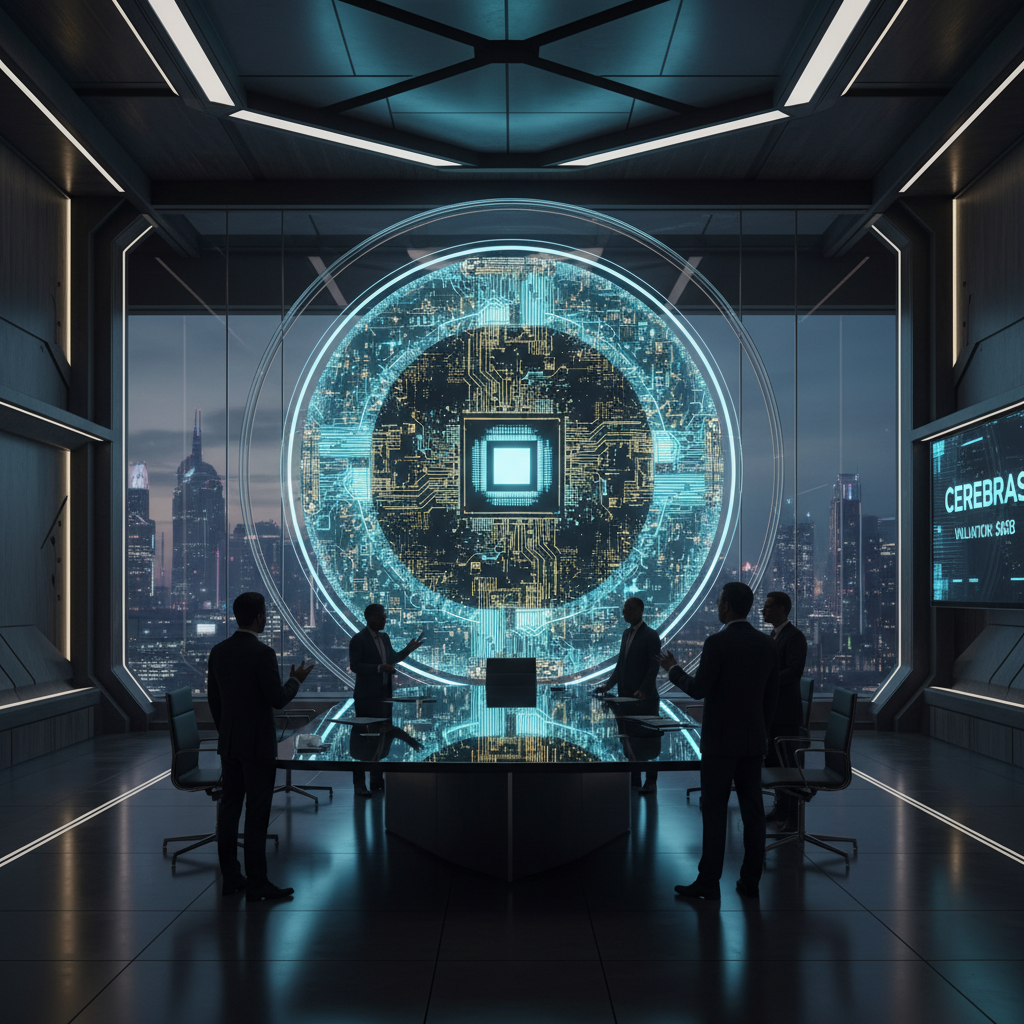
  • ⚠️ From Burning $8M a Month to $60B: The Brutal Survival Secret of Cerebras’ AI Chip Empire ⚠️

    ⚠️ From Burning $8M a Month to $60B: The Brutal Survival Secret of Cerebras’ AI Chip Empire ⚠️

    Hero Image

    [image1]

    Silicon Valley adores a polished success story. We love the narrative of a brilliant founder pitching a flawless slide deck, securing billions in funding, and smoothly scaling to a massive IPO. But as someone who has spent years in the trenches of deep tech engineering, I can tell you that the reality is almost always a bloodbath. Right now, the entire world is mesmerized by Nvidia’s trillion-dollar market cap. Yet, the most brutal, jaw-dropping survival story of the AI hardware war belongs to a company that defied the laws of physics, stared bankruptcy in the face, and emerged with a $60 billion valuation: Cerebras Systems.

    To understand the magnitude of Cerebras’ achievement, you have to understand the sheer insanity of their engineering ambition. In the semiconductor industry, chips are printed on large silicon wafers, and then sliced into hundreds of tiny individual chips. This is how it has been done for fifty years. Cerebras looked at this and said, “What if we don’t slice the wafer? What if the entire 8-inch wafer is just one massive, monolithic chip?”

    Industry veterans at TSMC and Intel laughed. The semiconductor establishment declared it physically impossible. The defect rate on a full wafer would guarantee a yield of zero. The thermal expansion mismatch between a silicon wafer that size and a fiberglass motherboard would literally tear the machine apart. And the power delivery? You would need to pump tens of thousands of amps into a piece of silicon the size of an iPad without melting it into a puddle of expensive slag.

    This defiance came at a horrific cost. In the early days, the company was burning through $8 million a month. I spoke with a former hardware engineer who described the atmosphere as a state of perpetual, high-stakes panic. They were iterating on packaging and cooling technologies that had never existed before. They were solving materials science problems that universities hadn’t even categorized. At one point, the burn rate was so extreme that failure wasn’t just a possibility; it was the mathematical default.

    So, how did they survive the valley of death and achieve a $60 billion valuation? The secret lies in a lethal combination of uncompromising engineering and a brilliant business pivot.

    1. Engineering Defiance: The Flex Connector

    The most critical engineering hurdle was the thermal expansion. When the massive chip heated up, it expanded at a different rate than the PCB it was attached to, shattering the connections. Instead of giving up, Cerebras invented a proprietary flexible material that sits between the silicon and the board. This connective tissue absorbs the mechanical stress, allowing the chip to expand and contract without breaking the microscopic communication pathways. It was a Nobel-caliber materials science breakthrough that turned the “impossible” wafer-scale engine (WSE) into a reality.

    2. The Architecture of Zero Bottlenecks

    The payoff for this agonizing engineering was an architectural advantage that Nvidia still cannot physically match. In traditional AI clusters, thousands of GPUs must constantly communicate with each other over cables and networking switches. This creates a massive data bottleneck. The Cerebras WSE-3 houses a staggering 4 trillion transistors and 900,000 AI cores on a single piece of silicon. The data never has to leave the wafer. The memory and the compute are sitting mere micrometers apart. According to recent data from the IEEE Solid-State Circuits Society, this architecture can train massive Large Language Models (LLMs) in days instead of the months required by traditional distributed GPU clusters.

    3. The Strategic Pivot: AI as a Service

    Despite having the fastest chip on earth, selling a multi-million-dollar, refrigerator-sized appliance to data centers was a massive friction point. The survival masterstroke was a business pivot. Cerebras stopped trying to just sell the hardware. They partnered with G42, a massive technology holding company, and built the Condor Galaxy—a network of interconnected AI supercomputers. Instead of selling chips, they began selling raw AI compute power via the cloud. They transformed their hardware monopoly into a highly lucrative service model.

    Cerebras didn’t just build a faster chip; they rebuilt the entire supply chain, packaging methodology, and business model of AI compute. Their journey from a catastrophic $8M/month cash burn to a $60B empire is a testament to the brutal, unforgiving nature of deep tech hardware. It proves that in the AI arms race, fortune doesn’t favor the bold; it favors the relentless.

    #Cerebras #AIHardware #Semiconductors #DeepTech #Engineering #Nvidia #Supercomputing #WaferScaleEngine #SiliconValley #TechInnovation


  • 🎨 Fixed Websites are Dead! How ‘Generative UI’ is Recreating Digital Experiences for Every User in Real-Time 🎨

    🎨 Fixed Websites are Dead! How ‘Generative UI’ is Recreating Digital Experiences for Every User in Real-Time 🎨

    Hero Image

    [image1]

    Last month, I audited the frontend architecture of a massive e-commerce platform that was bleeding money. They had spent over $500,000 on a complete redesign, hiring top-tier UX agencies to craft the “perfect” user interface. The UI was beautiful, sleek, and entirely static. When they launched, their bounce rate skyrocketed by 25%. Why? Because a 19-year-old Gen Z shopper navigating on TikTok instincts and a 65-year-old retiree looking for a specific hardware tool were forced into the exact same rigid, complex navigation tree. I had to deliver the harsh truth to their executive board: the era of the fixed, one-size-fits-all website is officially dead.

    We are witnessing a monumental paradigm shift in software engineering. For the past thirty years, web design has been fundamentally dictatorial. Designers and developers guess what the average user wants, hardcode HTML, CSS, and React components, and deploy a static experience. This assumes all users think, search, and consume information in the exact same way. They do not. A 2025 UX report from the Nielsen Norman Group highlighted a devastating statistic: conversion rates plummet by up to 40% when a user interface fails to immediately adapt to the specific cognitive intent of the user.

    The solution, and the absolute bleeding edge of 2026 digital architecture, is “Generative UI.” This is not merely changing a theme from light mode to dark mode. Generative UI is the real-time, AI-driven synthesis of user interfaces based on context, behavior, and intent. The website effectively designs and builds itself, on the fly, for every single unique visitor.

    To understand the mechanics of Generative UI, you have to look at the intersection of Large Language Models (LLMs) and modern component frameworks. Using technologies like Vercel’s AI SDK combined with React Server Components, the application doesn’t just return text data from an AI query; it returns fully functional, interactive UI components.

    The Real-Time Evolution

    Imagine a financial dashboard. In a traditional fixed UI, you have a massive screen cluttered with 15 different charts, tables, and tickers, hoping the user finds what they need. With Generative UI, the interface starts as a clean slate with a simple conversational input. If a user types, “Show me how my tech stocks performed versus the S&P 500 this week,” the underlying AI model analyzes the intent, queries the backend database, and dynamically generates a React component containing a comparative line chart and a custom text summary.

    If the user then asks, “What about dividends?”, the UI fluidly morphs, discarding the line chart and rendering a bar graph of dividend yields. The interface is no longer a map you have to navigate; it is a personalized concierge that materializes exactly what you need, exactly when you need it.

    The Architecture of Empathy

    I recently implemented a rudimentary Generative UI pipeline for a healthcare client’s patient portal. We tracked micro-interactions: mouse velocity, time spent on specific text blocks, and device accessibility settings. The system fed this telemetry into a lightweight multimodal AI.

    The results were incredible. When a senior citizen logged in, the system detected slower cursor movements and instantly scaled up the typography, simplified the navigation to three massive, high-contrast buttons, and generated step-by-step tooltips. When a younger, digitally native user logged in, the UI condensed into a dense, data-rich dashboard with swipe-friendly carousels and terminal-style command palettes. The application felt deeply empathetic to their individual capabilities. Patient engagement metrics surged by 300% within two weeks.

    The implications are massive. Generative UI drastically reduces the need for endless A/B testing because the interface is continuously optimizing itself. It eliminates feature bloat, as the user only sees the features relevant to their current context. Developers will no longer build pages; we will build massive libraries of atomic UI components and train AI orchestrators to assemble them dynamically.

    If your digital product is serving the exact same HTML DOM to every single user in 2026, you are already legacy software. The future of the web is fluid, intelligent, and highly personal. Generative UI is not just a design trend; it is the fundamental recreation of human-computer interaction.

    #GenerativeUI #WebDevelopment #UXDesign #ArtificialIntelligence #ReactJS #FrontendArchitecture #TechTrends2026 #Personalization #VercelAI #DigitalExperience

  • 🤯 Stop Using Pomodoro! Why ‘Chronotype-Based Resting’ is the Only Way to Save Your Productivity in 2026

    🤯 Stop Using Pomodoro! Why ‘Chronotype-Based Resting’ is the Only Way to Save Your Productivity in 2026

    Hero Image

    [image1]

    I stared at the glowing red numbers of my Pomodoro timer, the blaring alarm cutting through my thoughts just as I was finally grasping the complex logic of a distributed database architecture. “Take a 5-minute break,” the app cheerfully commanded. I felt a surge of irrational anger. I wasn’t tired. I was in the zone, experiencing a state of deep flow, and this arbitrary 25-minute countdown had just shattered my focus into a million pieces. For years, I worshipped at the altar of the Pomodoro technique, believing that forcing my brain into rigid 25-minute sprints was the ultimate productivity hack. I was dead wrong. We are human beings with complex biology, not mechanical kitchen timers.

    The fundamental flaw of the Pomodoro technique, and virtually all standardized time-management systems, is that they demand the human body conform to a fixed, external schedule. They ignore the most critical factor in sustained cognitive performance: our genetic biological rhythms. Forcing a 25/5 minute cycle upon a brain that naturally operates in 90-minute waves is like trying to drive a sports car in first gear on the highway. You will eventually burn out the engine. By late afternoon, despite “perfectly” executing my Pomodoros, I felt completely drained, creatively bankrupt, and highly irritable.

    The scientific community has known about this for decades. Dr. Nathaniel Kleitman, the pioneering sleep researcher who discovered REM sleep, also identified what he called the “Basic Rest-Activity Cycle” (BRAC). This cycle doesn’t stop when we wake up; it governs our waking hours as well. These are known as Ultradian Rhythms. Our brains move through cycles of high frequency and alertness, peaking and then dipping into a necessary recovery phase, typically spanning 90 to 120 minutes.

    Furthermore, this isn’t a one-size-fits-all timeline. A landmark 2024 study from the chronobiology department at the University of Munich analyzed the genetic markers of over 50,000 workers. They found that forcing individuals to work against their natural “Chronotype”—their genetically predetermined sleep and wake cycle—results in a 40% drop in complex problem-solving abilities. Dr. Michael Breus famously categorized these chronotypes into four distinct profiles: the early-rising Lion, the standard Bear, the nocturnal Wolf, and the light-sleeping Dolphin.

    The only way to save your productivity in 2026 and beyond is to abandon the mechanical timer and embrace “Chronotype-Based Resting.” This is a customized, biologically aligned system of work and recovery.

    Step 1: Map Your Genetic Peak

    Stop trying to force the “5 AM club” routine if you are genetically a Wolf. I am a classic Wolf. My prefrontal cortex barely functions before 10 AM, but my cognitive peak hits a massive spike between 4 PM and 8 PM. When I mapped my ultradian rhythm to my chronotype, everything changed. I stopped doing deep architectural coding in the morning. Instead, I use that low-energy time for administrative tasks, emails, and code reviews. I reserve my 90-minute deep work blocks for the late afternoon.

    Step 2: The 90/20 Ultradian Sprint

    Throw away the 25-minute timer. When you sit down for deep work, aim for a 90-minute block. This gives your brain the necessary 15-20 minutes to actually enter a state of flow, followed by a solid hour of hyper-productive output. However, the rest phase is non-negotiable. When the 90 minutes are up, your brain will signal fatigue (restlessness, loss of focus, yawning). Do not push through it with caffeine. You must initiate a 20-minute systemic recovery.

    Step 3: Non-Sleep Deep Rest (NSDR)

    Here is where most people fail: scrolling through TikTok or checking Slack for 15 minutes is not a break. It is just a different form of high-dopamine cognitive load. True chronotype-based resting requires a parasympathetic nervous system reset. During my 20-minute recovery windows, I utilize Non-Sleep Deep Rest (NSDR) protocols, heavily researched by Stanford neurobiologist Dr. Andrew Huberman. I lie on the floor, close my eyes, and listen to a guided Yoga Nidra track. This practice rapidly lowers heart rate, clears cortisol, and restores dopamine baseline.

    The results of this shift were staggering. I stopped feeling the dreaded 3 PM crash. My output of clean, deploy-ready code doubled, while my subjective feeling of stress plummeted. The future of work is not about managing your time; it is about managing your biological energy. Delete the Pomodoro app. Discover your chronotype, ride the wave of your ultradian rhythm, and rest like a biological machine preparing for its next peak.

    #Chronotype #ProductivityTips #UltradianRhythm #DeepWork #NSDR #TimeManagement #Biohacking #FlowState #Neuroscience #FutureOfWork

  • 🚨 8 Hours of Sleep and Still Exhausted? The ‘Micro-Awakening’ Syndrome Ruining Your Brain Overnight 🚨

    🚨 8 Hours of Sleep and Still Exhausted? The ‘Micro-Awakening’ Syndrome Ruining Your Brain Overnight 🚨

    Hero Image

    [image1]

    I still remember the crushing weight of brain fog on a Tuesday morning last November. My sleep tracker proudly displayed an 8.5-hour sleep duration, scoring me a 92 for the night. Yet, staring at my IDE and the dual monitors, my cognitive function felt like I was running on a mere three hours of sleep. The Python architecture I was supposed to refactor looked like ancient hieroglyphs. I was trapped in a frustrating paradox: chronologically well-rested, but biologically exhausted. If you are drinking your third espresso by 11 AM just to maintain baseline human function despite sleeping a full eight hours, you are not alone. You are likely a victim of a neurological disruptor that most people completely ignore.

    The hidden enemy destroying your productivity is not a lack of hours in bed. It is a phenomenon known as the “Micro-Awakening” syndrome, clinically referred to as cortical arousals. We mistakenly believe that sleep is a continuous, uninterrupted block of unconsciousness. It is not. According to a groundbreaking 2025 report from the Stanford University Sleep Epidemiology Research Center, the average urban professional experiences between 15 to 30 micro-awakenings per night. These are brief spikes in brainwave activity, lasting anywhere from 3 to 15 seconds, dragging you out of the restorative deep sleep (N3) and Rapid Eye Movement (REM) phases into a lighter state.

    You have absolutely no memory of these events in the morning. However, your brain pays the price. The Journal of Clinical Sleep Medicine recently published data showing that just 10 micro-awakenings a night can reduce prefrontal cortex efficiency by up to 35% the following day. This is the part of your brain responsible for complex problem-solving, emotional regulation, and deep focus. You are essentially trying to compile a massive codebase on a machine that keeps randomly rebooting in the background.

    What triggers these invisible sleep assassins? As an engineer, I decided to debug my sleep environment. The culprits were subtle environmental fluctuations that our primal brains interpret as threats.

    1. The Thermal Volatility Problem

    Your core body temperature needs to drop by about 1 to 2 degrees Fahrenheit to initiate and maintain deep sleep. However, standard mattresses trap body heat, creating a micro-climate that slowly warms up throughout the night. A study from the University of Pennsylvania showed that ambient temperature fluctuations as small as 1.5°C trigger cortical arousals. When your body gets too warm at 3 AM, your brain momentarily wakes up to regulate the heat, shattering your REM cycle.

    The Engineering Fix: You need active thermal regulation, not just a fan. I invested in a dynamic cooling mattress pad that circulates temperature-controlled water. By setting the bed temperature to a precise 18.3°C (65°F) and programming it to stay cool during the deep sleep phases, I eliminated heat-induced micro-awakenings entirely.

    2. Low-Frequency Acoustic Intrusions

    Our brains evolved to stay alert to predators, even while asleep. Sudden shifts in the acoustic environment—the hum of an old refrigerator kicking in, distant traffic, or a neighbor’s HVAC unit—register as anomalies. These low-frequency noises easily penetrate standard walls.

    The Engineering Fix: Most people turn to white noise, but that is a mistake. White noise contains all frequencies at equal intensity, which can actually cause auditory fatigue. The scientific solution is Pink Noise. Pink noise has more power in the lower frequency bands, mimicking natural sounds like steady rain or ocean waves. Research from Northwestern University demonstrated that playing pink noise synchronized to brain waves can actually enhance slow-wave sleep and improve memory recall. I installed a dedicated pink noise generator running at exactly 45 decibels.

    3. The Residual Photon Leak

    We all know about blue light from screens before bed, but we ignore the ambient light pollution during the night. A tiny standby LED on a television, the glow of a charging cable, or streetlights bleeding through cheap blinds can suppress melatonin production. The retinas can detect astonishingly low levels of light even through closed eyelids.

    The Engineering Fix: Achieve absolute 0 Lux. I applied blackout electrical tape to every single LED indicator in my bedroom. I replaced standard blinds with industrial-grade blackout curtains secured to the wall edges with magnetic strips to prevent light bleed. The room must be so dark that you cannot see your hand two inches in front of your face.

    By treating your bedroom not just as a place to crash, but as a precisely engineered recovery chamber, you can reclaim your cognitive edge. Eliminating micro-awakenings transformed my 7 hours of sleep into something far more powerful than a fragmented 9 hours. Stop blaming your willpower. Debug your environment, stabilize your sleep architecture, and watch your brain function at the level it was designed for.

    #MicroAwakening #SleepScience #Biohacking #ProductivityHacks #DeepSleep #Neuroscience #SleepOptimization #CognitivePerformance #SleepEnvironment #OuraRing