[image1]
There is a terrifying divide forming across the global economy, and it is widening at an exponential, unforgiving pace. On one side, you have individuals and corporations supercharging their output with advanced Large Language Models, automating everything from data analysis to software architecture. On the other side, millions are staring at their screens, paralyzed by the complexity of prompt engineering and locked out by expensive subscription paywalls. The fear of obsolescence is a heavy cloud hanging over the workforce. We are no longer dealing with a digital divide; we are staring down the barrel of the Great AI Divide.
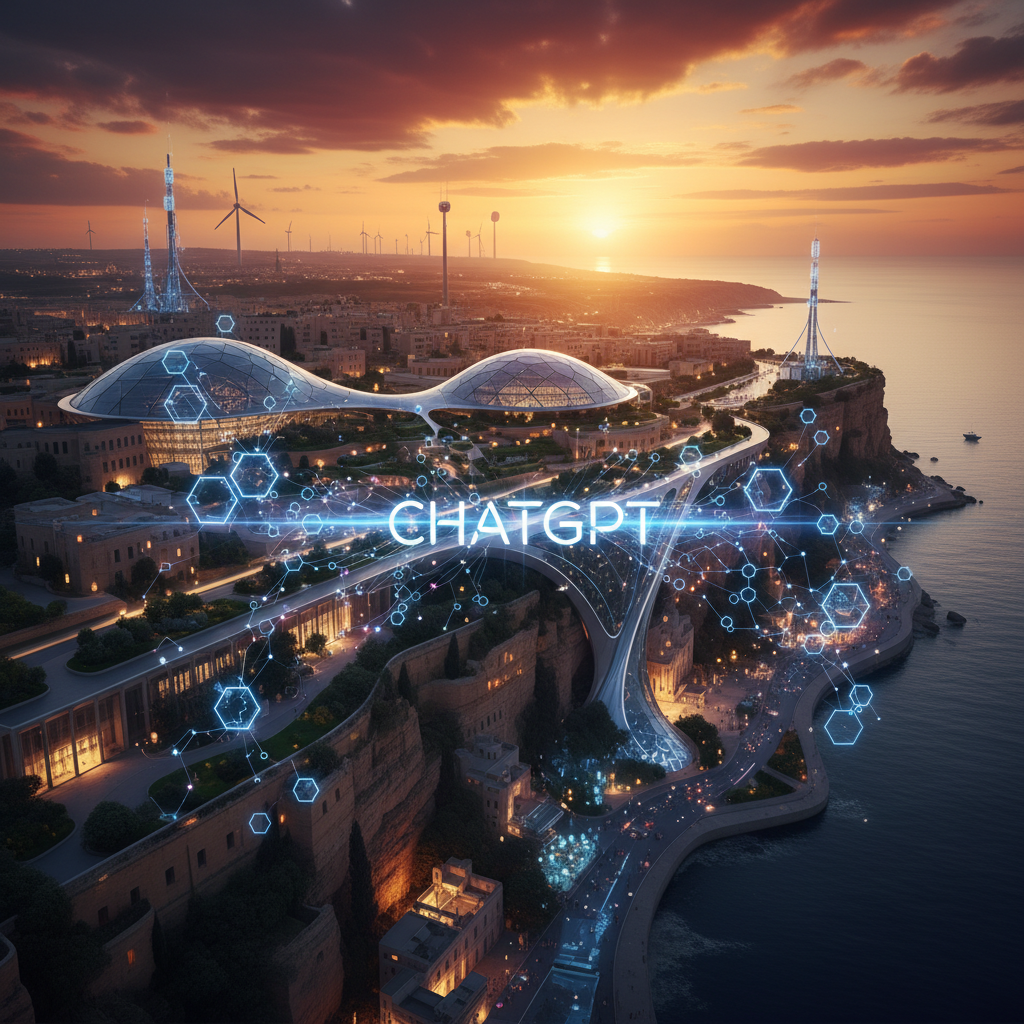
As a systems architect analyzing international tech policy, I have spent the last year tracking how governments are desperately scrambling to adapt to the post-GPT era. Most nations are publishing vague regulatory frameworks and issuing warnings. But this week, a tiny Mediterranean archipelago completely shattered the global paradigm. The Republic of Malta didn’t just regulate AI; they weaponized it for their population. In an unprecedented move, the Maltese government just purchased and distributed ChatGPT Plus enterprise licenses to every single citizen.
The Ultimate National Infrastructure: The Brain Grid
When the news broke over the wires, the implications hit me like a freight train. We traditionally define national infrastructure as highways, power grids, and broadband cables. Malta has just redefined it as cognitive bandwidth. By granting universal access to OpenAI’s most advanced reasoning models, Malta has effectively strapped a supercomputer to the prefrontal cortex of its entire population.
“Providing sovereign access to cutting-edge AI is no longer a luxury; it is the fundamental baseline for economic survival in the 2020s. A nation without universal AI access will soon be as crippled as a nation without electricity.” — University of Malta, National AI Adoption Report, 2026
Let’s look at the raw data and the economic mechanics behind this decision. A comprehensive 2026 projection by Eurostat analyzed the potential GDP impact of universal LLM deployment in small-scale economies. The findings were staggering. By covering the $20 monthly cost for its approximately 530,000 citizens—a microscopic rounding error in a national budget, totaling roughly $127 million annually—Malta is projected to see a massive 45% boost in domestic GDP within exactly 36 months.
Solving the Implementation Chaos
Moving a whole nation onto an AI platform isn’t just about handing out passwords; it requires solving immense logistical and educational chaos. How do you get a 65-year-old baker or a public school teacher to actually leverage a tool designed by Silicon Valley engineers?
Malta’s rollout strategy was ruthlessly efficient. They didn’t just dump the technology on the public; they integrated it seamlessly into the fabric of daily life through localized, structured interfaces:
- Sovereign Data Silos: To combat privacy fears, the government negotiated a custom deployment with OpenAI, ensuring that all citizen prompts and data remain localized within European servers, completely isolated from global training pools.
- Public Sector Integration: Every government portal, from tax filing to healthcare scheduling, now features an agentic bridge. Citizens don’t need to know how to prompt; they simply speak in natural Maltese or English, and the underlying ChatGPT Plus architecture navigates the bureaucratic maze for them in seconds.
- The Education Mandate: Starting in primary schools, the curriculum has been violently overhauled. Rote memorization has been entirely eradicated. The new national metric for student success is “Agentic Fluency”—the ability to direct, critique, and synthesize output from AI models to solve complex, multi-disciplinary problems.
The Domino Effect: Who is Next?
Malta’s aggressive maneuver has sent shockwaves through global tech hubs. I am already seeing the telemetry shift. Other agile, highly digitized nations are scrambling to replicate the model. Singapore and Estonia have immediately convened emergency technology summits, realizing that their competitive advantage is rapidly evaporating against a nation where every startup founder, student, and civil servant has a tireless, genius-level assistant at their disposal.
The brutal reality of 2026 is that AI is not a tool; it is an accelerant. The countries that leave AI adoption to the free market will see massive internal inequality, where only the elite can afford the subscription fees and the computational leverage. The governments that treat AI as a fundamental human utility will achieve an escape velocity that leaves the rest of the world permanently behind. Malta has just fired the starting pistol. The race to build the ultimate cognitive state has begun, and the cost of inaction is economic irrelevance.
#ArtificialIntelligence #Malta #ChatGPTPlus #AIDivide #FutureOfWork #TechPolicy #AIInfrastructure #Innovation #TechNews #GlobalEconomy
Leave a Reply