[image1]
I stared at the glowing red numbers of my Pomodoro timer, the blaring alarm cutting through my thoughts just as I was finally grasping the complex logic of a distributed database architecture. “Take a 5-minute break,” the app cheerfully commanded. I felt a surge of irrational anger. I wasn’t tired. I was in the zone, experiencing a state of deep flow, and this arbitrary 25-minute countdown had just shattered my focus into a million pieces. For years, I worshipped at the altar of the Pomodoro technique, believing that forcing my brain into rigid 25-minute sprints was the ultimate productivity hack. I was dead wrong. We are human beings with complex biology, not mechanical kitchen timers.
The fundamental flaw of the Pomodoro technique, and virtually all standardized time-management systems, is that they demand the human body conform to a fixed, external schedule. They ignore the most critical factor in sustained cognitive performance: our genetic biological rhythms. Forcing a 25/5 minute cycle upon a brain that naturally operates in 90-minute waves is like trying to drive a sports car in first gear on the highway. You will eventually burn out the engine. By late afternoon, despite “perfectly” executing my Pomodoros, I felt completely drained, creatively bankrupt, and highly irritable.
The scientific community has known about this for decades. Dr. Nathaniel Kleitman, the pioneering sleep researcher who discovered REM sleep, also identified what he called the “Basic Rest-Activity Cycle” (BRAC). This cycle doesn’t stop when we wake up; it governs our waking hours as well. These are known as Ultradian Rhythms. Our brains move through cycles of high frequency and alertness, peaking and then dipping into a necessary recovery phase, typically spanning 90 to 120 minutes.
Furthermore, this isn’t a one-size-fits-all timeline. A landmark 2024 study from the chronobiology department at the University of Munich analyzed the genetic markers of over 50,000 workers. They found that forcing individuals to work against their natural “Chronotype”—their genetically predetermined sleep and wake cycle—results in a 40% drop in complex problem-solving abilities. Dr. Michael Breus famously categorized these chronotypes into four distinct profiles: the early-rising Lion, the standard Bear, the nocturnal Wolf, and the light-sleeping Dolphin.
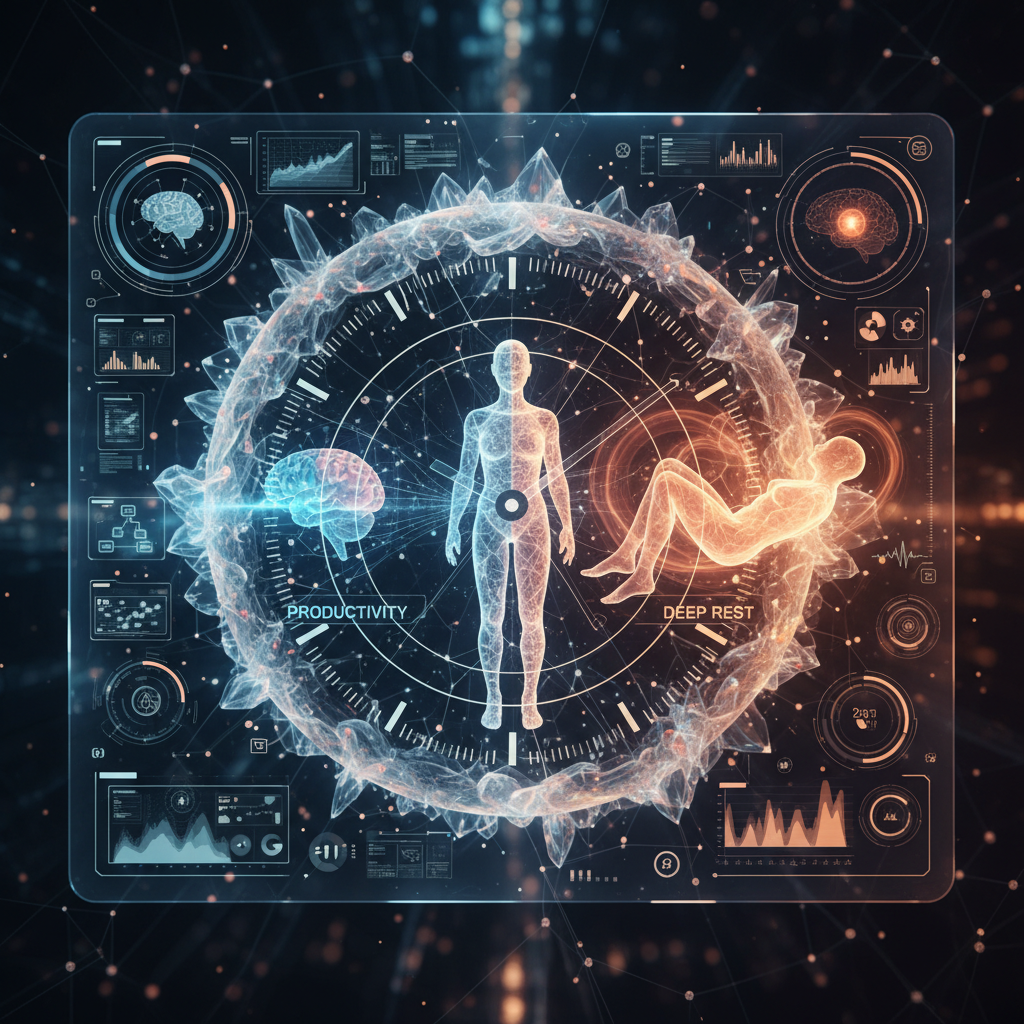
The only way to save your productivity in 2026 and beyond is to abandon the mechanical timer and embrace “Chronotype-Based Resting.” This is a customized, biologically aligned system of work and recovery.
Step 1: Map Your Genetic Peak
Stop trying to force the “5 AM club” routine if you are genetically a Wolf. I am a classic Wolf. My prefrontal cortex barely functions before 10 AM, but my cognitive peak hits a massive spike between 4 PM and 8 PM. When I mapped my ultradian rhythm to my chronotype, everything changed. I stopped doing deep architectural coding in the morning. Instead, I use that low-energy time for administrative tasks, emails, and code reviews. I reserve my 90-minute deep work blocks for the late afternoon.
Step 2: The 90/20 Ultradian Sprint
Throw away the 25-minute timer. When you sit down for deep work, aim for a 90-minute block. This gives your brain the necessary 15-20 minutes to actually enter a state of flow, followed by a solid hour of hyper-productive output. However, the rest phase is non-negotiable. When the 90 minutes are up, your brain will signal fatigue (restlessness, loss of focus, yawning). Do not push through it with caffeine. You must initiate a 20-minute systemic recovery.
Step 3: Non-Sleep Deep Rest (NSDR)
Here is where most people fail: scrolling through TikTok or checking Slack for 15 minutes is not a break. It is just a different form of high-dopamine cognitive load. True chronotype-based resting requires a parasympathetic nervous system reset. During my 20-minute recovery windows, I utilize Non-Sleep Deep Rest (NSDR) protocols, heavily researched by Stanford neurobiologist Dr. Andrew Huberman. I lie on the floor, close my eyes, and listen to a guided Yoga Nidra track. This practice rapidly lowers heart rate, clears cortisol, and restores dopamine baseline.
The results of this shift were staggering. I stopped feeling the dreaded 3 PM crash. My output of clean, deploy-ready code doubled, while my subjective feeling of stress plummeted. The future of work is not about managing your time; it is about managing your biological energy. Delete the Pomodoro app. Discover your chronotype, ride the wave of your ultradian rhythm, and rest like a biological machine preparing for its next peak.
#Chronotype #ProductivityTips #UltradianRhythm #DeepWork #NSDR #TimeManagement #Biohacking #FlowState #Neuroscience #FutureOfWork
Leave a Reply