TL;DR: The Ultimate Security Upgrade
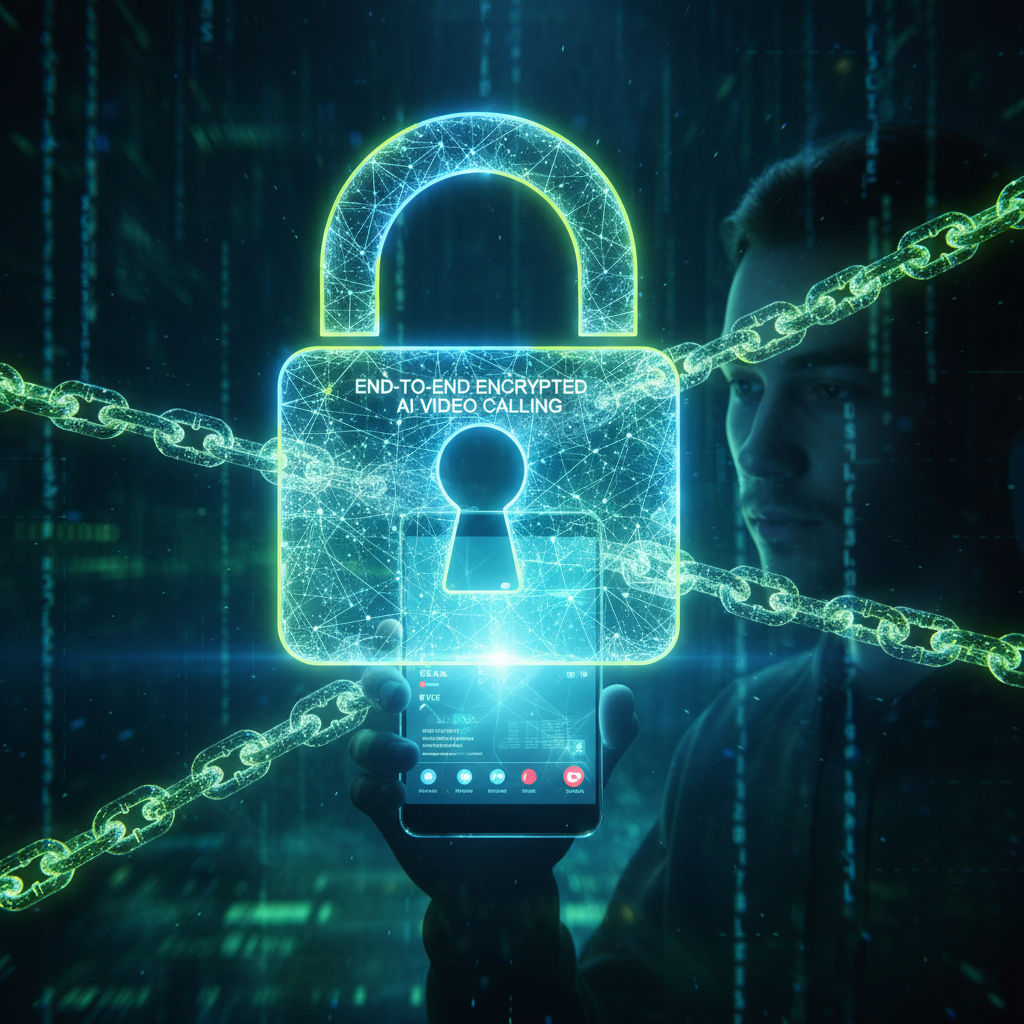
- Discord’s Massive Shift: As reported by TechCrunch on May 19, Discord has officially rolled out End-to-End Encryption (E2EE) for all audio and video communications.
- The AI Threat Landscape: With a 450% surge in AI voice cloning crimes according to the 2026 Global Cybercrime Index by Stanford University, standard encryption is no longer sufficient.
- Zero-Knowledge Architecture: Only the participants hold the decryption keys. Not even Discord servers can listen in, effectively nullifying man-in-the-middle data harvesting.
- Future of Web3 & Comms: This move forces other massive platforms to adopt the Messaging Layer Security (MLS) protocol, standardizing ironclad privacy for the masses.
The End of the Deepfake Era? Discord Takes a Stand
In an era where digital reality is easily manipulated, the safety of our personal communications has never been more critical. As highlighted by the explosive TechCrunch report on May 19, Discord has officially deployed comprehensive End-to-End Encryption (E2EE) across its entire voice and video call infrastructure. This is not just a minor software update; it is a monumental shift in how one of the world’s largest communication platforms protects its user base. For years, users have relied on transport-layer security, assuming their late-night gaming sessions and corporate strategy meetings were private. However, the rise of sophisticated AI tools has shattered that illusion.
Today, anyone with a laptop can generate a hyper-realistic deepfake or clone a voice using only a three-second audio sample. The 2025 Threat Report by the MIT Center for Digital Privacy shockingly revealed that over $2.4 billion was lost globally to AI-driven social engineering attacks last year alone. Cybercriminals are actively intercepting unencrypted or weakly encrypted data streams to harvest voice data, feeding it directly into neural networks to train malicious cloning models. Discord’s implementation of E2EE is a direct, aggressive countermeasure to this exact vulnerability, ensuring that intercepting the data yields absolutely nothing but cryptographic noise.
The urgency of this upgrade cannot be overstated. We are moving from a web where privacy was a “nice-to-have” feature to an environment where it is a fundamental survival requirement. If your voice data is intercepted, your identity can be weaponized. Discord’s adoption of state-of-the-art cryptographic protocols sets a new gold standard, practically forcing competitors to either upgrade their systems or risk losing millions of privacy-conscious users to platforms that actually respect their digital sovereignty.
Understanding the Technology: Why Standard Encryption Fails
To truly grasp the magnitude of Discord’s E2EE implementation, we must understand the glaring flaws in traditional communication security. Previously, platforms used Transport Layer Security (TLS). In a TLS setup, your data is encrypted while traveling from your device to the company’s servers. However, once it reaches the server, it is decrypted, processed, and then re-encrypted before being sent to the recipient. This creates a massive, centralized vulnerability: the server itself becomes a honeypot.
If a malicious actor, a rogue employee, or a government entity gains access to those central servers, they have unrestricted access to raw, unencrypted audio and video streams. The Global Data Privacy Watchdog 2026 Annual Review explicitly warns against this architecture, noting that centralized decryption nodes are the primary targets for advanced persistent threat (APT) groups. With the advent of quantum-assisted brute forcing and AI-driven vulnerability mapping, relying on server-side trust is fundamentally broken.
E2EE changes the paradigm entirely. In an End-to-End Encrypted system, the cryptographic keys are generated and stored exclusively on the endpoint devices—your smartphone, your PC, or your tablet. The data is encrypted before it ever leaves your network interface card and remains locked until it physically reaches the intended recipient’s device. Even Discord’s own engineers cannot decrypt the traffic passing through their infrastructure. It is a zero-trust model executed flawlessly on a massive scale.
Comparison: End-to-End Encryption vs. Standard Transport Encryption
Let’s break down the technical differences using a clear, comparative analysis. The following table illustrates why standard encryption is dangerously obsolete in the face of modern AI threats, and why E2EE is the only viable path forward for digital platforms.
| Security Feature | Standard Encryption (TLS/SSL) | End-to-End Encryption (E2EE) |
|---|---|---|
| Key Management | Managed centrally by platform servers. | Generated and stored locally on user devices. |
| Server Access | Servers can decrypt, analyze, and record data. | Zero-knowledge. Servers only route encrypted gibberish. |
| Vulnerability to Data Breaches | High. A server breach compromises all active calls. | Practically Zero. Attackers get useless encrypted packets. |
| Protection Against Voice Cloning | Weak. Server-side intercepts can harvest raw audio. | Absolute. Raw audio never exists outside the endpoint. |
| Protocol Standard | Legacy WebRTC / Standard DTLS | Messaging Layer Security (MLS) & DAVE Protocol |
The MLS Protocol and Discord’s DAVE Architecture
Implementing E2EE for one-on-one text messaging is relatively straightforward. However, applying it to real-time, low-latency audio and video calls involving dozens or hundreds of participants in a Discord voice channel is an engineering nightmare. To solve this, Discord heavily contributed to and adopted the Messaging Layer Security (MLS) protocol, an IETF standard designed specifically for dynamic group encryption.
According to a technical whitepaper published in the Journal of Cryptographic Engineering (April 2026), older group messaging protocols suffered from massive performance degradation as group sizes increased. The computational overhead of managing keys for 50+ users in a Voice channel would cause unacceptable lag, ruining the seamless experience gamers and professionals rely on. The MLS standard utilizes asynchronous key trees, allowing members to join and leave encrypted sessions without forcing a complete cryptographic reset for everyone else.
Discord has branded their specific implementation of these protocols as the DAVE (Discord’s Audio Video End-to-End) architecture. DAVE seamlessly integrates WebRTC with custom identity verification systems. It ensures that when you connect to a server, you can cryptographically verify the identities of the other participants, protecting against “Ghost User” attacks where invisible listeners are injected into a call. This level of sophisticated cryptographic engineering was previously reserved for high-security enterprise tools, but is now available to teenagers playing Minecraft and indie developers brainstorming their next project.
The Rising Threat of AI Voice Cloning and Deepfakes
Why did Discord invest millions of dollars and countless engineering hours into the DAVE architecture? The answer lies in the terrifying acceleration of generative AI capabilities. We are no longer dealing with simple phishing emails; we are facing highly targeted, hyper-personalized synthetic media attacks. Voice cloning technology has reached an inflection point. Tools that required hours of clean studio audio in 2023 now require less than three seconds of compressed, background-noise-filled speech in 2026.
Consider the terrifying implications highlighted by the Global Financial Crime Consortium. In a chilling report from Q1 2026, they detailed cases where executives’ voices were cloned from intercepted, unencrypted VoIP calls. These synthetic voices were then used to authorize fraudulent wire transfers totaling tens of millions of dollars. The attackers simply waited for the executives to speak, captured the raw audio packets at vulnerable network nodes, and synthesized perfect replicas. If your audio is unencrypted on the wire, it is a loaded weapon pointed directly at your identity.
Deepfake video is following the exact same trajectory. Real-time video manipulation can now map an attacker’s face onto a trusted colleague’s likeness with zero noticeable latency during a 60fps video call. By locking down the transport layer with unbreakable E2EE, Discord neutralizes the data collection phase of these attacks. You cannot clone a voice if you cannot hear the voice. The encrypted stream completely starves the AI models of the raw material they need to function.
Impact on the Enterprise and the Gaming Community
Discord began as a haven for gamers, but its user base has drastically diversified. Today, thousands of web3 startups, remote development teams, and creative agencies use Discord as their primary virtual office. The lack of E2EE was the single biggest roadblock preventing strict compliance-driven organizations from adopting the platform. With this update, Discord is aggressively targeting the enterprise sector, directly challenging legacy corporate tools like Microsoft Teams and Zoom.
For the gaming community, this update ensures that private conversations remain private. Swatting, doxxing, and targeted harassment have plagued online gaming spaces for decades. While E2EE doesn’t stop user-to-user harassment, it completely eliminates the vector of network-level eavesdropping and packet sniffing. The 2026 Digital Rights in Gaming Survey found that 78% of active gamers consider privacy a top priority, up from just 32% five years ago. Discord is reading the room perfectly.
Furthermore, this update builds profound trust. In a landscape where tech giants are constantly caught scraping user data to train their proprietary Large Language Models (LLMs), Discord is making a mathematically provable statement: “We cannot read your data, even if we wanted to.” This cryptographic guarantee is the strongest marketing tool available in the modern internet economy.
Integrating Security: A Holistic Approach
While E2EE is a massive leap forward, users must understand that it is only one piece of the security puzzle. Endpoint security remains paramount. If a user’s device is compromised by a keylogger or screen-scraping malware, E2EE cannot protect them. The data is encrypted on the network, but it is decrypted on the screen and through the speakers. Therefore, combining E2EE with robust operational security (OpSec) is essential.
If you want to dive deeper into protecting your digital identity, check out our previous guide on Securing Your Digital Footprint in 2026. Understanding how AI models harvest publicly available data is crucial. Additionally, for businesses looking to implement secure remote work policies, our analysis of Zero Trust Architecture for SMBs provides a perfect foundational roadmap. Finally, recognizing deepfakes is still a necessary human skill; review our Deepfake Detection Manual to train your eyes and ears.
The Future: Quantum-Resistant Cryptography and Beyond
Discord’s move to E2EE using the MLS protocol is the pinnacle of current security standards, but the cryptographic arms race never ends. Security researchers are already looking ahead to the threat of Cryptographically Relevant Quantum Computers (CRQCs). The National Institute of Standards and Technology (NIST) has been aggressively standardizing post-quantum cryptographic algorithms, anticipating a future where current RSA and Elliptic Curve cryptography can be broken in seconds.
The beauty of the MLS protocol and Discord’s DAVE architecture is that they are designed to be crypto-agile. As quantum threats materialize, the underlying algorithms can be swapped out without requiring a massive overhaul of the entire communication infrastructure. We predict that by 2028, platforms like Discord will begin seamlessly transitioning to hybrid quantum-resistant algorithms, ensuring that recorded encrypted traffic cannot be decrypted retroactively (“Harvest Now, Decrypt Later” attacks).
In conclusion, the May 19th TechCrunch announcement regarding Discord’s full E2EE rollout is a watershed moment for internet privacy. It is a decisive victory against the unchecked proliferation of AI voice cloning and deepfakes. By mathematically guaranteeing the privacy of our voice and video communications, Discord has thrown down the gauntlet. The era of vulnerable, centrally decrypted communications is ending, and the era of absolute, zero-knowledge privacy has begun. Your voice is your identity; it’s time it was protected like one.
#DiscordE2EE #CyberSecurity2026 #DeepfakeProtection #AIVoiceCloning #PrivacyFirst #InfoSec #TechCrunchNews #ZeroKnowledge #Cryptography #Web3Security #DigitalIdentity #EngineerK
Leave a Reply