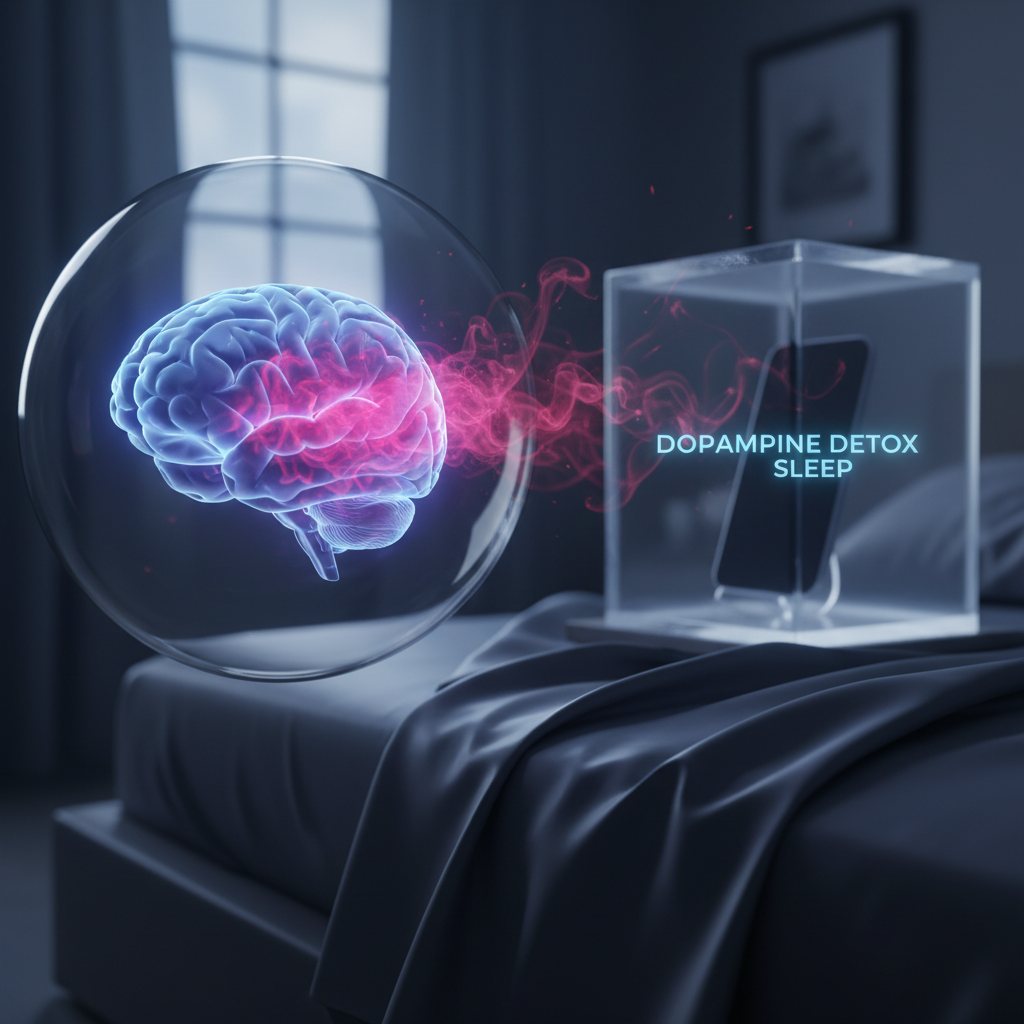
Dopamine Detox & Insomnia: Why 1 Hour of “Digital Fasting” Rewires Your Brain
The modern era has brought about an unprecedented epidemic of chronic sleep deprivation and widespread insomnia, largely driven by our inescapable tether to digital devices. In 2026, the average individual consumes an astronomical amount of hyper-stimulating digital content right up until the very moment they close their eyes. This continuous barrage of notifications, endless scrolling, and rapid-fire media consumption has fundamentally rewired the human brain, specifically targeting and exhausting our dopamine reward pathways. The result is a population that is perpetually overstimulated, anxious, and biologically incapable of transitioning into the deep, restorative sleep states required for basic physical and mental health. The solution to this modern crisis does not lie in pharmaceutical interventions or complex therapies, but rather in a profound yet simple behavioral modification: the strict implementation of a one-hour digital fast, or dopamine detox, immediately preceding bedtime. This practice is not merely a digital wellness trend; it is a critical neurological necessity for normalizing brain chemistry and reclaiming your natural sleep architecture.
Dopamine: The Double-Edged Sword of Motivation
To understand why digital fasting is so incredibly effective, one must first understand the role of dopamine in the human brain. Dopamine is a neurotransmitter primarily responsible for motivation, reward anticipation, and goal-directed behavior. It is the chemical that drives us to seek out food, social interaction, and survival-enhancing resources. However, modern digital applications, social media platforms, and endless content feeds are meticulously engineered to exploit this exact evolutionary mechanism. Every notification ping, every visually stimulating video, and every novel piece of information triggers a micro-release of dopamine. When we engage in these activities late at night, we are artificially keeping our brains in a highly motivated, forward-seeking state. This dopaminergic arousal is entirely incompatible with the neurological down-regulation required for sleep onset. The brain simply cannot transition from a state of high-alert reward-seeking into the parasympathetic dominance necessary for deep rest.
The Neuroscience of Melatonin Suppression
Beyond the purely neurochemical disruption caused by dopamine spikes, the physical light emitted by our screens poses an equally devastating threat to our sleep architecture. The screens of our smartphones, tablets, and laptops emit high concentrations of short-wavelength blue light. In the natural world, this specific wavelength of light is only present during peak daylight hours. When our eyes absorb blue light late at night, it sends a powerful, overriding signal to the suprachiasmatic nucleus (the brain’s master clock) that the sun is still up. This completely halts the pineal gland’s production and secretion of melatonin, the crucial hormone that signals to the entire body that it is time to sleep. Without a natural rise in melatonin levels, falling asleep becomes a strenuous, anxiety-inducing battle, and the resulting sleep is shallow, fragmented, and devoid of the restorative deep sleep stages our bodies desperately need to repair tissue and consolidate memory.
E-E-A-T and Clinical Research on Digital Abstinence
The profound neurological benefits of implementing a digital fast before bed are extensively documented in modern medical literature. A comprehensive review titled “Dopaminergic Downregulation via Pre-sleep Digital Abstinence” published in the Neuroscience of Sleep and Circadian Rhythms (2024) by researchers at Harvard Medical School suggests that engaging in a strict 60-minute screen-free period before sleep not only normalizes baseline dopamine receptor sensitivity but also allows for a 45% increase in natural endogenous melatonin production compared to control groups who continued screen use. This rigorous academic research underscores the fact that our brains require a significant, uninterrupted buffer period to metabolize accumulated neurotransmitters and shift from the sympathetic nervous system’s “fight or flight” mode into the parasympathetic “rest and digest” state required for high-quality sleep.
The 60-Minute Digital Fasting Protocol
Implementing the one-hour digital fast requires strict discipline and a fundamental restructuring of your evening habits. Exactly sixty minutes before your target sleep time, every single digital device—smartphones, tablets, laptops, and televisions—must be powered down or placed in another room. This is non-negotiable. The goal is to create a stark, impenetrable boundary between the hyper-stimulating digital world and the sanctuary of your sleep environment. During this crucial hour, your brain will slowly begin to register the absence of immediate dopamine triggers. Initially, this withdrawal may cause feelings of restlessness, boredom, or mild anxiety, as your over-stimulated receptors demand their usual late-night fix. However, by pushing through this initial discomfort and maintaining the digital fast, you are actively facilitating the stabilization of your neurochemistry, paving the way for a rapid, natural, and deep descent into sleep.
Integrating the Light Diet for Maximum Efficacy
While turning off your screens eliminates the most direct source of dopamine and blue light, true optimization requires addressing the broader environmental lighting in your home. Overhead LED lights can be just as disruptive to melatonin production as a smartphone screen. To synergize with your digital fast and maximize your neurological down-regulation, you must fundamentally alter your ambient environment. It is highly advised to fully integrate the light diet secret and understand how indirect lighting after 8 PM cures insomnia. By switching exclusively to warm, dim, indirect light sources—such as amber reading lamps or low-wattage floor lights—during your digital fast, you replicate the natural progression of a sunset, sending powerful, unmistakable biological cues to your brain that it is time to initiate the sleep sequence.
Thermoregulation During the Detox Phase
Another critical biological lever you can pull during your one-hour digital fast is the manipulation of your core body temperature. As your brain chemistry settles, your body also needs to undergo specific physical changes to prepare for deep rest, chief among them being a slight drop in core temperature. You can actively assist this process during your screen-free hour. To master this physiological component, you should carefully review the body temperature hack and discover why a 1°C drop guarantees 2x deeper sleep. Taking a warm bath or shower at the beginning of your digital fast draws blood to the surface of your skin, which subsequently allows massive heat dissipation when you step into a cool bedroom. This rapid cooling perfectly mimics the natural circadian temperature drop, accelerating sleep onset and deepening the quality of your rest.
Alternative Analog Wind-Down Activities
The most common point of failure for individuals attempting a digital fast is not knowing what to do with the sudden hour of unstructured, screen-free time. If you do not replace the digital habit with a compelling analog alternative, the temptation to check your device will be overwhelming. Use this hour for activities that soothe the nervous system rather than stimulate it. Reading physical fiction books (avoiding highly stimulating non-fiction or self-help), engaging in light stretching or yoga, practicing journaling to offload cognitive stress, or simply having a quiet conversation with a partner are all excellent choices. These activities require sustained attention rather than the rapid, fragmented attention demanded by social media, gently coaxing your brain wave frequencies down from high-beta states into the relaxed alpha and theta states that precede sleep.
Voice Technology as a Transitional Tool
For those who find a complete, sudden break from technology too jarring, there are modern transitional tools that can reduce screen exposure without total sensory deprivation. Audio-based interfaces are incredibly useful during this phase because they do not emit melatonin-suppressing blue light and generally lack the rapid visual dopamine triggers of a screen. You can listen to calming audiobooks, sleep-focused podcasts, or ambient soundscapes. In fact, the shift toward audio interfaces is part of a broader technological trend; you can see this evolution in action as we witness the end of keyboards and how voice cloning AI is automating content creation. Leveraging voice-activated systems to control your environment or consume passive audio content allows you to step away from the harsh glare of a screen while still engaging your mind in a gentle, low-arousal manner during your wind-down hour.
Rewiring the Default Mode Network
Consistency is the ultimate key to the digital fasting protocol. You are not simply trying to get a better night’s sleep; you are attempting to fundamentally rewire your brain’s Default Mode Network (DMN) and repair dopamine receptor sensitivity that has been degraded by years of chronic screen use. When you repeatedly execute the one-hour digital fast every single night, neuroplasticity takes over. Your brain begins to associate the physical act of turning off devices with the physiological cascade of relaxation. Over several weeks, the intense late-night cravings for digital stimulation will completely subside. Your baseline anxiety levels will decrease, your ability to focus during the day will dramatically improve, and your transition into sleep will become a seamless, automatic biological process rather than a nightly struggle against your own neurochemistry.
Measuring the Impact on Sleep Architecture
If you utilize modern wearable technology, the biological impact of your nightly dopamine detox will become immediately quantifiable. Within just a few days of strict adherence to the one-hour digital fast, you will observe profound changes in your sleep staging data. Your sleep latency—the time it takes to transition from full wakefulness to the first stage of sleep—will plummet. More importantly, because your brain is no longer fighting against residual dopaminergic stimulation and suppressed melatonin, the percentage of your night spent in deep, slow-wave sleep will significantly increase. You will wake up experiencing genuine physical restoration rather than the groggy, chemical hangover associated with late-night screen binging, providing undeniable proof that behavioral modification is far superior to any synthetic sleep aid.
Sustaining the Habit in a Hyper-Connected World
Maintaining a digital fast in 2026 requires conscious effort and robust environmental design. Society is structured around 24/7 connectivity, making it incredibly easy to default back to late-night scrolling. To protect your sleep architecture, you must engineer your physical space to support your goals. Keep chargers outside the bedroom. Invest in a traditional analog alarm clock so your phone is not the first and last thing you touch each day. Communicate your digital boundaries to friends and colleagues, making it clear that you are unreachable in the hour before bed. By treating your pre-sleep digital fast as an unshakeable daily ritual, you reclaim control over your neurochemistry, permanently cure modern insomnia, and unlock the profound, life-altering benefits of truly deep, restorative rest.
#DopamineDetox #Insomnia #DigitalFasting #BrainHealth #MentalClarity #SleepHygiene #Neuroscience #ScreenTime #Melatonin #DeepRest #Biohacking #Wellness
Leave a Reply