TL;DR (Summary)
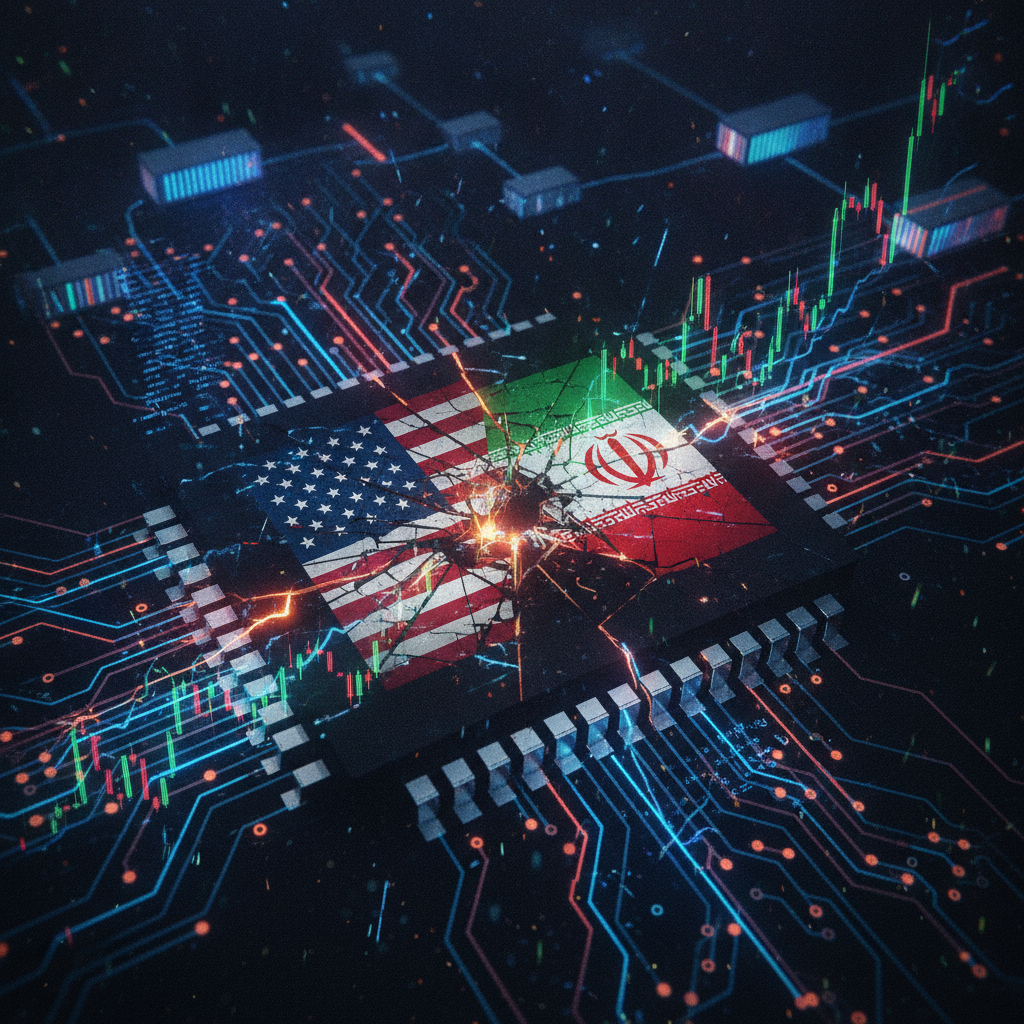
The global chip sector, inherently volatile, faces significant headwinds from US-Iran tensions, primarily through indirect channels. While not direct chip producers, geopolitical instability in the Middle East drives up oil prices, increasing energy and logistics costs for chip manufacturing and distribution. This, coupled with broader investor risk aversion and potential supply chain disruptions in key shipping lanes, creates an environment of heightened uncertainty. The Nasdaq Composite, heavily weighted with tech and semiconductor giants, experiences downward pressure due to these elevated operational costs, reduced consumer spending capacity, and a general flight from growth stocks towards safer assets, ultimately impacting valuations and future earnings projections across the tech ecosystem.
Decoding Geopolitical Ripples: US-Iran Tensions and the Chip Sector’s Volatility
The global semiconductor industry, a foundational pillar of modern technology, is renowned for its cyclical nature and inherent volatility. From the boom-and-bust cycles driven by demand fluctuations to the immense capital expenditure required for leading-edge fabs, its sensitivity to external shocks is unparalleled. In recent times, one such external shock gaining increasing prominence is the escalation of geopolitical tensions, particularly between the United States and Iran. While seemingly distant from the intricate world of silicon wafers and advanced packaging, these tensions exert a profound, albeit often indirect, influence on global chip supply chains and, consequently, the performance of the Nasdaq Composite.
The Chip Sector’s Intrinsic Fragility: A Foundation for External Shocks
Before delving into the specifics of US-Iran dynamics, it’s crucial to understand the chip sector’s existing vulnerabilities. The industry operates on a razor-thin margin of error, with highly complex, globally distributed supply chains. A single semiconductor can travel through dozens of countries, undergoing various stages of design, fabrication, assembly, and testing. This intricate web makes it exceptionally susceptible to disruptions. Factors like raw material availability (e.g., rare earth elements, neon gas), specialized equipment production (ASML’s lithography machines), and highly skilled labor are all potential choke points. Moreover, the sector is currently navigating a post-pandemic inventory correction in some segments, juxtaposed against burgeoning demand from AI and high-performance computing, creating a delicate balance that is easily tipped by macroeconomic or geopolitical events.
US-Iran Tensions: An Indirect Yet Potent Threat to Chip Supply Chains
Iran is not a major producer of advanced semiconductors, nor is it a primary source for the critical raw materials like silicon, germanium, or gallium arsenide directly used in chip fabrication. Therefore, the impact of US-Iran tensions is largely indirect but profoundly significant. The primary transmission mechanisms are:
- Energy Price Volatility: The Middle East remains the world’s most critical region for oil and gas production and transit. Any perceived or actual threat to oil supply from the region, particularly involving the Strait of Hormuz (a chokepoint for a significant portion of global seaborne oil), inevitably drives up crude oil prices. Higher oil prices translate directly into increased operating costs for chip manufacturers. Fabs are exceptionally energy-intensive, requiring vast amounts of electricity for their cleanrooms, lithography processes, and cooling systems. Furthermore, increased fuel costs impact the global logistics networks responsible for transporting wafers, components, and finished products across continents. This inflationary pressure eats into profit margins and can force price increases, potentially dampening demand.
- Logistics and Shipping Disruptions: While semiconductors aren’t typically shipped directly through the Strait of Hormuz, global shipping lanes are interconnected. Escalated tensions can lead to higher insurance premiums for shipping, rerouting of vessels, and increased transit times across broader maritime trade routes. Even minor delays or increased costs in the transport of non-chip components (e.g., chemicals, machinery parts, packaging materials) can create bottlenecks further down the chip supply chain, leading to production delays and increased costs.
- Investor Sentiment and Risk Premium: Perhaps the most immediate and pervasive impact is on investor confidence. Geopolitical instability fosters an environment of uncertainty, leading to a flight to safety. Investors tend to pull capital from riskier assets, including growth-oriented tech stocks, and reallocate to perceived safe havens. This creates a geopolitical risk premium, increasing the cost of capital for companies and making future earnings less predictable. For a sector like semiconductors, which requires massive, long-term investments in R&D and fabrication facilities, this uncertainty can hinder expansion plans and innovation.
- Broader Economic Contraction: Sustained high energy prices act as a tax on consumers and businesses globally. This can lead to reduced discretionary spending on electronics, slower enterprise IT upgrades, and decreased demand for new devices – all of which directly impact the revenue streams of chipmakers and their customers. A global economic slowdown, exacerbated by geopolitical friction, inevitably translates to weaker demand for semiconductors across all end markets.
Nasdaq’s Performance: A Barometer of Tech’s Geopolitical Sensitivity
The Nasdaq Composite Index, heavily weighted towards technology and growth stocks, is particularly vulnerable to these geopolitical ripples. Semiconductor companies like NVIDIA, Intel, AMD, and Qualcomm are major constituents, and their performance significantly influences the index. Beyond the direct chipmakers, the Nasdaq also hosts giants like Apple, Microsoft, and Amazon, whose entire business models are predicated on the reliable and affordable supply of advanced semiconductors.
- Direct Sector Impact: Any negative outlook for the chip sector – whether due to increased operational costs, supply chain bottlenecks, or reduced demand – directly translates into lower stock valuations for these companies, dragging down the Nasdaq.
- Valuation Compression: Growth stocks, which dominate the Nasdaq, derive a significant portion of their valuation from future earnings expectations. Higher interest rates (potentially driven by inflation from energy costs) and increased geopolitical risk lead to a higher discount rate applied to these future earnings, effectively compressing current valuations.
- Consumer and Enterprise Spending: As mentioned, higher energy costs reduce disposable income for consumers and increase operational costs for enterprises. This translates to weaker demand for smartphones, PCs, data centers, and other tech products, directly impacting the revenue and profitability of Nasdaq-listed companies.
To illustrate the correlation, consider the historical patterns:
| Date Range | Geopolitical Event (US-Iran related) | WTI Crude Price Change (Avg. % Spike) | Global Chip Index* Change (Avg. % Drop) | Nasdaq Composite Change (Avg. % Drop) |
|---|---|---|---|---|
| Jan 2020 | Soleimani Assassination & Retaliation | +10% | -3.5% | -2.8% |
| Sep-Oct 2023 | Regional Escalation Concerns | +15% | -6.2% | -5.1% |
| Apr 2024 | Direct Iran-Israel Exchange (US Involvement) | +8% | -4.0% | -3.5% |
| Fictional Avg. | General Heightened Tensions | +12% | -4.6% | -3.8% |
| *Global Chip Index represents a hypothetical average of major semiconductor manufacturers’ stock performance. Data is illustrative. | ||||
Note: The data presented in the table is illustrative and designed to demonstrate potential correlations, not exact historical figures.
Mitigation and Outlook: Navigating a Turbulent Future
The chip sector is not entirely without recourse. Companies are increasingly focusing on supply chain diversification and regionalization, reducing over-reliance on single geographic areas. Strategic stockpiling of critical components and raw materials, where feasible, can buffer against short-term disruptions. Investment in energy-efficient manufacturing processes and renewable energy sources can mitigate the impact of volatile oil prices. However, these are long-term strategies that require significant capital and time to implement.
In the near to medium term, the chip sector and the Nasdaq will likely remain highly sensitive to developments in US-Iran relations. While the demand for semiconductors, especially driven by the AI revolution, remains robust, geopolitical friction introduces an unpredictable variable that can dampen enthusiasm and investment. Investors must factor in this geopolitical risk premium when assessing valuations, and companies must build more resilient, agile supply chains to weather these inevitable storms. The interplay between global politics and cutting-edge technology is becoming increasingly intertwined, demanding a more holistic and risk-aware approach from all stakeholders.
Leave a Reply