TL;DR (Summary)
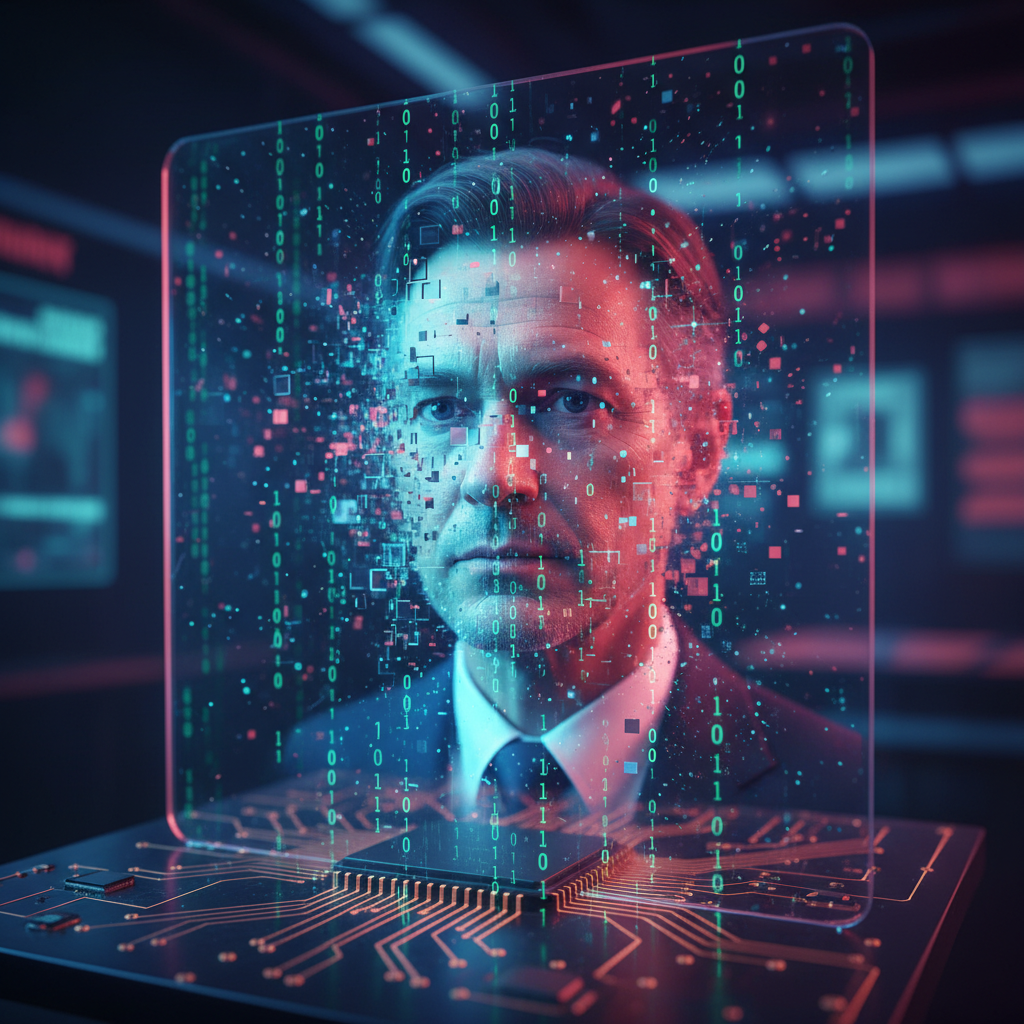
The 2026 local elections are a prime target for hyper-realistic AI deepfakes, which have evolved beyond simple face-swaps into seamless audio-visual manipulations. These attacks represent a form of asymmetric informational warfare, exploiting lower media scrutiny and localized social networks to spread potent disinformation. The defense is a multi-layered strategy combining AI-powered detection tools and content provenance standards (like C2PA), a massive public push for critical media literacy (the “human firewall”), and the establishment of rapid-response fact-checking systems capable of debunking malicious content within minutes, not days. The 2026 cycle will be a critical litmus test for our democratic resilience against this sophisticated technological threat.
The New Battlefield: From Clumsy Fakes to Political Reality-Bending
The term ‘deepfake’ often conjures images of amusing but obviously fake celebrity face-swaps from half a decade ago. That perception is now dangerously obsolete. We have crossed a technological Rubicon. The convergence of advanced Generative Adversarial Networks (GANs), Diffusion Models, and few-shot voice cloning means creating a video of a political candidate saying or doing something entirely fabricated is no longer the domain of sophisticated state actors. It can be done with consumer-grade hardware and open-source software. This isn’t just an evolution; it’s a paradigm shift in the nature of disinformation.
By 2026, we won’t be dealing with slightly “off” videos that can be debunked by looking at the eyes or blurry edges. We will face real-time, lip-synced, emotionally resonant deepfakes with cloned voices that are indistinguishable from the real person to the human ear. The primary target won’t necessarily be the presidential election, which receives immense media scrutiny. The true battleground will be the thousands of local elections—for mayor, for city council, for school board. These contests are the soft underbelly of our democracy, characterized by lower information environments and a higher reliance on community social media, making them fertile ground for manipulation.
Why Local Elections Are the Perfect Target
Consider the attack surface. A national candidate has a massive press corps and dedicated fact-checking teams monitoring their every mention. A candidate for county supervisor does not. A deepfake video released 48 hours before a local election—showing the candidate confessing to a non-existent scandal or endorsing a wildly unpopular policy—can spread through local Facebook groups, WhatsApp chats, and community forums like wildfire. The lie travels halfway around the world before the truth can get its boots on. By the time the candidate can issue a denial, the damage is done. The seed of doubt has been planted in thousands of voters’ minds, potentially swinging a close election. This is asymmetric warfare: low cost to the attacker, devastatingly high cost to the target and the democratic process itself.
Anatomy of a 2026 Deepfake Attack Vector
A sophisticated campaign to manipulate a local election, such as the 2026 지방선거 (local elections) in South Korea or similar municipal races in the US, would follow a predictable but effective playbook. First, open-source intelligence gathering scrapes hours of video and audio of the target candidate from YouTube, local news clips, and campaign speeches. Second, a voice model is trained, capable of replicating the candidate’s exact cadence, tone, and accent. Third, a Large Language Model (LLM) generates a script designed for maximum emotional impact and believability. Finally, the deepfake video is generated and strategically seeded into semi-closed social networks where it can incubate and gain credibility before being unleashed onto wider platforms. The speed and scale of this process are what make it so dangerous.
| Metric | 2022 Midterms | 2026 Local Elections (Projection) |
|---|---|---|
| Creation Time (1-min clip) | 12-24 hours (Expert) | Under 30 minutes (Prosumer) |
| Realism Score (1-10) | 6.5 (Noticeable artifacts) | 9.5 (Indistinguishable by eye/ear) |
| Detection Difficulty (AI) | Moderate (Signature-based) | Extremely High (Requires provenance data) |
| Distribution Speed (to 1M views) | 6-8 hours | Under 1 hour |
The Defensive Front: A Multi-Layered Shield
Surrendering to this threat is not an option. The defense requires a robust, three-layered strategy—a “defense in depth” for our information ecosystem.
Layer 1: The Technological Arms Race
We must fight fire with fire. This means investing heavily in AI-powered detection systems that go beyond looking for visual artifacts. These new systems analyze subtle inconsistencies in physics, lighting, and biological signals (like heart rate reflected in micro-expressions) that generative models struggle to replicate perfectly. More importantly, we must champion a standard for content provenance. Initiatives like the C2PA (Coalition for Content Provenance and Authenticity) aim to create a verifiable “birth certificate” for digital content, cryptographically signing images and videos at the point of capture. This allows news outlets and platforms to instantly verify if a piece of media has been manipulated, creating a powerful bulwark against fakes.
Layer 2: The Human Firewall
Technology alone will never be a silver bullet. The most critical line of defense is a well-informed and skeptical citizenry. We need a national, and indeed global, commitment to advanced media literacy. This isn’t just about teaching kids not to believe everything they see online. It’s about instilling critical thinking frameworks like the S.I.F.T. method: Stop. Investigate the source. Find better coverage. Trace claims to the original context. A population trained to pause before sharing, to question emotionally charged content, and to seek out trusted sources is far more resilient to manipulation than one that passively consumes information.
Layer 3: Rapid Response Fact-Checking
In the context of an election, speed is everything. The old model of a weekly fact-checking column is obsolete. We need 24/7, rapid-response “digital fire stations”—collaborations between election officials, major news organizations, and platform trust-and-safety teams. When a malicious deepfake is detected, this unit must be able to debunk it, disseminate the truth, and coordinate with platforms to label or remove the content within the “golden hour”—before it reaches viral escape velocity. This requires pre-established protocols and a commitment to collaboration over competition.
The 2026 Litmus Test for Democracy
The 2026 election cycle will be a crucible. It will test the strength of our technological defenses, the effectiveness of our educational initiatives, and the resolve of our democratic institutions. The threat of AI-driven disinformation is not a distant, hypothetical problem; it is an imminent danger. The battle to secure the integrity of our elections is not just about technology; it’s about reinforcing the very foundations of shared reality and trust upon which democracy depends. Success will require a whole-of-society effort, starting now. We are in an arms race for the truth, and the clock is ticking.
Leave a Reply