TL;DR (Summary)
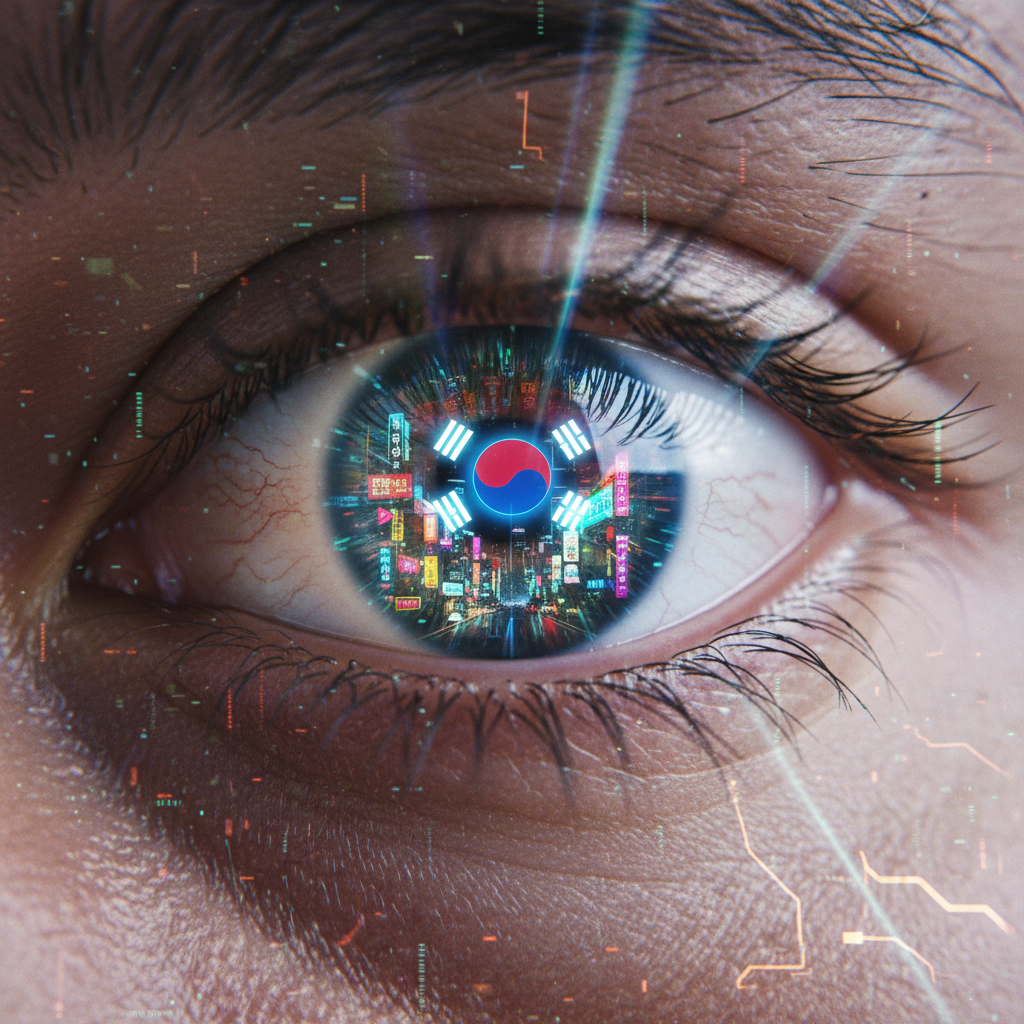
South Korea’s hyper-connected society, combined with its deeply polarized political landscape, creates a perfect storm for AI-driven deepfake disinformation ahead of the 2026 local elections. The increasing sophistication and accessibility of generative AI mean that highly convincing fake videos and audio can be mass-produced to sway public opinion, particularly in tight races. This isn’t a future threat; it’s an imminent crisis that requires a multi-pronged defense involving rapid technological detection, stronger regulations, and a nationwide media literacy campaign to protect the integrity of the democratic process.
The Digital Battlefield: Why South Korea is Ground Zero
South Korea is not just a technologically advanced nation; it is a fully digitalized society. With world-leading internet speeds and near-ubiquitous smartphone penetration, information—and more critically, disinformation—propagates at an unprecedented velocity. Platforms like KakaoTalk, Naver Band, and YouTube are not merely communication tools; they are the primary arenas for political discourse, especially among targeted demographics. It is within this high-speed, high-stakes environment that the 2026 local elections will be contested, and the most potent new weapon is the AI-generated deepfake.
Unlike the clumsy, easily-spotted fakes of the past, modern deepfakes, powered by sophisticated Generative Adversarial Networks (GANs) and diffusion models, are terrifyingly realistic. They can replicate a candidate’s voice, face, and mannerisms with stunning accuracy, making it nearly impossible for the average citizen to distinguish fact from fiction. For a political landscape as fiercely divided as South Korea’s, where elections are often decided by razor-thin margins, the introduction of this technology is not just disruptive; it’s potentially catastrophic.
Anatomy of a Deepfake Political Attack
The threat extends far beyond a single viral video. The true danger lies in the strategic deployment of this technology across multiple vectors. We must analyze the specific ways deepfakes will be weaponized in the run-up to 2026.
The Last-Minute Digital “October Surprise”
Imagine this scenario: 72 hours before polls open in a critical mayoral race in Busan, a video surfaces. It appears to show the leading candidate in a private meeting, making derogatory remarks about the city’s residents or accepting an illicit payment. The video is shared explosively through private KakaoTalk chat rooms, targeting elderly and undecided voters. By the time the campaign can issue a denial and forensic experts can prove it’s a deepfake, millions of votes may have already been influenced. The damage is done. The speed of digital distribution far outpaces the speed of verification, a fundamental asymmetry that bad actors are poised to exploit.
Micro-Targeted Audio and Image Smears
High-production video isn’t the only threat. Consider the power of AI-cloned audio. A simple 30-second audio clip, sounding exactly like a candidate, could be used to create a fake “leaked” phone call. This audio can be paired with a static image and distributed as a short-form video on YouTube or TikTok, tailored to exploit specific regional or generational anxieties. These smaller, “low-fi” attacks are harder to trace and can create a pervasive sense of scandal and doubt around a candidate, even if no single piece of content goes massively viral. It’s a death by a thousand digital cuts.
The Escalating Threat: A Data-Driven Perspective
The accessibility and power of deepfake technology are growing exponentially, while the cost and time required to create them are plummeting. This trend creates a low barrier to entry for malicious actors, from state-sponsored groups to domestic political operatives.
| Metric | 2022 (Actual) | 2024 (Estimate) | 2026 (Projection) |
|---|---|---|---|
| Avg. Time for Convincing Fake (1 min video) | 48-72 Hours | 6-8 Hours | Under 30 Minutes |
| Accessibility Level | Specialist Knowledge | Prosumer Apps | Consumer-Level Apps |
| Estimated Malicious Political Incidents (Global) | Dozens | Hundreds | Thousands+ |
| Detection Difficulty (AI vs AI) | Moderate | High | Extremely High |
A Three-Pronged National Defense Strategy
Passivity is not an option. Combating this threat requires an aggressive and coordinated national effort before the 2026 election cycle begins in earnest. The strategy must be comprehensive, targeting the technology, the regulation, and the consumer of the information.
1. Technological Arms Race: Detection and Provenance
We must fight fire with fire. This means investing heavily in AI-powered detection models that can spot the subtle artifacts and inconsistencies in synthetic media. Furthermore, promoting standards like the C2PA (Coalition for Content Provenance and Authenticity) is crucial. This creates a system of digital watermarking, allowing news organizations and campaigns to certify their official content as authentic. This shifts the burden of proof, forcing unverified content to be treated with immediate skepticism.
2. Regulatory Agility: Rapid Response and Accountability
South Korea’s National Election Commission (NEC) must be empowered with a rapid-response unit dedicated to identifying and debunking AI-generated disinformation during the critical election period. Legislation must be updated to impose severe penalties not just on the creators of malicious deepfakes, but also on the platforms that knowingly allow their rapid amplification. The legal framework must move at the speed of technology, not at the speed of bureaucracy.
3. Societal Resilience: The Human Firewall
Ultimately, the most robust defense is a well-informed and critical citizenry. A massive, nationwide digital media literacy campaign is non-negotiable. This campaign must be tailored for different demographics, particularly for older citizens who are often more trusting of information shared within their social circles. Teaching basic skills—like reverse image searching, questioning the source, and looking for emotional manipulation—can create a “human firewall” that is more resilient to manipulation.
Conclusion: The 2026 Test of Democratic Integrity
The threat of AI deepfakes on South Korea’s 2026 local elections is not a distant, abstract problem. It is an active and escalating danger to the foundation of its democratic process. The convergence of political polarization and accessible generative AI has created a weapon that can erode public trust and manipulate electoral outcomes on an unprecedented scale. Preparing for this challenge requires immediate action from policymakers, tech companies, and every single citizen. The integrity of the vote and the future of public discourse are on the line.
Leave a Reply