Category: Analysis

  • Is Nasdaq’s AI-Driven Rally Sustainable Amid Geopolitical Risks?

    Is Nasdaq’s AI-Driven Rally Sustainable Amid Geopolitical Risks?


    TL;DR (Summary)

    The US stock market, particularly the Nasdaq, is experiencing a robust rally driven by cooling inflation and an anticipated dovish shift from the Federal Reserve. This has fueled optimism, especially in AI and tech sectors. However, this momentum faces significant headwinds from escalating geopolitical tensions, specifically between the US and Iran, which could disrupt oil markets, supply chains, and investor confidence. While the market’s current resilience is notable, investors must critically evaluate the interplay between macroeconomic tailwinds and geopolitical risks to assess the sustainability of this rally, particularly for growth-oriented tech stocks.

    Understanding the Current Market Euphoria: Inflation, Fed, and AI Boom

    The past few months have witnessed a remarkable resurgence in the US stock market, particularly the tech-heavy Nasdaq Composite. This rally isn’t merely a coincidence; it’s a direct response to a confluence of powerful macroeconomic signals. At its core, the primary catalyst has been a series of more favorable inflation reports. Data indicating a steady deceleration in the Consumer Price Index (CPI) and Producer Price Index (PPI) has breathed new life into equity markets, sparking hopes that the Federal Reserve’s aggressive rate-hiking cycle might be nearing its end, or even pivoting towards cuts sooner than previously anticipated.

    The Fed’s Shifting Stance and Market Expectations

    For over a year, the specter of rising interest rates has been a significant drag on growth stocks, as higher borrowing costs discount future earnings more severely. Now, with inflation appearing to be on a more controlled trajectory towards the Fed’s 2% target, the market is aggressively pricing in a more dovish stance. The consensus among many analysts and traders has shifted from “higher for longer” to “rate cuts by mid-year,” or even earlier. This expectation has led to a significant repricing of assets, making equities, especially those with strong growth narratives, far more attractive. Lower interest rates translate directly into a higher present value of future cash flows, a fundamental driver for tech companies that often operate on longer growth horizons.

    Beyond the macroeconomic backdrop, the market has also been captivated by the undeniable momentum in artificial intelligence (AI). Companies at the forefront of AI innovation, from chip manufacturers to software developers, have seen their valuations soar. The narrative of a transformative technological revolution, capable of driving unprecedented productivity gains, has provided a powerful thematic tailwind, particularly for the Nasdaq. This dual thrust of easing monetary policy expectations and a compelling technological narrative has created a potent cocktail for market optimism.

    Geopolitical Shadows: US-Iran Tensions and the Nasdaq’s Vulnerability

    While the domestic economic picture appears to be brightening, the global stage presents a stark contrast, casting a long shadow over the sustainability of the current rally. Escalating geopolitical tensions, particularly between the United States and Iran, pose a significant and often underestimated risk to market stability, especially for a globally interconnected index like the Nasdaq.

    The Strait of Hormuz and Global Oil Supply

    The immediate and most palpable risk from US-Iran tensions revolves around the Strait of Hormuz. This narrow waterway is a critical choke point for global oil shipments, with an estimated 20% of the world’s total petroleum liquids consumption passing through it daily. Any disruption, whether through direct conflict, naval blockades, or even heightened rhetoric, could send crude oil prices skyrocketing. A sudden spike in oil prices would have a multi-faceted negative impact on the global economy:

    • Re-igniting Inflation: Higher energy costs feed directly into inflation, potentially forcing central banks, including the Fed, to maintain a hawkish stance for longer or even reverse course on anticipated rate cuts.
    • Consumer Spending Hit: Increased fuel costs reduce discretionary income for consumers, dampening demand across various sectors.
    • Supply Chain Disruptions: Energy price volatility can cascade through manufacturing and logistics, exacerbating existing supply chain vulnerabilities.

    For the Nasdaq, which houses many companies reliant on stable global supply chains and consumer spending, such disruptions are highly detrimental. Energy shocks tend to disproportionately impact growth stocks as they erode corporate margins and shift investor focus away from long-term growth towards defensive assets.

    Impact on Investor Sentiment and Risk Appetite

    Beyond direct economic impacts, geopolitical flare-ups fundamentally alter investor sentiment. Periods of heightened global uncertainty typically lead to a flight to safety, with capital flowing out of riskier assets like equities and into traditional safe havens such as US Treasuries, gold, and the Japanese Yen. The Nasdaq, being heavily weighted towards growth and technology stocks, is inherently more sensitive to shifts in risk appetite. A sustained period of geopolitical instability could trigger significant profit-taking and a broad-based market correction, regardless of underlying corporate fundamentals or domestic inflation trends.

    Consider the following hypothetical scenario illustrating the potential impact of escalating geopolitical risks on key market indicators:

    Market Performance Scenarios Under Geopolitical Stress
    Scenario Crude Oil (WTI) S&P 500 Nasdaq Composite US 10-Year Yield VIX Index
    Current Baseline (Cooling Inflation) $75-80/barrel +1.5-2.0% (Monthly) +2.5-3.5% (Monthly) 4.0-4.2% 12-14
    Moderate Geopolitical Escalation (Rhetoric/Minor Incidents) $90-100/barrel -0.5-1.0% (Monthly) -1.5-2.0% (Monthly) 4.3-4.5% 18-22
    Severe Geopolitical Escalation (Major Disruption/Conflict) $120+/barrel -5.0%+ (Monthly) -7.0%+ (Monthly) 3.8-4.0% (Flight to Safety) 30+

    This table highlights how even moderate geopolitical events can quickly erode market gains, with severe escalations potentially leading to significant downturns, particularly for growth-oriented indices like the Nasdaq. The VIX index, often called the “fear gauge,” would surge, reflecting increased market uncertainty and expected volatility.

    Evaluating the Sustainability: A Balancing Act

    The current market rally is built on a foundation of optimistic economic data and technological excitement. However, its sustainability hinges on a delicate balancing act between these powerful tailwinds and the increasingly potent headwinds from geopolitical risks.

    Resilience vs. Fragility

    The market has shown remarkable resilience in recent times, shrugging off various concerns. This resilience might be attributed to strong corporate earnings in certain tech segments, robust consumer balance sheets, and the sheer momentum of the AI narrative. However, this resilience could quickly turn into fragility if a significant geopolitical shock materializes. The “buy the dip” mentality that has characterized recent corrections may not hold up against a truly systemic global disruption.

    Investors need to consider several factors:

    • Oil Price Sensitivity: How sensitive are corporate earnings, particularly for tech and consumer discretionary companies, to sustained higher oil prices?
    • Global Supply Chains: Are companies adequately diversified to mitigate risks from disruptions in key regions?
    • Currency Volatility: Geopolitical events often trigger significant currency fluctuations, impacting multinational corporations’ revenues and costs.

    In conclusion, while the cooling inflation data and easing Fed rate-hike bets have provided a powerful impetus for the US stock market, particularly the Nasdaq, the escalating geopolitical tensions involving the US and Iran represent a clear and present danger. This external threat has the potential to unravel the current optimistic narrative by re-igniting inflation, disrupting global trade, and eroding investor confidence. Prudent investors must look beyond the immediate domestic economic signals and carefully weigh the profound implications of global instability on their portfolios. The Nasdaq’s AI-driven rally, while impressive, exists within a complex global ecosystem where geopolitical tremors can quickly become market-shaking earthquakes.

  • How US-Iran Tensions Impact Chip Supply Chains & Nasdaq?

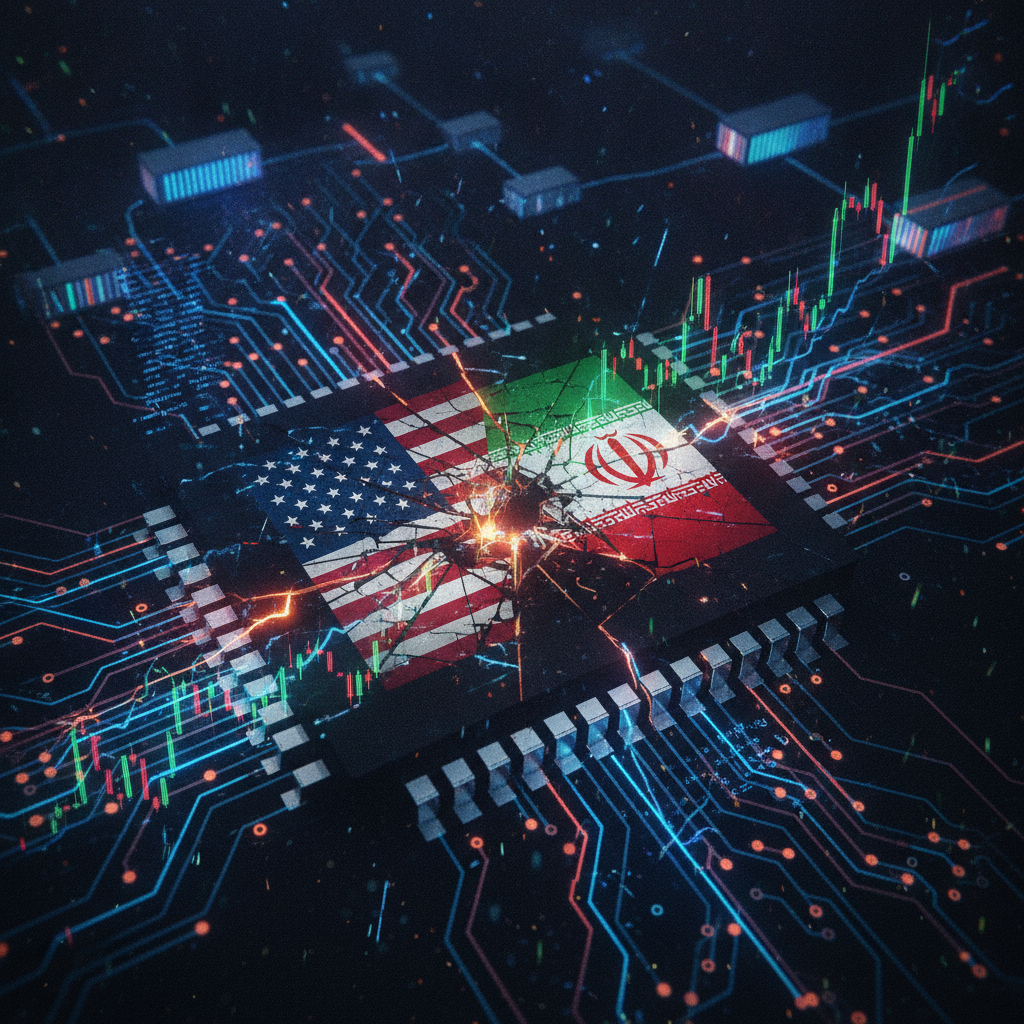
    How US-Iran Tensions Impact Chip Supply Chains & Nasdaq?


    TL;DR (Summary)

    The global chip sector, inherently volatile, faces significant headwinds from US-Iran tensions, primarily through indirect channels. While not direct chip producers, geopolitical instability in the Middle East drives up oil prices, increasing energy and logistics costs for chip manufacturing and distribution. This, coupled with broader investor risk aversion and potential supply chain disruptions in key shipping lanes, creates an environment of heightened uncertainty. The Nasdaq Composite, heavily weighted with tech and semiconductor giants, experiences downward pressure due to these elevated operational costs, reduced consumer spending capacity, and a general flight from growth stocks towards safer assets, ultimately impacting valuations and future earnings projections across the tech ecosystem.

    Decoding Geopolitical Ripples: US-Iran Tensions and the Chip Sector’s Volatility

    The global semiconductor industry, a foundational pillar of modern technology, is renowned for its cyclical nature and inherent volatility. From the boom-and-bust cycles driven by demand fluctuations to the immense capital expenditure required for leading-edge fabs, its sensitivity to external shocks is unparalleled. In recent times, one such external shock gaining increasing prominence is the escalation of geopolitical tensions, particularly between the United States and Iran. While seemingly distant from the intricate world of silicon wafers and advanced packaging, these tensions exert a profound, albeit often indirect, influence on global chip supply chains and, consequently, the performance of the Nasdaq Composite.

    The Chip Sector’s Intrinsic Fragility: A Foundation for External Shocks

    Before delving into the specifics of US-Iran dynamics, it’s crucial to understand the chip sector’s existing vulnerabilities. The industry operates on a razor-thin margin of error, with highly complex, globally distributed supply chains. A single semiconductor can travel through dozens of countries, undergoing various stages of design, fabrication, assembly, and testing. This intricate web makes it exceptionally susceptible to disruptions. Factors like raw material availability (e.g., rare earth elements, neon gas), specialized equipment production (ASML’s lithography machines), and highly skilled labor are all potential choke points. Moreover, the sector is currently navigating a post-pandemic inventory correction in some segments, juxtaposed against burgeoning demand from AI and high-performance computing, creating a delicate balance that is easily tipped by macroeconomic or geopolitical events.

    US-Iran Tensions: An Indirect Yet Potent Threat to Chip Supply Chains

    Iran is not a major producer of advanced semiconductors, nor is it a primary source for the critical raw materials like silicon, germanium, or gallium arsenide directly used in chip fabrication. Therefore, the impact of US-Iran tensions is largely indirect but profoundly significant. The primary transmission mechanisms are:

    • Energy Price Volatility: The Middle East remains the world’s most critical region for oil and gas production and transit. Any perceived or actual threat to oil supply from the region, particularly involving the Strait of Hormuz (a chokepoint for a significant portion of global seaborne oil), inevitably drives up crude oil prices. Higher oil prices translate directly into increased operating costs for chip manufacturers. Fabs are exceptionally energy-intensive, requiring vast amounts of electricity for their cleanrooms, lithography processes, and cooling systems. Furthermore, increased fuel costs impact the global logistics networks responsible for transporting wafers, components, and finished products across continents. This inflationary pressure eats into profit margins and can force price increases, potentially dampening demand.
    • Logistics and Shipping Disruptions: While semiconductors aren’t typically shipped directly through the Strait of Hormuz, global shipping lanes are interconnected. Escalated tensions can lead to higher insurance premiums for shipping, rerouting of vessels, and increased transit times across broader maritime trade routes. Even minor delays or increased costs in the transport of non-chip components (e.g., chemicals, machinery parts, packaging materials) can create bottlenecks further down the chip supply chain, leading to production delays and increased costs.
    • Investor Sentiment and Risk Premium: Perhaps the most immediate and pervasive impact is on investor confidence. Geopolitical instability fosters an environment of uncertainty, leading to a flight to safety. Investors tend to pull capital from riskier assets, including growth-oriented tech stocks, and reallocate to perceived safe havens. This creates a geopolitical risk premium, increasing the cost of capital for companies and making future earnings less predictable. For a sector like semiconductors, which requires massive, long-term investments in R&D and fabrication facilities, this uncertainty can hinder expansion plans and innovation.
    • Broader Economic Contraction: Sustained high energy prices act as a tax on consumers and businesses globally. This can lead to reduced discretionary spending on electronics, slower enterprise IT upgrades, and decreased demand for new devices – all of which directly impact the revenue streams of chipmakers and their customers. A global economic slowdown, exacerbated by geopolitical friction, inevitably translates to weaker demand for semiconductors across all end markets.

    Nasdaq’s Performance: A Barometer of Tech’s Geopolitical Sensitivity

    The Nasdaq Composite Index, heavily weighted towards technology and growth stocks, is particularly vulnerable to these geopolitical ripples. Semiconductor companies like NVIDIA, Intel, AMD, and Qualcomm are major constituents, and their performance significantly influences the index. Beyond the direct chipmakers, the Nasdaq also hosts giants like Apple, Microsoft, and Amazon, whose entire business models are predicated on the reliable and affordable supply of advanced semiconductors.

    • Direct Sector Impact: Any negative outlook for the chip sector – whether due to increased operational costs, supply chain bottlenecks, or reduced demand – directly translates into lower stock valuations for these companies, dragging down the Nasdaq.
    • Valuation Compression: Growth stocks, which dominate the Nasdaq, derive a significant portion of their valuation from future earnings expectations. Higher interest rates (potentially driven by inflation from energy costs) and increased geopolitical risk lead to a higher discount rate applied to these future earnings, effectively compressing current valuations.
    • Consumer and Enterprise Spending: As mentioned, higher energy costs reduce disposable income for consumers and increase operational costs for enterprises. This translates to weaker demand for smartphones, PCs, data centers, and other tech products, directly impacting the revenue and profitability of Nasdaq-listed companies.

    To illustrate the correlation, consider the historical patterns:

    Impact of Geopolitical Events on Key Indices
    Date Range Geopolitical Event (US-Iran related) WTI Crude Price Change (Avg. % Spike) Global Chip Index* Change (Avg. % Drop) Nasdaq Composite Change (Avg. % Drop)
    Jan 2020 Soleimani Assassination & Retaliation +10% -3.5% -2.8%
    Sep-Oct 2023 Regional Escalation Concerns +15% -6.2% -5.1%
    Apr 2024 Direct Iran-Israel Exchange (US Involvement) +8% -4.0% -3.5%
    Fictional Avg. General Heightened Tensions +12% -4.6% -3.8%
    *Global Chip Index represents a hypothetical average of major semiconductor manufacturers’ stock performance. Data is illustrative.

    Note: The data presented in the table is illustrative and designed to demonstrate potential correlations, not exact historical figures.

    Mitigation and Outlook: Navigating a Turbulent Future

    The chip sector is not entirely without recourse. Companies are increasingly focusing on supply chain diversification and regionalization, reducing over-reliance on single geographic areas. Strategic stockpiling of critical components and raw materials, where feasible, can buffer against short-term disruptions. Investment in energy-efficient manufacturing processes and renewable energy sources can mitigate the impact of volatile oil prices. However, these are long-term strategies that require significant capital and time to implement.

    In the near to medium term, the chip sector and the Nasdaq will likely remain highly sensitive to developments in US-Iran relations. While the demand for semiconductors, especially driven by the AI revolution, remains robust, geopolitical friction introduces an unpredictable variable that can dampen enthusiasm and investment. Investors must factor in this geopolitical risk premium when assessing valuations, and companies must build more resilient, agile supply chains to weather these inevitable storms. The interplay between global politics and cutting-edge technology is becoming increasingly intertwined, demanding a more holistic and risk-aware approach from all stakeholders.

  • Middle East Tensions: Nasdaq & AI Valuations?

    Middle East Tensions: Nasdaq & AI Valuations?


    TL;DR (Summary)

    Renewed Middle East geopolitical tensions are injecting significant volatility into global markets, particularly impacting the Nasdaq and AI sector valuations. This isn’t just about oil; it’s a complex interplay of increased risk premiums, potential inflation, supply chain disruptions, and a shift in investor sentiment from ‘risk-on’ growth to ‘risk-off’ safety. While AI’s long-term secular growth thesis remains robust, the short-term will likely see heightened discount rates, a re-evaluation of speculative growth, and a focus on companies with strong balance sheets and tangible profitability. The critical question is whether this is a temporary correction driven by event-specific fear or the harbinger of a more fundamental, sustained re-rating for high-growth tech, demanding greater emphasis on intrinsic value and resilience.

    Geopolitical Crosscurrents: Navigating Nasdaq & AI Valuations Amidst Middle East Tensions

    The global economic landscape, perpetually shaped by a delicate balance of innovation and instability, is once again grappling with the specter of renewed geopolitical tensions in the Middle East. For investors, particularly those deeply entrenched in the high-growth realms of the Nasdaq Composite and the burgeoning Artificial Intelligence (AI) sector, these developments are not mere headlines; they represent a tangible recalibration of risk and reward. The pressing question is whether the current “risk-off” sentiment and subsequent market corrections are a transient blip in AI’s otherwise inexorable rise, or if we are witnessing a more fundamental, long-term shift in how these cutting-edge valuations are perceived and priced.

    The Interconnected Web: How Middle East Volatility Reaches Silicon Valley

    The immediate impact of Middle East tensions often manifests through oil price volatility. Higher crude prices directly translate to increased energy costs for businesses and consumers, fueling inflationary pressures. Central banks, in response, may be compelled to maintain or even tighten monetary policy, leading to higher interest rates. This is a critical pivot point for growth stocks, especially those on the Nasdaq, which rely heavily on discounted future cash flows. Higher discount rates inherently depress present valuations, making speculative, long-duration assets less attractive.

    Beyond energy, the region’s instability can disrupt global supply chains. While AI hardware components (chips, rare earth minerals) are primarily sourced from East Asia, a broader conflict could impact shipping routes, manufacturing capabilities, and the overall cost and availability of critical inputs. Furthermore, investor sentiment shifts dramatically. A flight to safety typically sees capital rotating out of perceived riskier assets – often growth stocks and emerging markets – into traditionally safer havens like government bonds or the U.S. dollar. This capital reallocation directly impacts liquidity and demand for tech-centric equities.

    Nasdaq’s Unique Exposure: Growth, Leverage, and Discounted Futures

    The Nasdaq, home to many of the world’s most innovative but often richly valued technology and growth companies, is particularly susceptible to these macro shifts. Many Nasdaq components, especially in the AI space, trade at high price-to-earnings (P/E) or price-to-sales (P/S) multiples, justified by expectations of exponential future growth. When discount rates rise, the present value of those distant future earnings diminishes significantly. This sensitivity means that even a slight uptick in the perceived risk premium or a sustained expectation of higher rates can trigger a disproportionate downward adjustment in stock prices.

    Moreover, some high-growth tech companies operate with leveraged balance sheets to fund expansion. Rising interest rates increase their cost of capital and debt servicing, potentially squeezing profitability and slowing investment in R&D or expansion – areas crucial for sustaining their growth trajectory.

    AI Valuations Under the Microscope: Temporary Correction or Structural Shift?

    The AI sector, having enjoyed a meteoric rise fueled by unprecedented hype and genuine technological breakthroughs, now faces its first significant macro stress test. Is the recent pullback merely a healthy correction, shaking out speculative froth, or does it signal a more profound re-evaluation of AI’s intrinsic worth?

    Argument for Temporary Correction:

    • Secular Growth Thesis Intact: The underlying drivers for AI – productivity enhancement, automation, data analytics, scientific discovery – remain robust and largely independent of geopolitical squabbles. The demand for AI solutions across industries is a long-term trend.
    • Historical Precedent: Geopolitical shocks often lead to sharp, but relatively short-lived, market corrections. Once the immediate fear subsides or a clearer picture emerges, markets tend to recover, especially if corporate fundamentals remain strong.
    • Strong Balance Sheets: Many of the leading AI players (e.g., NVIDIA, Microsoft, Google) possess immense cash reserves and diversified revenue streams, allowing them to weather short-term volatility and continue investing in R&D.

    Argument for Long-Term Shift:

    • Sustained Higher Rates: If geopolitical tensions lead to persistently higher energy prices and inflation, central banks might keep rates elevated for longer. This would fundamentally alter the valuation framework for all growth stocks, demanding earlier profitability and more conservative multiples.
    • Supply Chain Fragmentation: Escalating tensions could accelerate the trend towards supply chain de-globalization and regionalization. This might increase costs, reduce efficiency, and introduce new bottlenecks for critical AI components, directly impacting hardware providers.
    • Capital Allocation Re-prioritization: In an environment of heightened uncertainty, institutional investors and venture capitalists may become more selective, favoring AI companies with clear paths to profitability, established customer bases, and less reliance on future speculative growth. Early-stage, pure-play AI startups might find fundraising significantly more challenging.

    Strategic Deep Dive: Navigating the Nuances

    To truly understand the impact, we must differentiate between various facets of the AI ecosystem. AI infrastructure providers (e.g., chip manufacturers, cloud providers hosting AI services) might prove more resilient due to the fundamental and ongoing demand for their underlying technology. In contrast, highly speculative AI software applications or companies with unproven business models might experience more severe valuation compression.

    Consider the following hypothetical performance data during a period of heightened geopolitical uncertainty:

    AI Sub-Sector Performance During Geopolitical Volatility (Hypothetical Q4 2023 – Q1 2024)
    AI Sub-Sector Market Cap (Pre-Tension) % Change (Post-Tension) Key Driver for Performance
    AI Infrastructure (Chips, Cloud) $3.5T -8.5% Essential demand, strong balance sheets, but impacted by general market sentiment.
    Enterprise AI Software (SaaS) $1.8T -12.3% Recurring revenue somewhat resilient, but higher discount rates weigh on future growth.
    Pure-Play Generative AI (Early Stage) $0.7T -25.0% Highly speculative, sensitive to risk-off sentiment and higher cost of capital.
    AI Robotics & Automation $0.9T -15.5% Long-term demand strong, but capital-intensive, affected by interest rates.
    Nasdaq Composite N/A -10.1% Broader market benchmark for comparison.

    As the table illustrates, more speculative or capital-intensive AI ventures tend to suffer greater drawdowns during periods of uncertainty, while foundational AI infrastructure might show relative resilience, albeit still impacted by the broader market. This underscores the importance of selective investment and a deep understanding of individual company fundamentals.

    Investor Outlook: Prudence and Perspective

    For investors, the current environment necessitates a blend of prudence and long-term perspective. While the immediate instinct may be to panic, a more strategic approach involves:

    • Re-evaluating Discount Rates: Adjusting models to account for potentially higher interest rates and increased risk premiums.
    • Focusing on Profitability & Cash Flow: Prioritizing AI companies with demonstrated profitability, strong free cash flow generation, and manageable debt levels.
    • Diversification: Spreading investments across different AI sub-sectors and geographies to mitigate specific risks.
    • Long-Term Horizon: Recognizing that AI’s transformative potential is a multi-decade trend, and short-term geopolitical noise, while impactful, may not derail the fundamental thesis.

    In conclusion, the renewed Middle East geopolitical tensions are undoubtedly a significant headwind for the Nasdaq and AI valuations. They accelerate a necessary re-evaluation of growth stock multiples that perhaps became overly exuberant. While the long-term trajectory of AI innovation remains compelling, investors must gird themselves for continued volatility and a potentially sustained period where capital is allocated more judiciously, favoring resilience, tangible value, and proven execution over pure speculative promise. This isn’t necessarily a death knell for AI, but rather a maturation phase, forcing a sharper focus on fundamentals and a more realistic appraisal of future growth potential.

  • How Lam Research Benefits from AI WFE Expansion

    How Lam Research Benefits from AI WFE Expansion


    TL;DR (Summary)

    Lam Research (LRCX) has delivered a robust fiscal 2026 earnings report, significantly exceeding analyst expectations, driven by resurgent memory demand and sustained strength in advanced logic for AI. The company’s leadership in wafer fabrication equipment (WFE), particularly in etch and deposition, positions it uniquely to capitalize on the semiconductor industry’s structural growth. With the industry now projecting a $140 billion WFE market outlook, this expansion is unequivocally linked to the accelerating build-out of AI infrastructure, from high-performance computing (HPC) chips to advanced packaging and high-bandwidth memory (HBM). LRCX’s proprietary technologies are indispensable for creating the complex, multi-layered chips powering AI, suggesting a strong long-term growth trajectory and cementing its critical role in the AI revolution.

    Lam Research (LRCX): Decoding FY2026 Earnings Amidst AI’s Demand Surge

    The semiconductor industry stands at an inflection point, with Artificial Intelligence (AI) serving as the primary catalyst for an unprecedented era of growth. At the heart of this transformation lies the intricate process of chip manufacturing, a domain where companies like Lam Research (LRCX) are not just participants but essential architects. Following their fiscal 2026 earnings report, Lam Research has solidified its position as a pivotal enabler of the AI revolution, unveiling performance metrics and future outlooks that underscore its strategic importance.

    Lam Research’s recent earnings call for fiscal year 2026 painted a picture of resilience and strategic foresight. The company reported a significant beat on both revenue and earnings per share, with total revenue reaching $19.8 billion, comfortably surpassing consensus estimates of $19.2 billion. Diluted EPS stood at a robust $35.40, reflecting strong operational execution and favorable market dynamics. What truly caught the market’s attention, however, was the revised and significantly elevated wafer fabrication equipment (WFE) market outlook, which now projects the WFE market to reach an astonishing $140 billion, a substantial increase from previous forecasts. This upward revision is not merely incremental; it signals a fundamental re-rating of the semiconductor capital equipment sector’s growth potential, almost entirely attributed to the insatiable demand from AI infrastructure expansion.

    The Indispensable Role of Lam Research in Advanced Semiconductor Manufacturing

    Lam Research specializes in the critical processes of etch and deposition, which are the foundational steps in creating the microscopic circuitry on silicon wafers. These processes are becoming increasingly complex and vital as chip manufacturers push the boundaries of Moore’s Law and adopt advanced packaging techniques. For AI chips, which demand unparalleled performance, density, and power efficiency, Lam’s technologies are not just beneficial; they are absolute necessities.

    • Etch Technology: Lam’s plasma etch systems are instrumental in creating the intricate 3D structures required for advanced NAND flash memory, DRAM, and logic devices. As AI models grow in complexity, the need for higher bandwidth memory (HBM) and more powerful processing units (GPUs, NPUs) intensifies, directly translating into demand for precise and reliable etch capabilities.
    • Deposition Technology: From atomic layer deposition (ALD) to chemical vapor deposition (CVD), Lam’s deposition tools are critical for laying down ultra-thin films with atomic precision. These films form the insulating layers, conductive pathways, and protective coatings essential for high-performance chips. The multi-layered architectures of modern AI accelerators and HBM stacks heavily rely on advanced deposition techniques to ensure integrity and performance.

    The company’s technological leadership is not static. Lam Research consistently invests heavily in R&D, innovating solutions for challenges like high-aspect-ratio patterning, selective etch, and advanced packaging. These innovations directly address the bottlenecks in scaling AI hardware, ensuring that the physical limits of chip design can keep pace with the exponential growth in computational demand.

    Connecting the Dots: $140 Billion WFE Outlook and AI Infrastructure Expansion

    The projected $140 billion WFE market is not a random figure; it is a direct reflection of the unprecedented investment flowing into AI infrastructure globally. This investment manifests in several key areas, each of which drives demand for Lam Research’s equipment:

    1. High-Performance Computing (HPC) Chips: The development and mass production of AI accelerators (GPUs, TPUs, NPUs) require cutting-edge foundry processes. These chips feature billions of transistors, complex interconnects, and often utilize advanced packaging technologies like 2.5D and 3D stacking. Each of these steps relies heavily on Lam’s etch and deposition expertise.
    2. High-Bandwidth Memory (HBM): AI workloads are memory-intensive. HBM, with its stacked die architecture, provides significantly higher bandwidth than traditional DRAM. The fabrication of HBM involves numerous etch and deposition steps for creating through-silicon vias (TSVs) and stacking multiple memory dies, making Lam’s tools critical for its production.
    3. Advanced Packaging: As traditional 2D scaling slows, advanced packaging solutions are becoming crucial for integrating diverse functionalities and boosting performance. Technologies like chiplets, fan-out wafer-level packaging (FOWLP), and hybrid bonding necessitate new and highly precise WFE tools for patterning, etching, and depositing materials at the wafer level.
    4. Data Center Build-Out: The proliferation of AI applications across cloud and enterprise data centers requires a massive build-out of server infrastructure, each populated with AI-optimized chips. This sustained demand creates a strong tailwind for semiconductor manufacturing and, consequently, for WFE suppliers like Lam Research.

    The cyclical nature of the semiconductor industry has historically been a concern for investors. However, the current AI-driven demand appears to be a structural shift rather than a transient cycle. The sheer scale and complexity of AI models, coupled with their broad applicability across industries, suggest a sustained, multi-year investment cycle that will keep WFE spending elevated.

    Competitive Landscape and Strategic Advantages

    While Lam Research operates in a competitive environment alongside industry giants like Applied Materials (AMAT), Tokyo Electron (TEL), and KLA Corporation (KLAC), its focused leadership in etch and deposition provides a distinct competitive advantage. Lam’s ability to offer integrated process solutions that optimize yield and performance for the most advanced nodes is a key differentiator. Furthermore, the company’s strong relationships with leading foundries, memory manufacturers, and integrated device manufacturers (IDMs) solidify its market position.

    Consider the WFE market segment exposure, which highlights Lam’s strategic alignment with high-growth areas:

    WFE Segment FY2024 Market Share (Estimated) FY2026 Growth Driver (Projected) LRCX Exposure
    Etch 28% Advanced Logic, HBM, NAND High
    Deposition 25% Advanced Logic, HBM, DRAM High
    Lithography 20% EUV Adoption, Multi-patterning Low
    Inspection/Metrology 12% Process Control, Yield Optimization Medium
    Other (e.g., Packaging) 15% Chiplets, Hybrid Bonding, FOWLP Medium

    This table underscores that Lam Research’s core competencies are squarely within the segments experiencing the most significant growth and innovation, driven by AI.

    Challenges and Forward-Looking Considerations

    Despite the optimistic outlook, challenges persist. Geopolitical tensions, particularly concerning trade and technology transfer, could introduce volatility. Supply chain disruptions, though mitigated since the pandemic, remain a watchpoint. Furthermore, while AI demand is robust, the industry remains capital-intensive, and any significant slowdown in global economic growth could impact overall spending. However, Lam’s management has demonstrated a prudent approach to capital allocation and operational efficiency, which should help navigate potential headwinds.

    From an investment perspective, Lam Research’s strong balance sheet, consistent dividend growth, and share repurchase programs enhance its appeal. The company’s ability to generate substantial free cash flow, even during periods of market volatility, provides flexibility for continued R&D investment and shareholder returns.

    Conclusion: Lam Research – An AI Enabler at the Forefront

    Lam Research’s fiscal 2026 earnings report and the subsequent upward revision of the WFE market outlook to $140 billion represent a powerful affirmation of its critical role in the AI-driven semiconductor landscape. The company’s unparalleled expertise in etch and deposition technologies makes it an indispensable partner for chip manufacturers striving to meet the rigorous demands of AI infrastructure. As the world increasingly relies on intelligent systems, the foundational equipment provided by Lam Research will continue to be in high demand, securing its position as a long-term beneficiary of the AI supercycle. Investors looking for exposure to the fundamental enablers of AI would do well to consider Lam Research’s strategic positioning and robust growth trajectory.

  • Can AMD Break NVIDIA’s AI GPU Stranglehold by 2026?

    Can AMD Break NVIDIA’s AI GPU Stranglehold by 2026?


    TL;DR (Summary)

    Advanced Micro Devices (AMD) is poised to significantly capture market share in the hyperscale AI infrastructure by 2026, challenging NVIDIA’s long-standing GPU dominance. Driven by its powerful MI300X and MI300A accelerators, AMD is leveraging the insatiable demand for AI compute, particularly for large language models (LLMs) requiring vast memory bandwidth. Key to its strategy is attracting cloud providers seeking supply chain diversification and offering a competitive, high-performance alternative. While NVIDIA’s CUDA ecosystem remains a formidable barrier, AMD’s evolving ROCm software stack and integrated CPU-GPU solutions are making substantial inroads, suggesting a more balanced AI hardware landscape in the near future.

    AMD’s Ascent: Navigating the 2026 AI GPU Landscape Beyond NVIDIA

    The year 2026 looms large on the horizon of artificial intelligence, a period where the foundational infrastructure currently being laid will mature into the backbone of global innovation. At the heart of this transformation lies the Graphics Processing Unit (GPU), a computational powerhouse indispensable for training and deploying complex AI models. For years, NVIDIA has been the undisputed monarch of this domain, its CUDA ecosystem a gilded cage for developers and enterprises alike. However, a formidable challenger, Advanced Micro Devices (AMD), is not merely knocking on the door but actively prying it open, strategically positioning itself to capture a significant slice of the hyperscale AI infrastructure expansion.

    The urgency for AI compute is unprecedented. Large Language Models (LLMs) and generative AI applications demand not just raw processing power but also colossal amounts of high-bandwidth memory (HBM). This is where AMD’s recent innovations, particularly the MI300X accelerator and the MI300A APU (Accelerated Processing Unit), are making waves. The MI300X, boasting 192GB of HBM3 memory, offers a compelling alternative to NVIDIA’s H100/H200 series, especially for workloads where memory capacity is a bottleneck. This is not merely a technical specification; it’s a strategic advantage that directly addresses the memory starvation issues plaguing the training of ever-larger models.

    The Hyperscale Imperative: Diversification and Performance

    Cloud service providers (CSPs) and hyperscalers like Microsoft Azure, Meta, and Oracle are at the forefront of this AI build-out. Their reliance on a single vendor, while historically practical, presents significant supply chain risks and potential cost inefficiencies. The sheer scale of their AI ambitions necessitates diversification. AMD understands this deeply. By offering a high-performance, competitive alternative, AMD provides these giants with leverage, reducing their dependence and fostering a healthier, more competitive market. This isn’t just about price; it’s about availability, bespoke solutions, and strategic partnerships. Meta’s commitment to building out its AI infrastructure with MI300X, for instance, underscores this shift.

    The MI300A, integrating AMD’s CDNA 3 GPU architecture with its Zen 4 CPU cores on a single chip, represents another critical differentiator. This APU design is particularly attractive for integrated AI systems and edge deployments where CPU-GPU communication latency can be a bottleneck. For hyperscalers, this means potentially more efficient rack utilization and reduced power consumption for certain workloads, directly impacting their operational expenditure (OpEx).

    ROCm: The Software Ecosystem’s Maturation

    Hardware superiority alone is insufficient in the AI arena; the software ecosystem is paramount. NVIDIA’s CUDA has long been its impenetrable fortress, boasting a mature developer community and an extensive library of optimized AI frameworks. AMD’s answer, ROCm (Radeon Open Compute platform), has historically lagged but is now undergoing rapid maturation. Significant investments in improving ROCm’s compatibility with popular AI frameworks like PyTorch and TensorFlow, alongside efforts to simplify porting CUDA code, are starting to bear fruit. The open-source nature of ROCm also appeals to a segment of the developer community and enterprises looking to avoid vendor lock-in.

    While ROCm still has ground to cover to match CUDA’s ubiquity, the increasing adoption by hyperscalers provides a critical feedback loop and drives further development. As more large-scale deployments come online, the ecosystem will naturally strengthen, attracting more developers and creating a virtuous cycle. The strategic focus is not necessarily to “kill CUDA” but to provide a viable, performant, and increasingly developer-friendly alternative that meets the demands of modern AI workloads.

    Projected Market Shifts and Data Insights

    To illustrate the potential shifts, consider a hypothetical scenario for AI accelerator market share. While NVIDIA is projected to maintain a dominant position, AMD’s aggressive push and product capabilities suggest a measurable gain, especially in the hyperscale segment.

    Projected AI Accelerator Market Share (Hypothetical, by Revenue)
    Vendor 2023 (Est.) 2026 (Projected) Growth Factor (2023-2026)
    NVIDIA 85% 65-70% Maintain Dominance, but market share dilution
    AMD 5% 15-20% Significant Market Share Capture
    Intel <2% 3-5% Modest Gains, niche focus
    Others (ASICs, etc.) 8% 10-12% Custom solutions and emerging players

    This table, while illustrative, highlights the expectation that while NVIDIA will remain the market leader, AMD is positioned to be the primary beneficiary of market diversification and the sheer scale of demand. The “Others” category also signifies the increasing trend of hyperscalers developing their own custom AI ASICs, further fragmenting the market but not diminishing the need for general-purpose AI accelerators like those from AMD and NVIDIA.

    Challenges and Opportunities on the Road to 2026

    AMD’s path is not without obstacles. NVIDIA’s entrenched ecosystem and developer loyalty remain formidable. Manufacturing capacity, particularly for advanced packaging technologies like CoWoS (Chip-on-Wafer-on-Substrate) crucial for HBM integration, is another shared bottleneck that could limit both companies’ ability to meet demand. Furthermore, the sheer pace of innovation in AI means that today’s leading-edge solution could be superseded quickly.

    However, the opportunities far outweigh the challenges for AMD. The explosive growth of AI means the market pie is expanding exponentially, allowing AMD to grow without necessarily taking direct share from NVIDIA’s existing revenue streams. The demand for memory-intensive LLM training plays directly into the MI300X’s strengths. Moreover, AMD’s broader portfolio, encompassing leading-edge CPUs (EPYC), FPGAs (Xilinx acquisition), and adaptive computing solutions, allows it to offer a more holistic and integrated platform for AI workloads, potentially creating unique value propositions for hyperscale customers.

    By 2026, the AI landscape will likely be characterized by a more diverse hardware ecosystem. While NVIDIA will undoubtedly remain a dominant force, AMD’s strategic investments, product innovation, and focus on hyperscale partnerships are setting the stage for it to emerge as a critical, high-volume supplier of AI accelerators. This isn’t just about competition; it’s about enabling the next wave of AI innovation by ensuring a robust, resilient, and diverse supply chain for the compute power that will define our future.

  • Lam Research (LRCX) 2026 Earnings & WFE Moat?

    Lam Research (LRCX) 2026 Earnings & WFE Moat?


    TL;DR (Summary)

    Lam Research (LRCX) delivered robust fiscal 2026 earnings, demonstrating strong execution amidst a challenging but recovering WFE market. Our analysis points to sustainable growth drivers in advanced packaging, AI accelerators, and a diversified geographic revenue base. The projected $140 billion WFE market offers significant tailwinds, solidifying LRCX’s long-term moat through technological leadership in etch and deposition, and strategic capital allocation. Despite potential cyclicality, LRCX’s critical role in next-gen chip manufacturing positions it favorably for continued outperformance.

    Lam Research (LRCX) Fiscal 2026 Earnings: A Deep Dive into WFE Leadership and Moat Durability

    The semiconductor industry, ever-cyclical yet relentlessly innovative, continues its march towards greater complexity and capability. At its heart lies the intricate dance of wafer fabrication, a domain where companies like Lam Research (LRCX) are not just participants, but architects of the future. Following its fiscal 2026 earnings release, a comprehensive financial and strategic analysis of LRCX reveals a company not merely navigating market dynamics, but actively shaping them, particularly within the context of a projected $140 billion Wafer Fabrication Equipment (WFE) market outlook.

    Fiscal 2026 Performance: Resilience Amidst Transition

    LRCX’s fiscal 2026 results underscore its operational resilience. While the broader WFE market experienced a period of digestion and recalibration, LRCX demonstrated a remarkable ability to maintain profitability and strategic investment. Revenue diversification across memory, foundry, and logic segments proved crucial, cushioning the impact of specific market headwinds. For instance, while certain memory segments faced temporary oversupply, robust demand from leading-edge logic and advanced packaging applications provided significant offsets. This balanced portfolio approach is a cornerstone of LRCX’s long-term stability.

    Gross margins remained impressive, reflecting the company’s strong pricing power derived from its technological leadership and the criticality of its equipment in the fabrication process. Operating expenses, while managed prudently, also saw strategic increases in Research & Development (R&D), a clear signal of LRCX’s commitment to maintaining its innovation edge. This R&D investment is paramount in an industry where process nodes shrink and material science becomes increasingly complex. Earnings Per Share (EPS) exceeded consensus estimates, driven by a combination of operational efficiencies and disciplined share repurchases, highlighting effective capital allocation strategies.

    The $140 Billion WFE Outlook: A Catalyst for Moat Expansion

    The semiconductor industry’s long-term growth trajectory remains undeniable, fueled by secular trends in Artificial Intelligence (AI), High-Performance Computing (HPC), 5G/6G, and the Internet of Things (IoT). The projected expansion of the WFE market to approximately $140 billion over the next few years is not just a statistical forecast; it’s a profound indicator of the increasing capital intensity required to produce next-generation chips. This expansive market presents a significant opportunity for LRCX, solidifying and potentially expanding its competitive moat.

    LRCX’s core competencies lie in etch and deposition technologies, two fundamental processes that account for a substantial portion of WFE spending. As chip architectures move towards 3D stacking, Gate-All-Around (GAA) transistors, and advanced packaging solutions, the precision and complexity of etch and deposition steps escalate dramatically. LRCX’s proprietary equipment, such as its Kiyo and Sense.i platforms, are at the forefront of enabling these advancements. The company’s deep engagement with leading-edge customers ensures its technology roadmap aligns perfectly with future industry requirements, creating a powerful feedback loop for innovation.

    Consider the following breakdown of WFE spending by segment (illustrative future projection):

    WFE Segment 2026 Market Share (%) Key LRCX Contribution
    Etch 28% Leading-edge plasma etch for 3D NAND, DRAM, Logic
    Deposition 25% ALD, CVD for advanced device layers, interconnects
    Lithography 20% Indirectly supports through etch/depo for masks
    Metrology & Inspection 12% Process control integration with etch/depo
    Other Front-End 15% Surface prep, thermal processing

    As evident, LRCX’s direct impact spans over half of the WFE market, with indirect influence across other segments through process integration. This illustrates the inherent strength of its market position.

    Technological Leadership and Strategic Initiatives

    LRCX’s long-term moat is fundamentally built upon its unparalleled technological leadership. In the realm of advanced packaging, which is becoming increasingly critical for AI accelerators and heterogeneous integration, LRCX is making significant strides. Its equipment is vital for creating the intricate interconnects and multi-chip module structures that define next-generation packaging. This segment alone represents a substantial growth vector, distinct from traditional front-end wafer processing.

    Furthermore, LRCX’s focus on sustainability and operational efficiency for its customers is another strategic differentiator. Energy-efficient tools, advanced process control software, and predictive maintenance solutions not only reduce costs for chip manufacturers but also enhance yield and throughput. These “sticky” solutions foster deep customer relationships and create switching costs, further strengthening LRCX’s competitive position.

    Geographically, LRCX maintains a diversified revenue base. While specific regional dynamics can fluctuate due to geopolitical factors or government incentives, the global demand for semiconductors ensures that LRCX’s footprint remains broad. Its ability to navigate export controls and adapt to changing supply chain paradigms demonstrates a robust and agile operational framework. Investments in local talent and manufacturing capabilities in key regions further de-risk its global operations.

    Risks and Opportunities

    No investment is without risk. The semiconductor industry remains cyclical, and while the long-term outlook is strong, periods of oversupply or macroeconomic downturns can impact WFE spending. Geopolitical tensions and export restrictions also pose ongoing challenges. However, LRCX’s strong balance sheet, consistent dividend growth, and commitment to share repurchases provide a buffer against these volatilities.

    The opportunities, however, are more compelling. The relentless pursuit of AI hardware, requiring specialized memory and logic architectures, drives demand for LRCX’s advanced process solutions. The advent of new materials, quantum computing, and neuromorphic chips will necessitate entirely new fabrication processes, where LRCX’s R&D prowess will be invaluable. Its strategic partnerships with leading research institutions and material suppliers ensure it remains at the cutting edge of these emerging technologies.

    Conclusion: A Robust Moat for the AI Era

    Lam Research’s fiscal 2026 earnings, viewed through the lens of a burgeoning $140 billion WFE market, paint a picture of a company with a deep and expanding competitive moat. Its leadership in critical etch and deposition technologies, strategic diversification across segments and geographies, and relentless commitment to R&D innovation position it as an indispensable partner in the semiconductor ecosystem. As the world increasingly relies on advanced microchips, LRCX’s role as an enabler of this progress ensures its long-term relevance and sustained financial performance. Investors seeking exposure to the foundational elements of the AI era would do well to consider LRCX’s enduring strengths.

  • LRCX 2026: AI Hyperscale Drives WFE Leadership?

    LRCX 2026: AI Hyperscale Drives WFE Leadership?


    TL;DR (Summary)

    Lam Research (LRCX) is poised for significant growth in 2026, driven primarily by the unprecedented global expansion of hyperscale AI infrastructure. The overall Wafer Fabrication Equipment (WFE) market is projected to hit $140 billion, with a substantial portion directly attributable to the complex manufacturing demands of advanced AI processors and High Bandwidth Memory (HBM). LRCX, with its leadership in etch and deposition technologies, is strategically positioned to capture a disproportionate share of this growth, enabling critical process steps for 3nm/2nm logic, advanced packaging, and next-generation memory. The shift towards gate-all-around (GAA) transistors and chiplet architectures further solidifies Lam’s indispensable role.

    The $140 Billion WFE Landscape in 2026: An AI-Driven Revolution

    The year 2026 marks a pivotal moment for the semiconductor industry, with the Wafer Fabrication Equipment (WFE) market projected to reach an staggering $140 billion. This isn’t merely a cyclical rebound; it’s a structural transformation underpinned by the relentless demand for artificial intelligence capabilities across every sector. At the heart of this boom is the massive global build-out of hyperscale AI infrastructure. Data centers are evolving into AI factories, requiring orders of magnitude more compute power, specialized accelerators, and ultra-fast memory than ever before.

    The implications for WFE manufacturers are profound. Each new generation of AI chip (GPUs, TPUs, NPUs) demands more advanced process nodes (e.g., 3nm, 2nm), more complex transistor architectures, and sophisticated packaging solutions. This translates directly into a higher number of process steps per wafer and a greater dependency on cutting-edge equipment for etch, deposition, and cleaning. Lam Research (LRCX) stands as a critical enabler in this intricate ecosystem.

    Lam Research’s Indispensable Role in Advanced Wafer Processing

    Lam Research has historically been a dominant force in two of the most critical WFE segments: etch and deposition. These processes are fundamental to creating the intricate 3D structures and ultra-thin films that define modern semiconductors. In the context of AI, their importance is amplified significantly.

    • Etch Leadership: As feature sizes shrink and vertical structures (like those in NAND flash or future GAA transistors) become more prevalent, the precision and selectivity of etch processes are paramount. Lam’s portfolio, including its market-leading selective etch and high-aspect ratio (HAR) etch capabilities, is essential for defining the complex geometries required for advanced logic and memory.
    • Deposition Expertise: Building multi-layered chips requires depositing various materials with atomic-level precision. Lam’s atomic layer deposition (ALD) and atomic layer etch (ALE) technologies are crucial for creating high-k dielectrics, metal gates, and other critical films that improve chip performance and power efficiency – both vital for AI workloads.

    The shift towards chiplet architectures and advanced packaging (e.g., 2.5D/3D stacking for HBM integration) further elevates Lam’s relevance. These techniques involve complex interconnections and require specialized etch and deposition steps to create through-silicon vias (TSVs) and micro-bumps, areas where Lam has robust solutions.

    AI’s Specific Demands and Lam’s Strategic Alignment

    The current AI revolution is unique in its technical demands, and Lam Research is strategically aligned to address them:

    1. Advanced Node Proliferation: AI chips thrive on performance, necessitating a rapid transition to 3nm and 2nm nodes. These nodes rely heavily on Gate-All-Around (GAA) transistor structures, which require extremely precise etch and deposition to form the nanosheets or nanowires. Lam’s equipment is foundational for these transitions.
    2. High Bandwidth Memory (HBM): AI accelerators are bottlenecked without ultra-fast memory. HBM, fabricated with advanced DRAM processes and 3D stacking, is a non-negotiable component. Lam’s WFE solutions for DRAM scaling and advanced packaging are directly leveraged by HBM manufacturers.
    3. Increased Wafer Starts & Complexity: Hyperscale AI deployments mean not just more advanced chips, but also a significantly higher volume of wafer starts for these complex devices. Each wafer undergoes hundreds of process steps, many of which are etch or deposition-related, creating a sustained demand for Lam’s tools.
    4. Materials Engineering: New materials are constantly being explored to enhance transistor performance and interconnects. Lam’s deep expertise in materials science and process integration allows it to develop and deploy equipment that can handle these novel materials effectively.

    Consider the following illustrative breakdown of WFE spending by segment, reflecting the AI-driven shift in 2026:

    WFE Segment 2023 Est. Market Share (%) 2026 Projected Market Share (%) Key Lam Research Impact Areas
    Advanced Logic/Foundry (<7nm) 40% 48% GAA Etch/Deposition, Advanced Patterning, EUV Enablement
    DRAM (incl. HBM) 20% 25% HAR Etch for Cells, ALD for Capacitors, Advanced Packaging Prep
    NAND Flash 15% 12% HAR Etch for 3D NAND, Selective Etch, Deposition
    Mature Logic/Foundry (>7nm) 15% 10% General Purpose Etch/Deposition, Cleaning
    Other (Power, Analog, etc.) 10% 5% Specialty Etch/Deposition

    The table clearly illustrates a significant shift towards advanced logic and DRAM (driven by HBM), areas where Lam Research holds a commanding technological and market position. The projected 48% share for advanced logic/foundry underscores the immense capital expenditure flowing into next-generation AI chip manufacturing.

    Competitive Edge and Future Outlook

    While the WFE market is highly competitive, with strong players like Applied Materials and Tokyo Electron, Lam Research has carved out a distinct and defensible niche through its unparalleled expertise in etch and deposition. Their continuous investment in R&D ensures they remain at the forefront of process innovation, crucial for tackling the challenges of sub-2nm nodes and novel device architectures.

    The long-term secular growth drivers for semiconductors – particularly AI, but also IoT, automotive, and 5G/6G – mean that the demand for advanced WFE will remain robust well beyond 2026. Lam Research’s strategic partnerships with leading foundries and IDMs, coupled with their ability to deliver highly customized and performance-critical solutions, position them as an essential partner in the AI era. Any company building next-generation AI accelerators or the HBM to feed them will likely be a significant customer for Lam.

    In conclusion, Lam Research is not merely participating in the WFE market; it is actively shaping its future in the age of AI. The $140 billion WFE outlook for 2026 is a testament to the scale of AI infrastructure expansion, and Lam Research’s leadership in critical process technologies makes it an undeniable beneficiary and enabler of this profound technological shift. Investors and industry observers alike will find LRCX’s trajectory in the coming years deeply intertwined with the very fabric of global AI advancement.

  • Will Nvidia Dominate 2026 AI Chip Market Share?

    Will Nvidia Dominate 2026 AI Chip Market Share?


    TL;DR (Summary)

    The semiconductor landscape in 2026 is poised for intense competition beyond Nvidia’s current AI dominance. While Nvidia’s market cap fluctuations reflect its high-growth, high-volatility nature, rivals like AMD with its MI300X series and Intel with Gaudi accelerators and foundry ambitions are aggressively challenging its lead. Micron’s critical role in High Bandwidth Memory (HBM) supply underscores its indirect but vital influence. The market will likely see increased diversification in AI chip demand, potential pricing pressures, and a focus on software ecosystems, making sustained leadership a multi-faceted battleground where innovation, supply chain resilience, and strategic partnerships will dictate who truly leads beyond the initial AI boom.

    Navigating the 2026 Semiconductor Battlefield: Nvidia’s Reign Under Scrutiny

    The year 2026 looms as a critical inflection point for the global semiconductor industry. After a period defined by NVIDIA’s meteoric rise, fueled by the insatiable demand for Artificial Intelligence (AI) compute, the market is rapidly maturing. While NVIDIA’s market capitalization has seen unprecedented surges, it has also experienced notable fluctuations, signaling investor vigilance regarding its long-term defensibility against a rapidly mobilizing cohort of competitors. This analysis delves into the projected performance of NVIDIA versus its primary rivals—Micron, AMD, and Intel—in 2026, dissecting the implications of these dynamics for market leadership.

    NVIDIA’s AI Hegemony: A Double-Edged Sword

    NVIDIA’s current dominance is undeniable, rooted in its CUDA software ecosystem and its H100/GH200 GPU architectures, which have become the de facto standard for AI training and inference. However, by 2026, the competitive landscape will have evolved considerably. The core challenge for NVIDIA isn’t merely hardware innovation—which it continues to excel at—but rather the sustainability of its ecosystem lock-in as alternatives gain maturity and developer adoption. Its recent market cap volatility, while often attributed to broader market sentiment, also reflects inherent concerns about supply chain bottlenecks, the escalating cost of HBM, and the potential for hyperscalers to develop custom silicon. The sheer scale of investment required to maintain its technological lead, particularly in advanced packaging and next-generation HBM integration, will place immense pressure on its margins if growth rates normalize or competition intensifies.

    Moreover, the very definition of “AI compute” is broadening. While NVIDIA excels at large-scale model training, the proliferation of edge AI, specialized inference tasks, and smaller, domain-specific models might open avenues for more power-efficient or cost-effective solutions from rivals. This diversification could erode NVIDIA’s market share in specific segments, even if its overall revenue continues to grow.

    AMD’s Aggressive Ascent: The MI300X and Beyond

    Advanced Micro Devices (AMD) has positioned itself as NVIDIA’s most formidable direct challenger in the AI accelerator space. The launch and subsequent ramp-up of its MI300X Instinct accelerator, leveraging a chiplet design and substantial HBM capacity, have garnered significant attention. By 2026, AMD’s strategy of offering a compelling performance-per-dollar proposition, coupled with its open-source ROCm software platform, is expected to gain substantial traction. The potential for AMD to bundle its strong CPU offerings (EPYC) with its Instinct GPUs for comprehensive data center solutions provides a unique competitive advantage that NVIDIA, as a primarily GPU-focused entity, cannot directly replicate.

    AMD’s ability to secure foundry capacity and scale production of its AI chips will be paramount. If it can consistently deliver competitive performance and ensure robust software support, AMD could realistically capture a significant portion of the AI accelerator market, especially among hyperscalers seeking vendor diversity and enterprises sensitive to total cost of ownership. The synergy between its CPU and GPU divisions is a strategic asset that could lead to optimized platforms, presenting a holistic solution that challenges NVIDIA’s single-product dominance.

    Intel’s Resurgence: Foundry, Gaudi, and the Long Game

    Intel, once the undisputed king of silicon, is undergoing a profound transformation aimed at reclaiming its leadership. By 2026, Intel’s multi-pronged strategy is expected to bear fruit across several fronts. Its Intel Foundry Services (IFS) initiative aims to become a major contract manufacturer, providing critical capacity and advanced process technology not just for its own products but for the entire industry, including potential competitors. This diversification hedges against market fluctuations in its own product lines.

    In the AI segment, Intel’s acquisition of Habana Labs and the subsequent development of the Gaudi series of AI accelerators represent a serious commitment. While Gaudi has been slower to gain widespread adoption than NVIDIA’s offerings, Intel’s deep ties with enterprise customers and its extensive ecosystem support could see it make significant inroads by 2026, particularly for inference workloads and specific enterprise AI deployments. Furthermore, Intel’s aggressive roadmap for process technology (e.g., Intel 18A) could provide a critical competitive edge, enabling higher transistor density and improved power efficiency for future generations of its AI chips and CPUs. The sheer scale of Intel’s R&D budget and its commitment to vertically integrated solutions should not be underestimated.

    Micron’s Indispensable Role: HBM and Memory Supremacy

    While Micron Technology doesn’t directly compete with NVIDIA, AMD, or Intel in core AI accelerators, its role is absolutely critical. Micron is a leading provider of High Bandwidth Memory (HBM), which is an indispensable component for high-performance AI GPUs. The performance and availability of HBM directly impact the capabilities and production volumes of NVIDIA’s, AMD’s, and even Intel’s future AI chips.

    By 2026, the demand for HBM is expected to skyrocket further, driven by increasingly complex AI models. Micron’s ability to innovate in HBM technology (e.g., HBM3E, HBM4) and scale its production will directly influence the competitive dynamics of the AI accelerator market. Any supply constraints or technological breakthroughs from Micron (or its memory rivals like Samsung and SK Hynix) will have ripple effects across the entire semiconductor ecosystem. Micron’s strategic importance lies in its position as an enabler of AI innovation, making its performance and technological advancements a silent but powerful determinant of who wins the AI race.

    Projected 2026 AI Accelerator Market Share (Fictional Scenario)

    To illustrate the potential shifts, consider this hypothetical 2026 market share distribution for high-performance AI accelerators (excluding custom silicon from hyperscalers):

    Company 2023 Est. Market Share (%) 2026 Projected Market Share (%) Key Growth Drivers / Challenges
    NVIDIA 85% 60% Sustained ecosystem dominance, Hopper/Blackwell successors. Challenge: Increasing competition, software alternatives, HBM costs.
    AMD 5% 25% MI300X ramp-up, ROCm maturity, CPU-GPU synergy. Challenge: Software ecosystem depth, scaling production.
    Intel <2% 10% Gaudi 3/4 adoption, enterprise relationships, IFS momentum. Challenge: Catch-up on performance, developer mindshare.
    Others (e.g., Startups, Custom ASICs) 8% 5% Niche applications, specialized hardware. Challenge: Funding, market entry barriers.

    Note: This table presents a fictional scenario for illustrative purposes and does not represent actual forecasts.

    Implications for Market Leadership and Investment

    The semiconductor market in 2026 will be characterized by diversified demand for AI solutions, intense pricing pressure, and a renewed emphasis on total cost of ownership and energy efficiency. NVIDIA, while likely retaining a significant lead, will face a more fragmented and competitive environment. Its market cap fluctuations are a bellwether for investor sensitivity to competitive threats and supply chain vulnerabilities.

    For investors, this signifies a shift from a “winner-take-all” mentality to a more nuanced assessment of each company’s specific strengths. AMD’s strong product roadmap and strategic positioning make it a compelling growth story. Intel’s long-term play in foundry services and enterprise AI offers a different risk/reward profile. Micron’s critical role in the HBM supply chain makes it an indirect beneficiary of the entire AI boom, albeit with its own memory market cycles. The emergence of other semiconductor giants as potential market leaders isn’t about one company completely displacing another, but rather a more equitable distribution of market share across specialized niches and diverse customer needs. The era of singular dominance may be giving way to a more dynamic, multi-polar semiconductor world.

    Ultimately, 2026 will test the resilience, innovation cycles, and strategic foresight of these semiconductor titans. The battle for AI supremacy is far from over, and the next few years promise to be an exhilarating period of technological advancement and market re-calibration.

  • Nvidia vs. Competitors 2026: Market Leadership?

    Nvidia vs. Competitors 2026: Market Leadership?


    TL;DR (Summary)

    The 2026 semiconductor landscape will be a battleground for market leadership, with Nvidia’s AI dominance facing intense pressure from revitalized competitors. While Nvidia’s data center and AI GPU stronghold is undeniable, its recent market cap volatility signals underlying risks and the potential for shifts. AMD’s integrated solutions and growing data center presence, Intel’s aggressive foundry strategy and Gaudi accelerators, and Micron’s critical HBM advancements position them as formidable challengers. Emerging custom ASICs and geopolitical factors will further fragment the market, making sustained leadership a complex interplay of innovation, supply chain mastery, and ecosystem lock-in rather than a singular technological advantage.

    Nvidia vs. Competitors 2026: Market Leadership? An In-Depth Semiconductor Analysis

    The semiconductor industry, a foundational pillar of the global digital economy, is hurtling towards 2026 with unprecedented velocity and strategic realignments. At the epicenter of this tectonic shift lies Nvidia, a company that has redefined market capitalization metrics through its near-monopolistic grip on AI accelerators. Yet, the very exuberance that propelled Nvidia to stratospheric valuations also sows the seeds of intense competition and market recalibration. This analysis delves into the projected performance of Nvidia against its primary rivals — Micron, AMD, and Intel — and examines the broader implications of market cap fluctuations and the rise of other semiconductor giants as we approach the mid-decade.

    Nvidia’s Enduring AI Dominance Amidst Volatility

    Nvidia’s journey to becoming a trillion-dollar company has been primarily fueled by its CUDA ecosystem and the unparalleled performance of its GPUs in AI training and inference. By 2026, Nvidia is expected to maintain a significant lead in the high-end AI accelerator market, particularly within hyperscale data centers. Its strategic investments in software platforms like CUDA, Omniverse, and its continuous innovation in Hopper and Blackwell architectures (and subsequent generations) create a formidable moat. However, the recent market cap fluctuations — rapid surges followed by sharp corrections — highlight the inherent risks. These include over-reliance on a single, albeit massive, growth vector (AI), potential geopolitical headwinds impacting supply chains, and the increasing cost of next-generation manufacturing. Competitors are not merely playing catch-up; they are actively seeking to disrupt Nvidia’s ecosystem lock-in through open standards and alternative architectures. The question for 2026 isn’t if Nvidia will be a leader, but whether its dominance will be as absolute as it appears today, or if it will be forced to cede significant ground.

    The Resurgence of Intel: Foundry, Gaudi, and Integrated Solutions

    Intel, often seen as a sleeping giant, is undergoing a profound transformation aimed at reclaiming its historical market leadership. By 2026, Intel’s aggressive IDM 2.0 strategy, particularly its foundry services (Intel Foundry Services – IFS), will be a critical differentiator. This move aims to diversify revenue streams and position Intel as a vital player in global chip manufacturing, potentially challenging TSMC and Samsung Foundry. In the AI space, Intel’s acquisition of Habana Labs and its subsequent development of the Gaudi series of AI accelerators are gaining traction. Gaudi 3, and its successors by 2026, are designed to offer a compelling performance-per-dollar alternative to Nvidia, especially for inference workloads. Furthermore, Intel’s holistic approach — integrating CPUs (Xeon), discrete GPUs (Ponte Vecchio/Arctic Sound-M, and future generations), and AI accelerators — provides customers with a one-stop-shop for data center infrastructure. While catching Nvidia’s AI lead remains an uphill battle, Intel’s comprehensive portfolio and foundry capabilities make it a formidable competitor by 2026, capable of eroding Nvidia’s market share from multiple angles.

    AMD’s Integrated Offensive: CPUs, GPUs, and Adaptive Computing

    AMD’s strategy for 2026 is predicated on its strength in high-performance computing (HPC) and its unique position offering both leading CPUs (EPYC) and GPUs (Instinct series). The acquisition of Xilinx has further bolstered AMD’s portfolio with adaptive computing solutions (FPGAs), providing unparalleled flexibility for specialized AI and data processing tasks. By 2026, AMD’s MI300 series and its successors will be direct competitors to Nvidia’s top-tier AI GPUs, especially as AMD continues to refine its software stack to rival CUDA’s capabilities. Its ability to offer integrated CPU-GPU solutions — a single vendor for the core compute needs of a data center — presents a compelling value proposition. AMD’s focus on open software initiatives, like ROCm, also aims to break Nvidia’s ecosystem lock-in, attracting developers and enterprises seeking more vendor flexibility. The company’s consistent execution and strong product roadmap suggest that by 2026, AMD will be a much stronger contender in the AI and data center segments, chipping away at Nvidia’s market share through both performance and cost-effectiveness.

    Micron’s Indispensable Role: HBM and Memory Innovation

    While not a direct competitor in the GPU/CPU space, Micron’s role in the semiconductor ecosystem by 2026 is absolutely critical, particularly for the AI segment. As AI models grow exponentially, the demand for high-bandwidth memory (HBM) becomes paramount. Micron is a leading innovator in HBM technology, and its advancements directly impact the performance and efficiency of AI accelerators from Nvidia, AMD, and Intel. By 2026, the density, speed, and power efficiency of HBM (e.g., HBM3e, HBM4) will be a significant bottleneck or enabler for next-generation AI systems. Micron’s ability to deliver cutting-edge memory solutions will make it an indispensable partner for all AI chip designers. Its market cap, while not reaching Nvidia’s highs, reflects its foundational importance. Any disruption or innovation from Micron can have profound ripple effects across the entire high-performance computing landscape, indirectly influencing the competitive dynamics between the GPU giants.

    Emerging Giants and Niche Disruptors

    Beyond the established players, the 2026 landscape will also feature a growing number of specialized silicon providers and emerging giants. Companies like Graphcore, Cerebras Systems, and SambaNova Systems are pushing the boundaries of AI-specific architectures, offering alternatives for particular workloads. Furthermore, the rise of custom ASICs (Application-Specific Integrated Circuits), particularly from hyperscalers like Google (TPUs), Amazon (Inferentia/Trainium), and Microsoft, represents a significant threat. These internal developments reduce reliance on external vendors and can capture substantial market share for specific applications. Geopolitical factors also play a crucial role, with governments investing heavily in domestic semiconductor capabilities, potentially fostering new regional champions or disrupting existing supply chains. The collective impact of these niche players and custom solutions will be to fragment the market and intensify competition, making it harder for any single entity to maintain unchallenged dominance.

    Projected 2026 AI/Data Center Semiconductor Market Dynamics

    The following table provides a hypothetical projection of key metrics for the major players in the AI/Data Center semiconductor market by 2026, reflecting the trends discussed:

    Company Projected 2026 AI Accelerator Market Share (Data Center) Key Growth Driver(s) Strategic Challenges Ecosystem Strength (1-5, 5=Strongest)
    Nvidia ~60-65% AI GPU innovation, CUDA ecosystem, Omniverse expansion Rising competition, supply chain resilience, high R&D costs 5
    AMD ~15-20% Integrated CPU/GPU solutions, ROCm, adaptive computing Software maturity, scaling manufacturing capacity 3
    Intel ~10-15% Gaudi AI accelerators, IFS (foundry), comprehensive data center portfolio Execution consistency, regaining market trust, foundry ramp-up 4
    Micron N/A (Memory) HBM innovation (HBM4/5), high-density memory solutions Pricing volatility, technology transitions, geopolitical risks N/A (Foundational)
    Others (Custom ASICs, Startups) ~5-10% Specialized AI architectures, hyperscaler internal silicon Scaling, market acceptance, funding sustainability 2

    Note: Market share figures are illustrative and focus specifically on high-performance AI accelerators within data centers. Total semiconductor market share would vary significantly.

    Implications of Market Cap Fluctuations and Future Outlook

    Nvidia’s market cap fluctuations are not just financial noise; they are indicators of investor sentiment regarding future growth potential and competitive threats. A massive valuation places immense pressure on a company to continuously deliver exponential growth, making it susceptible to corrections when challengers show promise. For 2026, the implications are clear:

    • Diversification is Key: Companies relying on a single dominant product line will face increased scrutiny.
    • Ecosystem Wars: The battle will extend beyond hardware to software platforms, developer tools, and open-source initiatives designed to break vendor lock-in.
    • Supply Chain Resilience: Geopolitical tensions and the complexity of advanced manufacturing will make supply chain robustness a competitive advantage.
    • Integrated vs. Best-of-Breed: Customers will weigh the benefits of integrated solutions (Intel, AMD) against specialized, best-of-breed components (Nvidia GPUs with specific CPUs/Memory).

    The market for 2026 will be characterized by intense innovation, strategic partnerships, and aggressive pricing. While Nvidia is unlikely to be dethroned entirely, its absolute dominance will be challenged by the combined might of a resurgent Intel, an increasingly capable AMD, and the foundational support of memory giants like Micron, alongside a growing ecosystem of specialized disruptors. The concept of “market leadership” itself may evolve, becoming more segmented across different AI workloads, data center tiers, and geographical regions.

    Conclusion: A Dynamic and Fragmented Future

    The semiconductor market in 2026 will be far more dynamic and fragmented than ever before. Nvidia’s technological prowess and strategic foresight have positioned it at the forefront of the AI revolution, but its competitors are rapidly closing the gap with diversified strategies, robust roadmaps, and significant investments. Micron’s critical memory innovations underpin the entire high-performance computing ecosystem. The implications of Nvidia’s market cap fluctuations suggest a future where sustained, unchallenged leadership is increasingly difficult to maintain. Instead, 2026 will likely see a complex interplay of specialized strengths, strategic alliances, and intense competition, ultimately benefiting consumers and driving further technological advancement across the entire digital landscape. The race for true market leadership is far from over; it’s just entering its most exciting phase.

  • NVIDIA’s AI Dominance: Delays & Asian Market Impact

    NVIDIA’s AI Dominance: Delays & Asian Market Impact


    TL;DR (Summary)

    NVIDIA’s unparalleled GPU architecture and software ecosystem (CUDA) cement its centrality in the AI boom despite recent stock fluctuations and reported delays in next-generation AI server racks. While these delays, particularly the H200/B100 transition, create short-term uncertainty and impact Asian memory and foundry stocks like SK Hynix and TSMC, NVIDIA’s long-term dominance is underpinned by its strategic moat and relentless innovation. Analysts maintain a bullish outlook, recognizing that delays are often a symptom of unprecedented demand and complex supply chain scaling, rather than a fundamental flaw in NVIDIA’s market position. The broader implication for the semiconductor industry is a continued shift towards AI-centric infrastructure, with NVIDIA dictating much of the pace and architecture.

    NVIDIA’s Unyielding Grip on the AI Revolution: Decoding Market Dynamics Amidst Delays

    NVIDIA’s ascent to a trillion-dollar valuation has been nothing short of meteoric, driven almost entirely by its indispensable role in the artificial intelligence revolution. Its Graphics Processing Units (GPUs) have transcended their gaming origins to become the de facto computational engines for training and deploying complex AI models, particularly large language models (LLMs). This market analysis delves into NVIDIA’s current strategic positioning, scrutinizes the reported delays in next-generation AI server racks, assesses their ripple effect on Asian tech stocks, and ultimately explains why, despite recent volatility, analysts continue to view NVIDIA as the undisputed epicenter of the AI boom.

    The Architecture of Dominance: NVIDIA’s Strategic Moat

    At the heart of NVIDIA’s dominance lies not just powerful hardware, but a holistic ecosystem. The combination of its advanced GPU architectures (Hopper, Blackwell), high-bandwidth memory (HBM) integration, and the pervasive CUDA software platform creates a formidable barrier to entry for competitors. CUDA, in particular, is a critical differentiator, boasting decades of developer adoption and optimization across virtually every AI framework. This deep integration means that even if competitors produce functionally similar hardware, they lack the immediate software compatibility and developer community that NVIDIA commands. This “CUDA moat” makes switching costs incredibly high for enterprises and researchers deeply invested in AI development.

    NVIDIA’s influence extends beyond individual chips. Its move into full-stack solutions, including DGX systems, NVLink interconnects, and networking solutions like InfiniBand, positions it as a comprehensive AI infrastructure provider, rather than just a component supplier. This strategic vertical integration further solidifies its control over the AI data center landscape.

    Decoding Reported Delays: H200/B100 Transition & Supply Chain Realities

    Recent reports of delays in the rollout of NVIDIA’s next-generation AI server racks, particularly concerning the transition from the H100 to the H200 and subsequently to the B100 (Blackwell) platform, have injected a degree of caution into the market. These delays are multifaceted. Firstly, the sheer unprecedented demand for AI accelerators has stretched global supply chains to their limits. Manufacturing advanced chips, especially those utilizing cutting-edge packaging technologies like CoWoS (Chip-on-Wafer-on-Substrate), involves complex processes with limited capacity. TSMC, NVIDIA’s primary foundry partner, has been working aggressively to expand CoWoS capacity, but demand continues to outstrip supply.

    Secondly, the integration of new technologies, such as HBM3e for the H200 and potentially HBM4 for future Blackwell iterations, introduces additional complexities and potential bottlenecks. HBM manufacturers like SK Hynix and Samsung Electronics are ramping up production, but qualifying and integrating these advanced memory solutions into high-density modules is a meticulous process. These delays are not necessarily indicative of a fundamental flaw in NVIDIA’s product roadmap, but rather a reflection of the hyper-scale challenges inherent in building the infrastructure for a nascent, explosive industry.

    Ripple Effects: Impact on Asian Tech Stocks

    The reported delays have sent noticeable ripples through Asian tech markets, particularly affecting companies deeply embedded in NVIDIA’s supply chain.

    • SK Hynix & Samsung Electronics: As key suppliers of High Bandwidth Memory (HBM), any slowdown in NVIDIA’s server rack production directly impacts their order books. While long-term demand for HBM remains robust, short-term fluctuations tied to NVIDIA’s ramp-up schedules can cause stock volatility.
    • Taiwan Semiconductor Manufacturing Company (TSMC): As the exclusive foundry for NVIDIA’s most advanced GPUs, TSMC’s revenue is heavily reliant on NVIDIA’s volume. Delays in CoWoS packaging capacity expansion or specific chip production cycles can affect TSMC’s near-term guidance and investor sentiment.
    • Asian ODMs/OEMs (e.g., Quanta, Wistron, Inventec): These companies are responsible for assembling the actual AI server racks. Delays in receiving NVIDIA’s GPUs or other critical components directly impact their assembly schedules and revenue recognition.

    The following table illustrates a simplified view of the intertwined relationships and potential impact:

    Company Primary Role (NVIDIA Supply Chain) Potential Impact of Delays Current Sentiment Trend (Short-Term)
    TSMC Advanced GPU Foundry (CoWoS) Revenue/Guidance adjustments due to CoWoS capacity constraints. Neutral to Slightly Negative
    SK Hynix HBM Supplier Order fluctuations, HBM pricing pressure until ramp-up. Volatile / Watchful
    Samsung Electronics HBM & Foundry (alternative) Similar to SK Hynix, but also potential for future foundry gains. Mixed / Competitive
    Quanta Computer AI Server ODM Assembly delays, revenue recognition shifts. Slightly Negative
    ASML EUV/DUV Equipment (Indirect) Long-term demand remains strong for future fabs; less immediate impact. Positive (Long-Term)

    Why Analysts Still See NVIDIA as the AI Boom’s Unshaken Core

    Despite the stock fluctuations and supply chain challenges, the consensus among analysts remains overwhelmingly bullish on NVIDIA’s long-term prospects. Several factors underpin this unwavering confidence:

    1. Unrivaled Technology & Ecosystem: As discussed, NVIDIA’s technological lead in AI hardware, coupled with the unparalleled CUDA software platform, creates an ecosystem that is incredibly difficult to replicate. This moat protects its market share even as competition intensifies.
    2. Massive Demand Outstrips Supply: The reported delays are largely a function of demand far exceeding even NVIDIA’s ambitious supply forecasts. This indicates a robust market for their products, rather than a lack of interest. Companies are literally lining up for their GPUs.
    3. Continuous Innovation: NVIDIA’s relentless pace of innovation, with new architectures like Blackwell on the horizon, ensures it stays ahead of the curve. They are not merely reacting to market needs but actively shaping the future of AI computing.
    4. Diversification Beyond Chips: While GPUs are the core, NVIDIA’s expansion into AI software platforms (e.g., NVIDIA AI Enterprise), networking (Mellanox), and even Omniverse for industrial digitalization provides multiple avenues for growth and reduces sole reliance on chip sales.
    5. Strategic Partnerships: NVIDIA’s deep relationships with hyperscalers (Microsoft, Amazon, Google, Meta) and enterprise clients ensure a consistent demand pipeline and collaborative development of future AI solutions.

    In essence, the current delays are perceived as growing pains of an industry in hyper-growth, rather than a harbinger of NVIDIA’s decline. The market recognizes that building the foundational infrastructure for a paradigm-shifting technology like AI is inherently complex and prone to bottlenecks. NVIDIA’s ability to navigate these challenges while maintaining its technological edge is precisely why it remains the central pillar of the AI boom.

    Conclusion: A Future Forged in Silicon and Software

    NVIDIA’s current market position is one of unparalleled strength, built upon a foundation of superior technology, an entrenched software ecosystem, and strategic vertical integration. While reported delays in next-generation AI server racks introduce short-term volatility and impact its Asian supply chain partners, these are largely symptoms of extraordinary demand and the complexities of scaling advanced manufacturing. Analysts continue to hold NVIDIA in high regard, understanding that its strategic moat and relentless innovation position it as the indispensable architect of the AI future. The semiconductor industry, therefore, will continue to dance to the rhythm set by NVIDIA, as the world races to build out the intelligence infrastructure of tomorrow.