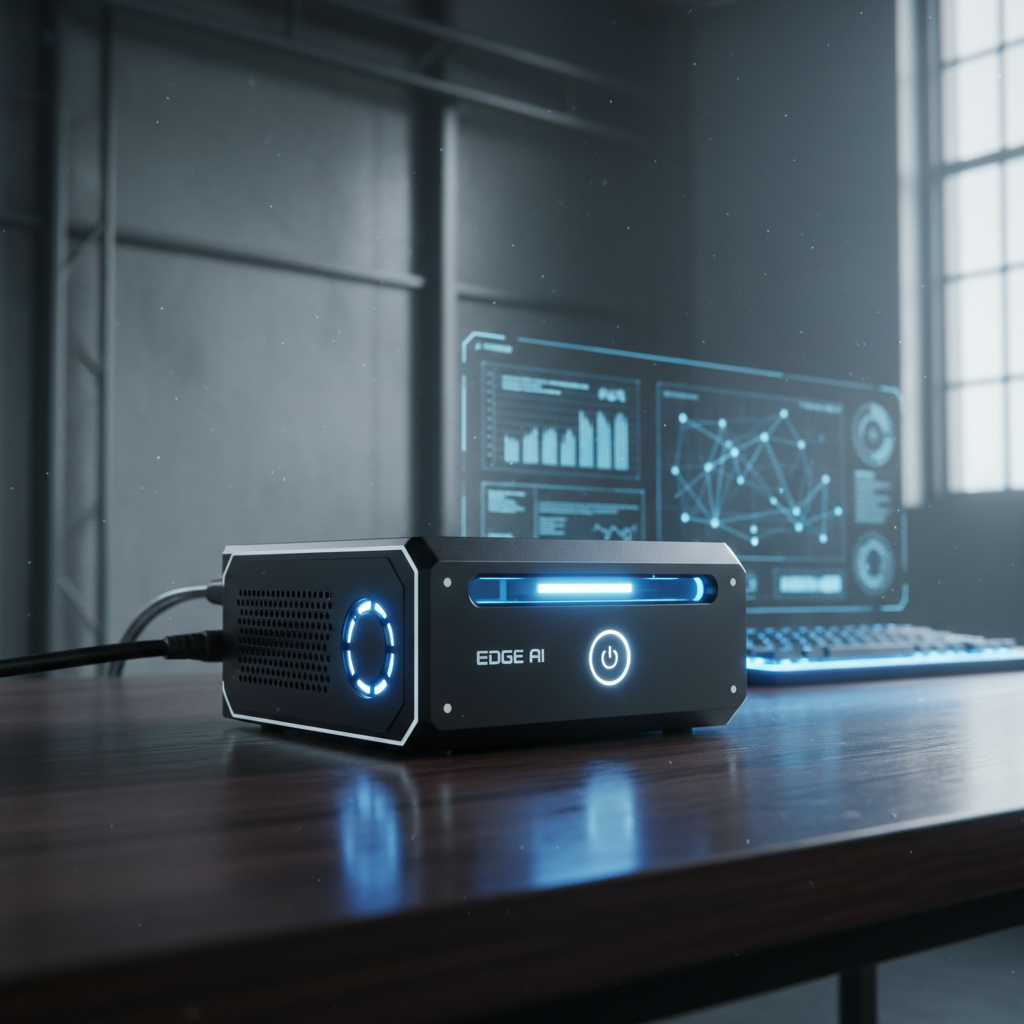
- TL;DR (Summary)
- Edge AI in 2026 represents a massive paradigm shift from cloud dependency to local processing power.
- Running models like Llama-3 locally on your Mac or PC guarantees zero-latency inference and ironclad data privacy.
- Automation pipelines can now seamlessly integrate local LLMs without incurring recurring API costs.
The Dawn of Edge AI Automation in 2026
As we navigate through 2026, the era of relying exclusively on cloud-based artificial intelligence has officially drawn to a close. The new standard is Edge AI Automation. By running massive language models like Llama-3 directly on consumer hardware—such as Apple Silicon Macs and high-end RTX-equipped PCs—developers and enterprises are reclaiming control over their data, their latency, and their budgets.
Historically, deploying state-of-the-art AI meant paying by the token, suffering through network congestion, and trusting third-party servers with highly sensitive corporate data. Today, the democratization of localized compute changes everything. With quantization techniques reaching unprecedented levels of efficiency, a model that once required a rack of enterprise GPUs can now hum along silently on a desktop computer.
Why Cloud Dependency is Becoming Obsolete
The push toward local execution isn’t just a trend; it is a fundamental correction of the tech industry’s over-reliance on centralized infrastructure. Cloud providers have continuously raised prices while throttling API access during peak times. Edge AI bypasses these bottlenecks entirely.
When you automate tasks locally, you achieve instantaneous execution. Whether it is sorting thousands of confidential emails, summarizing proprietary legal documents, or generating code, the data never leaves your machine. This isolation is the ultimate cybersecurity measure.
Hardware Requirements for Local Llama-3
To successfully run Llama-3 and automate complex workflows at the edge, your hardware needs to meet specific thresholds. Fortunately, 2026’s consumer tech is more than capable.
| Hardware Platform | Minimum RAM/VRAM | Recommended Setup | Expected Performance (Tokens/sec) |
|---|---|---|---|
| Apple Silicon (Mac) | 16GB Unified | M3 Max or M4 Pro with 64GB+ Unified Memory | 45 – 80 t/s |
| Windows PC (Nvidia) | 12GB VRAM | RTX 5080 or RTX 4090 with 24GB VRAM | 60 – 120 t/s |
| Linux Workstation | 16GB VRAM | Dual RTX 4080s or equivalent | 80 – 150 t/s |
Building the Automation Pipeline
Running the model is only the first step. The true power of Edge AI lies in automation. By hooking local API endpoints (like those provided by Ollama or LM Studio) into automation frameworks (such as n8n, LangChain, or simple Python scripts), your machine becomes an autonomous agent.
Integrating Local Endpoints
Instead of pointing your scripts to OpenAI or Anthropic, you simply redirect them to localhost:11434. Because the API structures are virtually identical, migrating existing cloud-dependent scripts to your local environment takes minutes. You can process customer feedback, scrape and summarize web content, and draft responses entirely offline.
Security and Speed: The Twin Pillars of Edge AI
In 2026, data breaches are costlier than ever. Running Llama-3 locally completely nullifies the risk of intercepting API traffic or exposing proprietary prompt data to AI training sets. Your data remains yours. Furthermore, the speed of memory bandwidth on modern motherboards completely obliterates the latency of HTTP requests over the internet. It is instantaneous, secure, and incredibly reliable.
Conclusion
The transition to Edge AI Automation is not merely an option for the tech-savvy; it is the definitive future of computing. By harnessing the power of local Llama-3 models on your own Mac or PC, you secure your data, accelerate your workflows, and build a resilient infrastructure completely immune to cloud outages. Welcome to the localized future of 2026.
Leave a Reply