TL;DR (Summary)
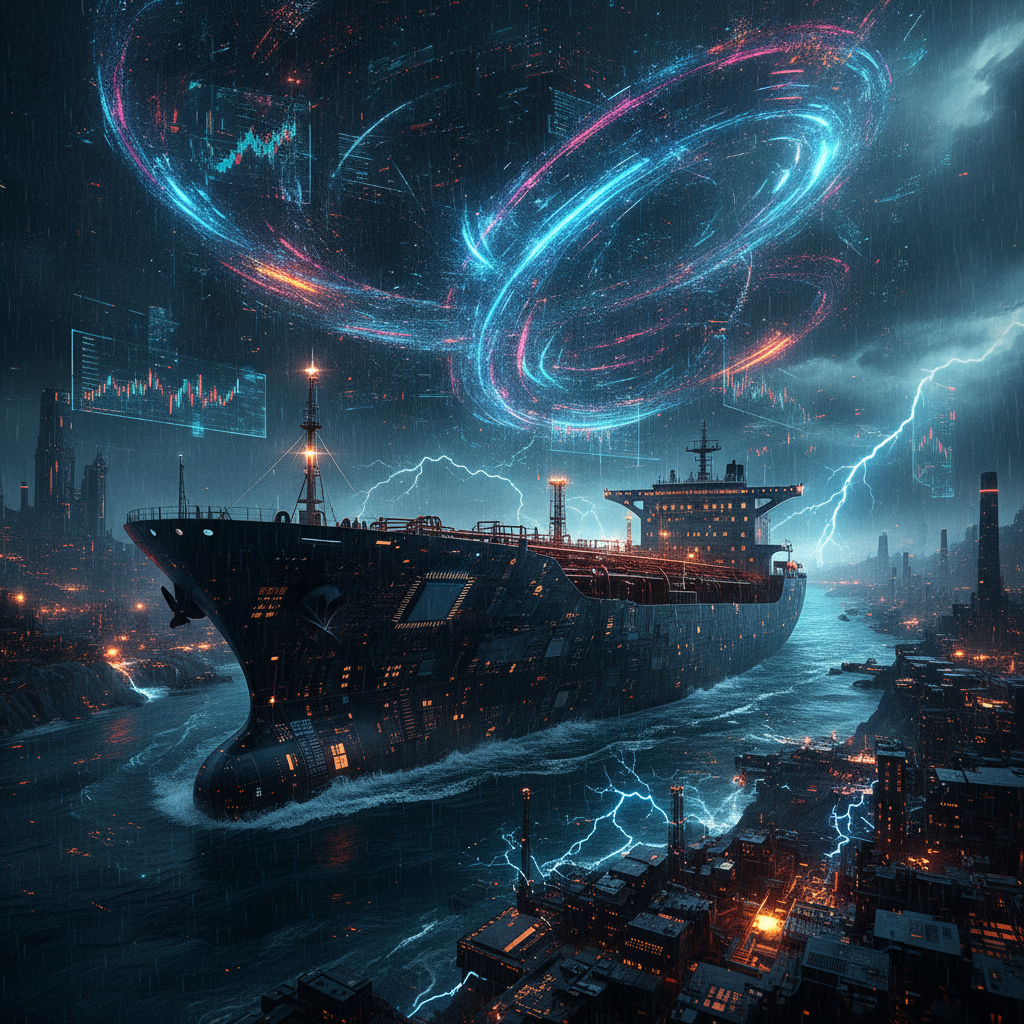
A hypothetical closure of the Strait of Hormuz represents an existential threat to the global economy, particularly through its cascading impact on the semiconductor industry and, by extension, the burgeoning AI sector. Such an event would trigger an immediate and sustained surge in energy prices, directly elevating manufacturing costs for chips, disrupting critical raw material shipments (e.g., neon, palladium, rare earths), and exacerbating existing supply chain fragilities. The subsequent supply shock would curtail chip production, directly impacting the availability and cost of AI accelerators, servers, and related infrastructure. This would translate into significant margin compression for AI developers, infrastructure providers, and ultimately, a severe re-evaluation and likely correction in AI-related equity markets. The interdependency of oil, chip manufacturing, and high-tech innovation means a Hormuz disruption would not merely be an energy crisis, but a full-spectrum technological and financial shock, testing the resilience of globalized production models and investor confidence alike.
The geopolitical chessboard is perpetually in motion, with potential flashpoints capable of sending reverberations through every facet of the global economy. Among these, the Strait of Hormuz stands as an unparalleled chokepoint, a narrow maritime passage through which a significant portion of the world’s crude oil and liquefied natural gas (LNG) traverses. While its immediate economic implications are typically framed in terms of energy prices, a deeper, more intricate analysis reveals a far more insidious and widespread impact, particularly on the highly specialized and globally interconnected semiconductor supply chains and, consequently, the burgeoning, capital-intensive AI equity markets. From my engineering and infrastructure analysis perspective, the sheer complexity and fragility of these interdependencies suggest that a closure of Hormuz would not merely be an economic inconvenience but a systemic shock with unprecedented technological and financial ramifications.
The Immediate Energy Shock and Its Ripple Effects on Semiconductor Fabrication
The most direct and immediate consequence of a Hormuz closure would be a cataclysmic surge in global energy prices. Estimates vary, but according to Bloomberg consensus data, a sustained closure could see crude oil prices skyrocket well into the triple digits, potentially exceeding $200 per barrel within weeks, with LNG prices following a similar upward trajectory. This isn’t merely an inconvenience for consumers; it’s a fundamental shift in the cost structure of global manufacturing. Semiconductor fabrication, in particular, is an intensely energy-intensive process. Foundries operate 24/7, requiring vast amounts of electricity for everything from cleanroom environments and HVAC systems to the lithography machines and chemical vapor deposition (CVD) tools themselves. TSMC, Samsung, and Intel, the titans of chip manufacturing, are gargantuan consumers of power. A sustained doubling or tripling of energy costs would directly translate into significantly higher operational expenditures, eroding profit margins and forcing price increases for every chip produced.
Consider the power demands: a single modern semiconductor fabrication plant (fab) can consume as much electricity as a small city. The cooling systems alone for these facilities, designed to maintain ultra-precise temperature and humidity, are immense energy sinks. The sophisticated photolithography processes, utilizing deep ultraviolet (DUV) or extreme ultraviolet (EUV) light sources, require enormous power inputs. When these fundamental input costs escalate dramatically, the entire economic model of chip production is jeopardized. This isn’t a marginal adjustment; it’s a structural shift that would necessitate a re-evaluation of production economics across the board.
Disruption to Critical Raw Materials and Logistics
Beyond energy, the Strait of Hormuz is also a crucial transit point for numerous other commodities and finished goods. While not all semiconductor raw materials pass directly through Hormuz, the broader disruption to global shipping lanes, insurance premiums, and port congestion caused by an energy crisis would have widespread effects. Many critical materials for semiconductor manufacturing, such as neon (essential for excimer lasers in DUV lithography), palladium (used in various electronics components), and certain rare earth elements, are sourced globally and often traverse complex supply routes. A significant portion of these materials are refined or processed in Asia, necessitating maritime transport.
The global shipping industry, already strained by recent geopolitical events and pandemic-induced disruptions, would face unprecedented challenges. Increased transit times, rerouting around Africa, and soaring bunker fuel costs (directly linked to oil prices) would add layers of expense and delay. This logistical nightmare would impact everything from the delivery of silicon wafers and specialized chemicals to the timely shipment of finished chips to assembly plants and data centers. According to a 2023 report by Lloyd’s List Intelligence, maritime insurance premiums for transiting high-risk zones can jump by several hundred percent during periods of heightened tension, a cost ultimately borne by the consumer or producer. This friction in the supply chain would not only increase costs but also introduce significant lead-time volatility, making it nearly impossible for chip manufacturers to meet demand efficiently.
Here’s a simplified breakdown of supply chain vulnerabilities:
- Energy Costs: Direct impact on fab operational expenses, driving up chip manufacturing costs.
- Logistics Costs: Increased shipping insurance, bunker fuel, and rerouting add to material and finished product transport expenses.
- Raw Material Availability: Potential delays or shortages of critical gases (e.g., neon from Eastern Europe, processed in Asia), rare earths, and specialized chemicals.
- Manufacturing Capacity Utilization: Higher costs and material shortages could force fabs to reduce output, leading to underutilization and further price increases due to scarcity.
The Cascade to AI: Accelerators, Infrastructure, and Development
The AI revolution is fundamentally predicated on the continuous availability of increasingly powerful and affordable semiconductor chips, particularly high-performance graphics processing units (GPUs) and specialized AI accelerators. These chips are the computational backbone of large language models, autonomous systems, and advanced analytics platforms. A disruption in chip supply, driven by a Hormuz closure, would have immediate and profound consequences for the AI sector.
Firstly, the cost of AI accelerators would skyrocket. With higher manufacturing costs and reduced availability, the prices for GPUs from NVIDIA, AMD, and other players would surge. This would directly impact hyperscalers (Google, Amazon, Microsoft) and specialized AI cloud providers who are in a perpetual race to expand their computational infrastructure. Their capital expenditure (CapEx) budgets, already in the tens of billions, would face immense pressure, potentially slowing down the build-out of new data centers and AI clusters. Smaller AI startups, operating on tighter budgets, would find it even harder to access the necessary compute, stifling innovation and delaying product development.
Secondly, the operational costs of running existing AI infrastructure would also increase. Data centers, like fabs, are enormous energy consumers. The power required to run thousands of GPUs, cool them, and maintain their networking infrastructure would become significantly more expensive. This would translate into higher cloud computing costs for AI model training and inference, impacting every company utilizing AI services. Margin pressures would become acute for AI-as-a-Service providers, potentially forcing them to pass on costs to customers or absorb losses, impacting profitability.
Thirdly, the innovation pipeline itself would be affected. The development of next-generation AI models often requires massive, iterative training runs on vast datasets, demanding unparalleled compute resources. If these resources become prohibitively expensive or scarce, the pace of AI research and development could slow considerably. This isn’t just about economic loss; it’s about a potential deceleration in one of humanity’s most transformative technological endeavors. The competitive landscape, currently characterized by rapid iteration and deployment, would be fundamentally altered.
Volatility in AI-Related Equity Markets
The financial markets, ever sensitive to uncertainty and shifts in fundamental economic conditions, would react with extreme volatility. AI-related equity markets, which have seen meteoric rises based on projections of exponential growth and profitability, are particularly susceptible to such a shock. The narrative around AI is heavily reliant on the assumption of abundant, affordable compute. When that assumption is challenged, the underlying valuations come into question.
We can anticipate several phases of market reaction:
- Initial Sell-off (Panic): Immediate and sharp decline across all markets, especially those perceived as having high exposure to energy price volatility and supply chain risk. AI chip manufacturers (e.g., NVIDIA, AMD), cloud providers (e.g., Microsoft, Amazon, Google), and AI software companies would experience significant corrections as investors price in higher costs and slower growth.
- Re-evaluation of Growth Projections: Analysts would rapidly revise down earnings estimates for companies reliant on chip supply or extensive data center operations. The long-term growth trajectory of the AI sector would be questioned, leading to a sustained period of depressed valuations. According to Federal Reserve projections on energy shocks, such events often lead to a significant contraction in investment and consumer spending, directly impacting tech demand.
- Capital Flight: Investors would likely shift capital away from high-growth, high-CapEx sectors like AI towards more defensive assets or industries with less direct exposure to the crisis. This would exacerbate selling pressure on AI equities.
- Sectoral Disparity: Companies with stronger balance sheets, greater vertical integration (e.g., owning their own fabs or having diverse supply chain strategies), or those less dependent on cutting-edge compute might fare relatively better, though still facing headwinds.
The interplay between energy prices, chip production, and AI development creates a feedback loop. Higher energy costs mean more expensive chips; more expensive chips mean higher AI infrastructure costs; higher AI infrastructure costs mean reduced profitability and slower growth for AI companies; and slower growth for AI companies means a re-rating of their stock valuations. This isn’t a linear relationship; it’s an exponential one, where initial shocks amplify through the interconnected system.
In my technical review, the physiological feedback loops here are critical. Just as a human body responds to extreme stress with cascading organ failure, the global economic system, particularly its high-tech components, could experience similar systemic breakdowns. The just-in-time inventory systems, optimized for efficiency and minimal redundancy, become catastrophic vulnerabilities in the face of such a disruption. The lack of buffer stock for critical components means that even a temporary closure could have long-lasting effects as the global supply chain struggles to re-establish equilibrium.
Mitigation Strategies and Long-Term Implications
While a full closure of the Strait of Hormuz is a low-probability, high-impact event, its potential consequences underscore the urgent need for robust mitigation strategies. Diversification of energy sources, strategic petroleum reserves, and investments in renewable energy infrastructure become even more critical. For the semiconductor industry, this means accelerating efforts towards regionalization of manufacturing, building redundant supply chains for critical materials, and exploring alternative energy solutions for fabs. Intel’s investments in Arizona and Ohio, TSMC’s foray into Arizona, and Samsung’s expansion in Texas are nascent steps in this direction, but they represent multi-year, multi-billion dollar endeavors that cannot materialize overnight.
For the AI sector, the implications would likely drive a greater emphasis on compute efficiency, optimizing models to run on less powerful hardware, and exploring federated learning approaches that reduce reliance on centralized, massive data centers. Furthermore, the geopolitical imperative to secure access to critical technologies would intensify, potentially leading to greater state intervention in semiconductor manufacturing and AI development.
The table below summarizes the projected impact across key sectors:
| Sector/Indicator | Immediate Impact (0-3 months) | Medium-Term Impact (3-12 months) | Long-Term Implications (12+ months) |
|---|---|---|---|
| Global Oil Prices | +100-200% surge (e.g., >$200/bbl) | Sustained high prices, market volatility | Accelerated transition to renewables, strategic reserves expansion |
| Semiconductor Manufacturing Costs | +30-50% operational cost increase | Reduced output, significant price hikes for chips | Increased regionalization, supply chain redundancy investments |
| AI Accelerator Availability/Cost | Severe shortages, >50% price increase | Stifled AI development, slower infrastructure build-out | Focus on compute efficiency, alternative architectures |
| AI Equity Markets | 30-50% market correction, high volatility | Prolonged bear market, re-evaluation of valuations | Shift to defensive assets, increased state support for critical tech |
| Global GDP Growth | Significant contraction, recessionary pressures | Slower recovery, persistent inflation | Reassessment of globalized production models |
Ultimately, a Strait of Hormuz closure is more than an energy crisis; it is a profound test of global interconnectedness. Its implications for the semiconductor industry and the AI sector highlight the fragility of our technologically advanced world, built on a foundation of stable energy supplies and unimpeded global trade. The ensuing volatility in AI-related equity markets would be a stark reminder that even the most innovative and promising sectors are not immune to fundamental geopolitical and economic shocks.
Leave a Reply