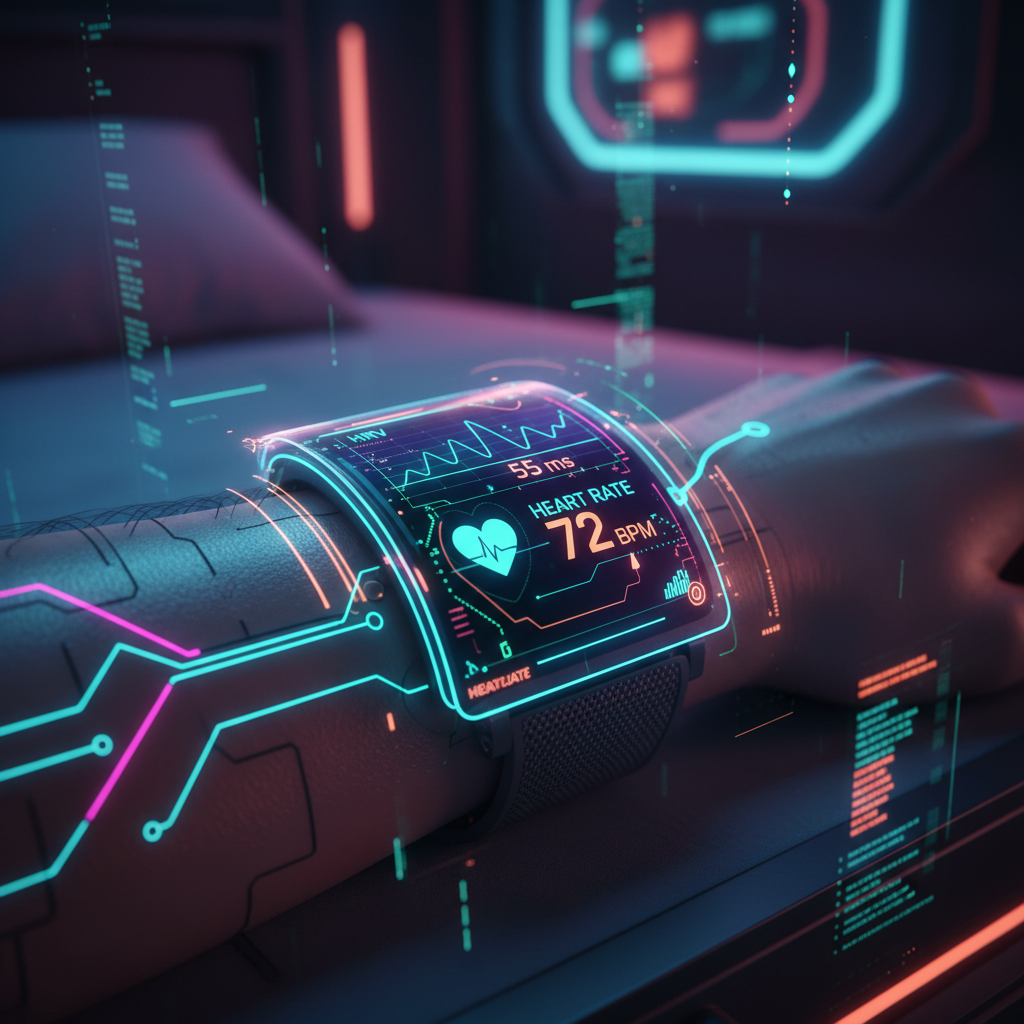
TL;DR (Summary)
- Heart Rate Variability (HRV) is a critical metric for understanding your body’s readiness and recovery levels.
- Wearables like Whoop, Oura Ring, Garmin, and Apple Watch use advanced sensors to track HRV continuously.
- Higher HRV generally indicates a well-rested, resilient nervous system, while lower HRV suggests stress or fatigue.
- Rest isn’t just about sleep; active recovery and stress management play a huge role in optimizing your daily HRV.
- While not medical devices, these gadgets offer powerful insights to help you balance intense effort with crucial downtime.
Understanding Heart Rate Variability (HRV): The Ultimate Biomarker
In the rapidly evolving world of health and fitness optimization, few metrics have garnered as much attention as Heart Rate Variability, or HRV. For decades, athletes and biohackers have relied on static heart rate measurements to gauge effort. However, measuring the beat-to-beat variations in your heart rate provides a far more nuanced picture of your internal state. HRV is not just a measure of cardiovascular fitness; it is a direct window into the Autonomic Nervous System (ANS).
The human heart does not beat like a perfectly timed metronome. Even if your resting heart rate is a steady 60 beats per minute, the time interval between each beat fluctuates by milliseconds. Sometimes the gap is 0.85 seconds, and the next it might be 1.05 seconds. This microscopic irregularity is exactly what we want to see. A healthy, responsive cardiovascular system is characterized by a high degree of variability, which demonstrates that your body is constantly adapting to subtle changes in its environment, breathing patterns, and stress levels.
The Autonomic Nervous System is divided into two primary branches: the Sympathetic Nervous System (SNS) and the Parasympathetic Nervous System (PNS). The SNS is your body’s accelerator, responsible for the “fight or flight” response. It primes you for action, increasing your heart rate and preparing your muscles for exertion. Conversely, the PNS is the brake pedal, controlling the “rest and digest” functions. It slows the heart rate and promotes recovery. When your HRV is high, it indicates a strong balance between these two systems, with a robust parasympathetic response allowing you to recover effectively. When your HRV is chronically low, it often points to a dominant sympathetic state—meaning your body is stuck in high gear due to stress, overtraining, poor sleep, or illness.
The Science of Rest: Why Recovery is Non-Negotiable
We live in a culture that glorifies hustle, grind, and relentless forward momentum. However, human physiology dictates a different reality: growth and adaptation happen during rest, not during the workout or the stressful event itself. Whether you are aiming to build muscle, improve cardiovascular endurance, or simply maintain sharp cognitive function throughout a demanding workday, the quality of your rest dictates your success.
Rest encompasses several dimensions, with sleep being the most critical foundation. During deep (slow-wave) sleep, the body releases human growth hormone (HGH), repairs tissue, and consolidates memories. REM sleep, on the other hand, is essential for emotional regulation and cognitive processing. Wearable technology has revolutionized our ability to track these sleep stages, but it goes beyond just sleep duration. Quality, continuity, and timing are equally vital.
Beyond nocturnal sleep, daytime rest—often referred to as active recovery or deliberate downtime—plays a significant role in maintaining a healthy HRV. Activities such as meditation, deep breathing exercises (like box breathing), light walking, and mobility work help stimulate the vagus nerve. The vagus nerve is the main component of the parasympathetic nervous system, and its activation directly increases HRV. By strategically incorporating periods of true rest into your day, you prevent the accumulation of autonomic stress that typically tanks your variability scores.
How Wearable Technology Measures HRV
Measuring the minute differences in milliseconds between heartbeats used to require a cumbersome electrocardiogram (ECG) machine in a clinical setting. Today, that power rests on our wrists or fingers. Most modern wearables utilize one of two primary technologies to capture this data:
Photoplethysmography (PPG)
The vast majority of fitness trackers and smartwatches rely on optical heart rate sensors known as PPG. If you look at the back of an Apple Watch or a Garmin device, you will see flashing green or red LED lights. These lights illuminate the capillaries just beneath your skin. As your heart pumps blood, the volume of blood in these vessels expands and contracts. A photodetector measures the amount of light reflected back. By tracking these subtle changes in blood volume, the device’s algorithms calculate your heart rate and, subsequently, the intervals between beats to determine your HRV.
Electrocardiogram (ECG/EKG)
Some advanced devices, such as the newer Apple Watches (when using the specific ECG app) or specialized chest straps like the Polar H10, use electrical sensors to detect the electrical signals that trigger your heart to beat. Chest straps remain the gold standard for consumer-grade HRV tracking because they are less susceptible to motion artifacts compared to optical sensors on the wrist. However, for overnight tracking—which is when HRV is most stable and useful for baseline measurements—optical sensors in rings and watches are generally considered accurate enough for tracking trends.
Comparing the Titans: Top Wearables for HRV and Rest
Not all wearables are created equal when it comes to prioritizing HRV and recovery data. Let’s examine how the top contenders stack up in the market.
| Device | Form Factor | HRV Focus | Best For |
|---|---|---|---|
| Whoop 4.0 | Wrist/Bicep Band (No Screen) | Extreme focus on Strain vs. Recovery. Uses HRV heavily to calculate daily recovery score. | Serious athletes and data nerds who want actionable lifestyle coaching. |
| Oura Ring Gen 3 | Smart Ring | Exceptional sleep tracking. Measures HRV continuously at night for an accurate readiness score. | Those who hate wearing watches to bed and prioritize sleep data. |
| Garmin (Fenix/Epix/Forerunner) | Smartwatch | Utilizes “Body Battery” and “Training Readiness” metrics, incorporating HRV status. | Endurance athletes who need GPS tracking combined with recovery metrics. |
| Apple Watch (Series 8/9/Ultra) | Smartwatch | Logs HRV in the background (primarily via Apple Health). Less prescriptive natively. | General consumers who want a great smartwatch with solid background health tracking. |
The Whoop Perspective: Strain and Recovery
The Whoop strap is arguably the most dedicated recovery wearable on the market. It doesn’t tell time; it only collects data. Whoop takes your overnight HRV, resting heart rate, sleep performance, and respiratory rate to generate a daily “Recovery Score” from 0 to 100% (color-coded red, yellow, or green). This score dictates how much “Strain” (cardiovascular exertion) you should take on that day. It forces users to confront the reality of their lifestyle choices—showing exactly how late-night alcohol or a stressful work presentation destroys the next day’s HRV.
Oura Ring: The Sleep Authority
The Oura Ring takes a more subtle approach. Worn on the finger, it sits closer to the arteries than a wrist-worn device, allowing for highly accurate optical readings. Oura’s primary strength is its sleep staging and overnight HRV tracking. It provides a “Readiness Score” every morning. Because it is unobtrusive, compliance is very high—people rarely take it off to sleep. Oura also uniquely factors in body temperature trends, making it an excellent tool for tracking overall systemic health and even predicting the onset of illness before symptoms arise.
Garmin: The Athlete’s Companion
Garmin has integrated HRV tracking into its comprehensive suite of athletic metrics. Features like “HRV Status” track your 7-day average against your personal baseline. Their proprietary “Body Battery” metric is incredibly intuitive: it charges up during sleep and restful periods and drains during workouts and stressful moments. Garmin is ideal for those who want to see how their rest directly impacts their running pace, cycling power, or overall training load.
Using HRV Data to Optimize Your Lifestyle
Collecting data is meaningless unless it drives behavioral change. Here is how you can practically apply the insights from your wearable to enhance your rest and recovery.
1. Establish Your Baseline: HRV is highly individualized. A “good” score for a 20-year-old elite athlete might be 120ms, while a healthy 50-year-old might average 45ms. Do not compare your HRV to others. Instead, wear your device consistently for at least 3-4 weeks to establish your personal baseline. Once you know your normal range, you can look for deviations.
2. Identifying Stressors: When you see a sudden dip in your HRV (and a corresponding red recovery score on your device), ask yourself what changed. Did you drink alcohol? Did you eat a heavy meal right before bed? Are you fighting off a cold? Are you experiencing relationship or financial stress? Identifying these triggers allows you to make conscious adjustments.
3. Modulating Training Intensity: If you wake up with a significantly suppressed HRV, it is generally a sign that your body is not fully recovered from previous stressors. This is the day to skip the high-intensity interval training (HIIT) or heavy deadlifts. Instead, opt for active recovery: a light jog, yoga, or a long walk. Conversely, when your HRV is unusually high, your nervous system is primed and ready to absorb a tough training stimulus. Push hard on those green days.
4. The Power of Breathwork: One of the fastest ways to acutely improve your HRV is through controlled breathing. Practices like resonance frequency breathing (typically around 5.5 to 6 breaths per minute) strongly stimulate the vagus nerve. Many wearables now include guided breathing sessions. Taking 5-10 minutes before bed to engage in slow, deliberate breathing can shift your autonomic nervous system into a parasympathetic state, setting the stage for higher overnight HRV and deeper sleep.
Common Pitfalls and Limitations of Wearable HRV Tech
While wearable tech is incredibly powerful, it is not without flaws. Understanding these limitations is crucial to avoid becoming overly anxious about the numbers.
First, orthosomnia is a real phenomenon. This is a condition where individuals become so obsessed with perfecting their sleep and recovery metrics that the anxiety about the numbers actually causes poor sleep and lowers HRV. If looking at a low recovery score ruins your entire day, it might be time to take a break from tracking.
Second, optical sensors (PPG) are susceptible to errors. Movement, skin tone, tattoos, and how tightly the device is worn can all affect accuracy. This is why overnight HRV—measured when you are relatively still—is generally more reliable than daytime measurements.
Finally, algorithms are proprietary and differ between brands. An Apple Watch might calculate HRV using SDNN (Standard Deviation of NN intervals), while Whoop and Oura might use rMSSD (Root Mean Square of Successive Differences). This means you cannot directly compare a raw HRV number from Garmin to one from Whoop. You must stick to one ecosystem to track your personal trends accurately.
The Future of Wearable Recovery Technology
The landscape of wearable tech is shifting from simple tracking to proactive, AI-driven coaching. In the future, we can expect wearables to not just tell us our HRV is low, but to integrate seamlessly with our smart home environments. Imagine a scenario where your wearable detects a highly sympathetic (stressed) state and automatically lowers the temperature in your bedroom, dims the smart lights, and queues up a relaxing soundscape to actively force your body into a restorative state.
Furthermore, the integration of continuous glucose monitors (CGMs) with HRV wearables is already beginning. Seeing the direct correlation between blood sugar spikes, inflammation, and subsequent drops in HRV provides an unparalleled look into how metabolic health drives autonomic nervous system balance.
Conclusion
In conclusion, tracking your Heart Rate Variability is no longer reserved for professional athletes in laboratories. With the advent of sophisticated wearables, anyone can gain real-time insights into their body’s readiness to perform and its desperate need to rest. By paying attention to these metrics and, more importantly, acting upon them, you can build a more resilient, balanced, and energetic version of yourself. True health is not found in endless exertion, but in the intelligent oscillation between profound effort and deep, restorative recovery.
Leave a Reply