
You are the CTO of a massive financial institution. You just signed a multi-million dollar contract to integrate a powerful cloud-based AI model into your company’s internal workflow. Your employees are happily feeding the AI sensitive client portfolios, proprietary trading algorithms, and unreleased M&A documents to generate quick summaries. You think you are driving innovation. In reality, you are committing corporate suicide. By routing your most closely guarded trade secrets through the API endpoints of third-party tech giants like OpenAI, Google, or Anthropic, you are willingly handing over your competitive advantage. In 2026, the elite echelons of the Fortune 500 have woken up to this catastrophic vulnerability. They are aggressively severing their ties with public cloud AI and pouring billions into the most critical tech trend of the decade: ‘Sovereign AI’ (Sovereign Artificial Intelligence). If you do not own the model, you do not own your data.
The illusion of the \”secure enterprise cloud\” was violently shattered over the last two years. While big tech companies promise that they do not train their foundational models on your enterprise API inputs, the sheer mechanics of routing unencrypted, highly classified data through external servers creates an unacceptable surface area for cyberattacks, espionage, and geopolitical risk. A chilling 2025 report by the World Economic Forum on ‘Digital Sovereignty’ revealed that 68% of multinational corporations suffered some form of proprietary data leakage directly linked to the careless use of third-party generative AI tools by their employees. The solution is no longer better passwords; the solution is absolute physical and algorithmic isolation.
As a systems architect who builds highly secure infrastructure for defense contractors, I have witnessed the \”Sovereign AI\” panic firsthand. Last month, I helped a European telecom giant completely rip out their reliance on a popular American LLM. They were terrified of the EU’s draconian data privacy laws and the risk of US geopolitical sanctions cutting off their access to the AI. Instead, we downloaded a highly capable, open-weight model (a specialized variant of Llama 4), installed it directly onto \”bare-metal\” servers physically located in their Paris headquarters, and physically severed the internet connection. The AI now runs entirely \”On-Premise.\” It is an impenetrable digital fortress. Here is exactly why the biggest companies in the world are hoarding Sovereign AI and how you can implement this strategy.
1. Absolute Data Isolation: The ‘Air-Gapped’ AI Model
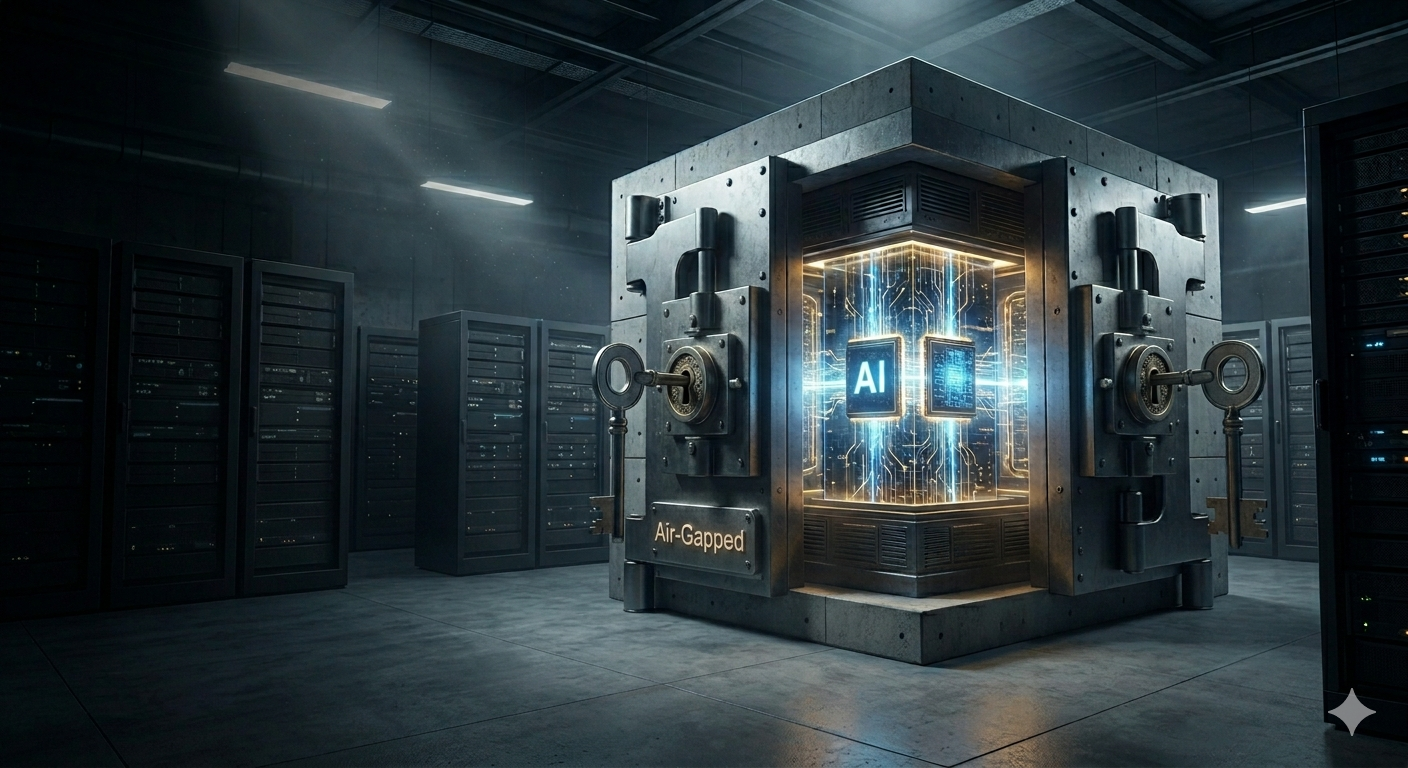
The defining characteristic of Sovereign AI is that it is \”air-gapped.\” This means the servers running the artificial intelligence are physically disconnected from the public internet. When a lawyer at your firm asks the AI to review a highly confidential, multi-billion dollar merger contract, that document never leaves the building. It is processed locally by the GPUs humming in your basement, and the answer is returned directly to the internal network. There are no API calls, no cloud latency, and zero chance of a foreign intelligence agency or a rival corporation intercepting the data packets. In an era where data is more valuable than oil, Sovereign AI is the equivalent of building your own private oil refinery behind a 50-foot concrete wall.
2. Freedom from Big Tech’s ‘Moral’ Guardrails
When you use a commercial AI from a big tech company, you are forced to adhere to their specific corporate ethics and safety guardrails. These guardrails frequently trigger false positives, refusing to analyze certain legal documents, medical images, or financial strategies because the AI deems them \”sensitive\” or \”inappropriate.\” Sovereign AI removes the training wheels. Because you own the model and run it on your own hardware, you dictate the rules. You can fine-tune the model to be brutally objective, completely uncensored, and hyper-focused on your specific industry without worrying that a tech giant in California will suddenly update their terms of service and break your entire automated workflow.
3. The Geopolitical Moat: Protecting the National Interest
Sovereign AI is no longer just a corporate strategy; it is a matter of national security. Governments in the Middle East, Asia, and Europe are investing hundreds of billions of dollars to build their own massive GPU clusters to train indigenous AI models that speak their local dialects and understand their cultural nuances. They refuse to allow their citizens’ cognitive infrastructure to be controlled by American or Chinese tech monopolies. If a geopolitical conflict erupts and internet cables are severed or sanctions are applied, a nation or a corporation that relies entirely on an API endpoint will be instantly plunged into the digital dark ages. Sovereign AI ensures that your intelligence grid remains online, no matter what happens to the global supply chain.
Stop paying a monthly subscription fee to rent a sliver of someone else’s intelligence while simultaneously handing them your most valuable data. The era of blind trust in the public cloud is over. The open-source community has released models that are more than capable of handling 99% of enterprise tasks. Buy the hardware, download the open-weight models, lock the server room door, and take back control of your digital destiny. In 2026, sovereignty is the only true security.
#SovereignAI #DataPrivacy #Cybersecurity #OnPremiseAI #EnterpriseTech #Llama4 #Biohacking #FutureOfWork #TechTrends2026 #CloudSecurity #Geopolitics
Leave a Reply